The post Richard Reeves, David Williams share insights for unstoppable economic mobility efforts appeared first on StriveTogether.
]]>Hearing all of these individual aspirations begs an important question: How do we know if we’re making progress as a system, as a society, in ensuring the success of every child toward economic mobility? At the opening plenary of the Cradle to Career Network Convening, network members heard from two experts on the state of opportunity in America: Richard Reeves, senior fellow at the Brookings Institution, and David Williams, policy director at Opportunity Insights.
Here are a few highlights from their conversation:
“The myth of meritocracy”
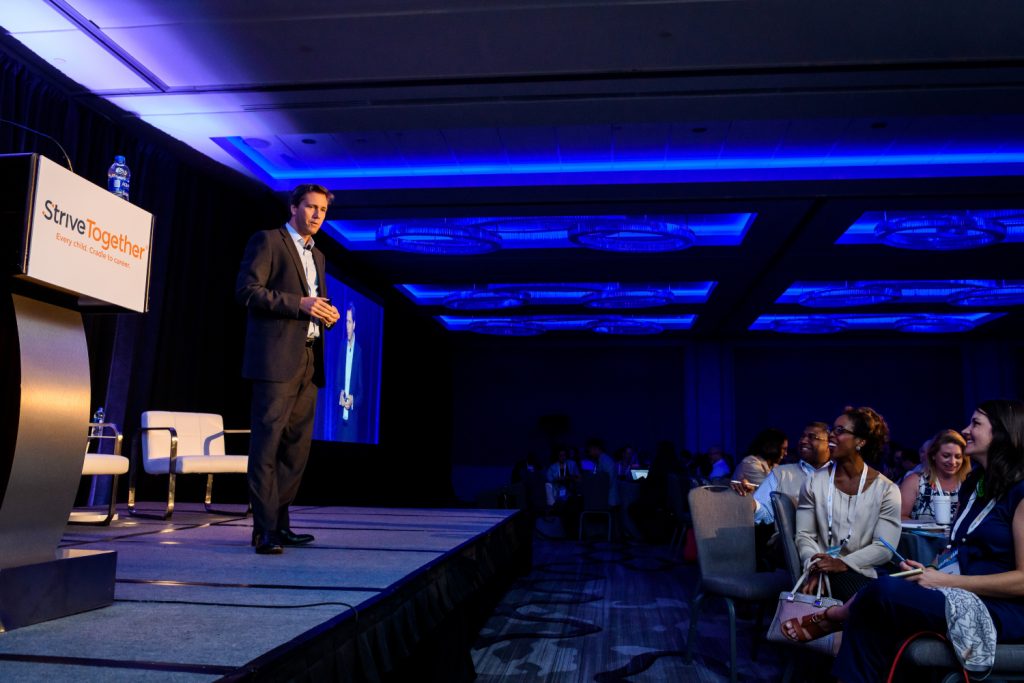
Reeves shared a stark perspective on the class system in the U.S. and, as he described it, “the myth of meritocracy.” This myth camouflages the structural inequities of our economic system. As Reeves described the “ruthless machine” of the American class system that produces economic inequity across our country, I was reminded of the idea that there is no such thing as a broken system — all systems are perfectly designed to produce the outcomes they achieve.
Race and place matter.
If you’re black and were born into bottom 20% of the economic ladder, you have a 50% chance of staying there, while white Americans born into same quintile are half as likely to stay. In addition to race, as many of us have suspected, place matters, too. Reeves described this as “the Baltimore effect,” explaining that if you grew up in Baltimore, controlling for all other factors possible, you’re likely to earn 15% less over your lifetime than the average American. This impact is even more pronounced for boys.
Data from Raj Chetty and Opportunity Insights shows the impact of the place where you grow up. While this insight represents a huge shift in social science, we still don’t understand the “what” or “why” of how place affects outcomes. I believe Cradle to Career Network members are ready to dig into the data and answer these questions for their own communities.
Investigate the factors specific to the neighborhoods that have provided opportunity in your community. What are the challenges and what have been the bright spots in those neighborhoods?
Disrupting education inequality
Reeves highlighted that education inequality is passed on even more strongly than wealth. Standardized tests like the SAT are often used to perpetuate these inequities over generations. We as a network have an opportunity to identify equitable system measures — like equitable funding flows, diversity of the educator workforce and more — to measure not only child-level outcomes but system performance to address disrupt this accrual of privilege over time.
Our work must involve elevating the human capital in the education and economic mobility space and ensuring that talent is representative of the communities we seek to serve. Watch how Cradle to Career Network members Generation Next and Milwaukee Succeeds are collaborating with partners to take on this challenge:
Measuring effective solutions
Put simply, there is NO correlation between employment growth and economic mobility. In fact, in places like Charlotte, N.C., economic growth is actually exacerbating mobility challenges. You simply can’t count on job growth to drive economic mobility.
So, what does work? One proven solution is supporting and expanding integrated early childhood systems that include evidence-based home visitation support. Learn how Cradle to Career Network member Norwalk ACTS is supporting this effort:
So, what does this mean for the work of our movement?
Put eloquently by David Williams, “StriveTogether partnerships are uniquely positioned to build the political will to operationalize these research insights into action.”
Here are some ways we can work toward sharing the American Dream:
- Define your success metrics very clearly.
- Start with the evidence. What promotes mobility at different stages of the cradle-to- career continuum?
- Measure and evaluate progress so you can make informed adjustments and improve over time.
- Engage with housing partners to improve housing opportunities, which impact many other factors.
- Use the Opportunity Insights’ Opportunity Atlas to dig into the data in YOUR community and target your work to local issues for those marginalized by systems and structures.
We, as a movement, have an opportunity to measure and demonstrate what works for kids and families. Across the country, people are eager for solutions, and we can provide them.
The post Richard Reeves, David Williams share insights for unstoppable economic mobility efforts appeared first on StriveTogether.
]]>The post Make a beeline for allies in our collective impact work appeared first on StriveTogether.
]]> Community Solutions helps communities adopt the best problem-solving tools from multiple sectors to end homelessness and the conditions that create it. The organization was created by Rosanne Haggerty, who spent 20 years developing affordable housing but couldn’t build apartments nearly as fast as homelessness and poverty were expanding. In 2011, she launched Community Solutions with a team of co-founders to find faster solutions. Today, they help communities optimize their existing resources to make measurable social change at scale.
But how exactly are they getting these results? Homelessness, like education gaps and poverty, is sometimes seen as an intractable problem, but at StriveTogether and the Cradle to Career Network, we know better.
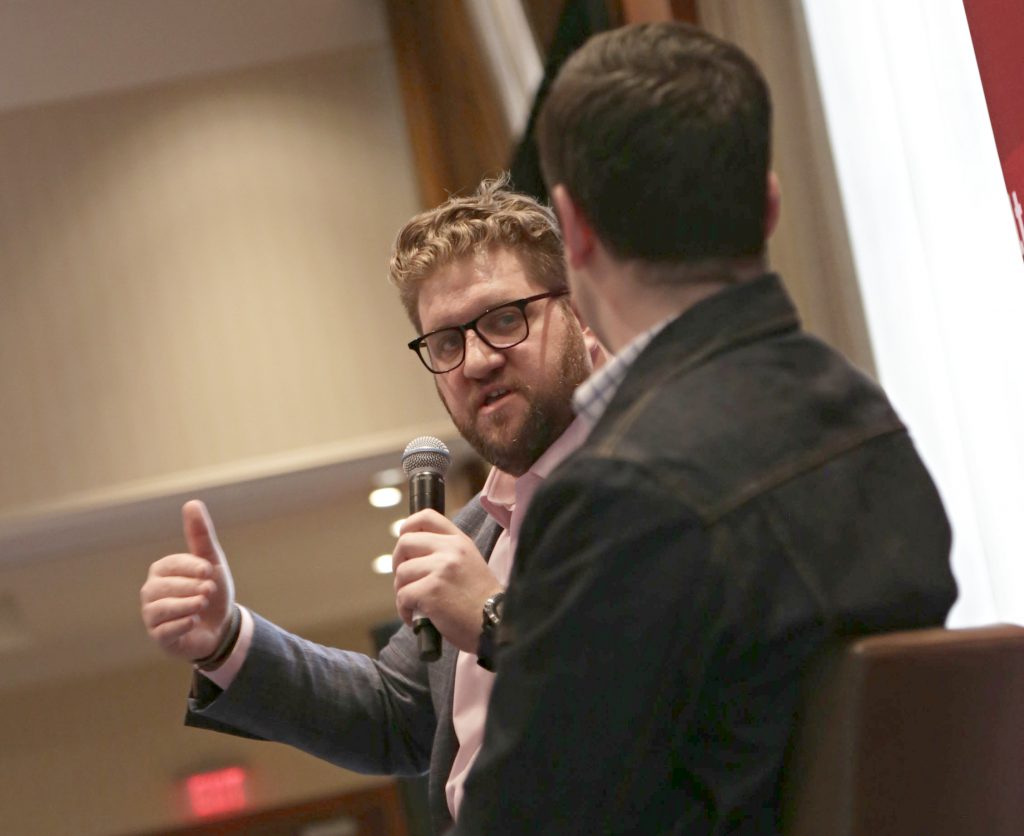
For members of the Cradle to Career Network, Community Solutions’ process will seem very familiar. Their approach includes focusing on data; facilitating partners toward shared goals and action; targeting strategies to specific sub-groups (e.g. chronic, veteran or youth homelessness); identifying technical, complex and complicated challenges; and testing and refining strategies with small tests while thinking about the policy changes and resource flows needed to transform systems to END homelessness in communities across the country.
Years ago, I heard Nate Waas Schull from All Hands Raised describe attending a StriveTogether convening as being the girl in the bee suit in Blind Melon’s “No Rain” video, who feels lonely until she finally finds a whole field of bees — moving from feeling alone doing large-scale change work in your community, to finding friends and peers from across the country. Well now, my StriveTogether friends, let’s welcome to the field another colony of change agents using a similar process to ensure no one experiences homelessness in our communities.
Nate’s analogy resonated with me as I attended a Community Solutions Learning Session for its Built for Zero communities and team members at the end of March. Built for Zero is a rigorous national movement to end veteran and chronic homelessness in more than 70 communities across the country. Coordinated by Community Solutions, this effort supports participants in developing real-time data on homelessness, optimizing local housing resources, tracking progress against monthly goals and accelerating the spread of proven strategies.
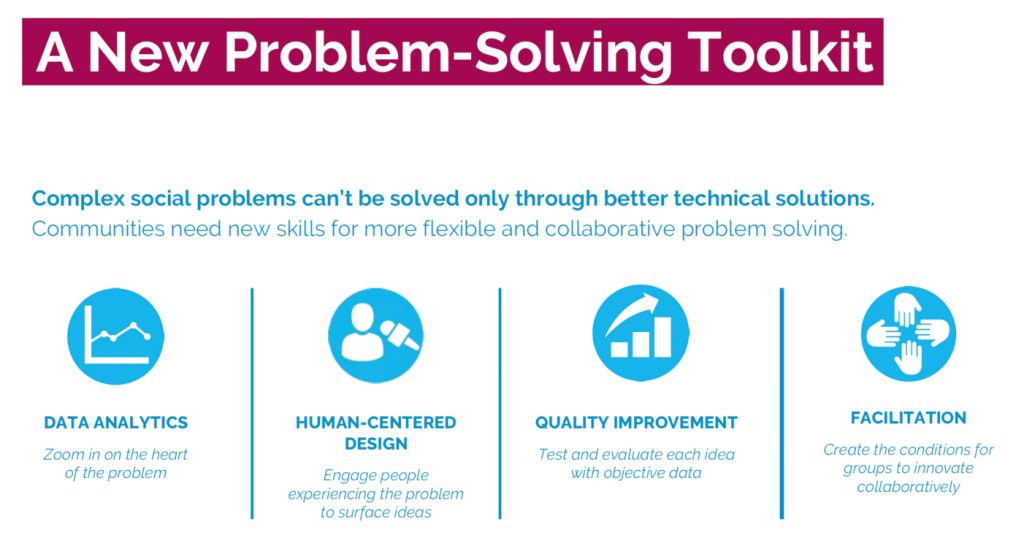
While being interviewed onstage by Jake Maguire of Community Solutions at last month’s event, I shared insights from the collective impact work of StriveTogether and the Cradle to Career Network, including how we use collaboration, center equity and focus on continuous improvement to create change in our communities. I walked away from the Learning Session feeling confident and excited that not only are there similarities in our work and approaches, there are common skills and competencies needed to execute large-scale social change efforts.
Moving forward, we’ll partner with Community Solutions to share emerging practices and support each other’s critical efforts for marginalized communities. In the meantime, I recommend that you visit their website to see if your community is taking on the Built for Zero challenge or learn more about how your community can get involved.
Our work at StriveTogether of transforming the systems that impact children and families is always strengthened by working across sectors. So, as Christian Paige said during his spoken word performance at our 2018 Cradle to Career Network Convening, let’s “write an eviction notice for homelessness” and change it from an issue we face to a “[parable] of what can be conquered by collective impact.”
The post Make a beeline for allies in our collective impact work appeared first on StriveTogether.
]]>The post Working together across national networks for student-centered learning appeared first on StriveTogether.
]]>This is a question that leaders from more than 100 communities gathered to answer at the February Students at the Center convening in Houston, Texas. This unprecedented event — hosted by Coalition for Community Schools, Communities in Schools and StriveTogether — answered a challenge that local community partners have asked our national networks for years: “You talk about the importance of collaboration locally while failing to model that collaboration effectively nationally.”
In response to this challenge, we set aside organizational siloes nationally to create a unifying vision for student success built around five principles for putting students at the center. As I head back to Texas this week to prepare for our next event — the Aligning Networks So Every Student Thrives panel at South by Southwest EDU in Austin Wednesday — I recall the examples and lessons learned last month.
Every morning, I take a few moments to reflect on the great privilege and responsibility we have at StriveTogether as a network to the more than 10 million children living in our communities. In the face of pervasive racial and economic disparities, we must ask ourselves how we can enlist more partners to accelerate the rate of change for EVERY child. This means we must engage not just at the municipal, county or regional level, but also at the school and neighborhood level to connect with students and families and the services that support them in much more intentional ways.
Community Schools, represented by our partners at Coalition for Community Schools and Communities In Schools, are natural allies to make this happen. Imagine if every school had staff on the ground working to drive improve outcomes and change systems along the cradle-to-career continuum. That’s what this partnership could mean for the success of every child.
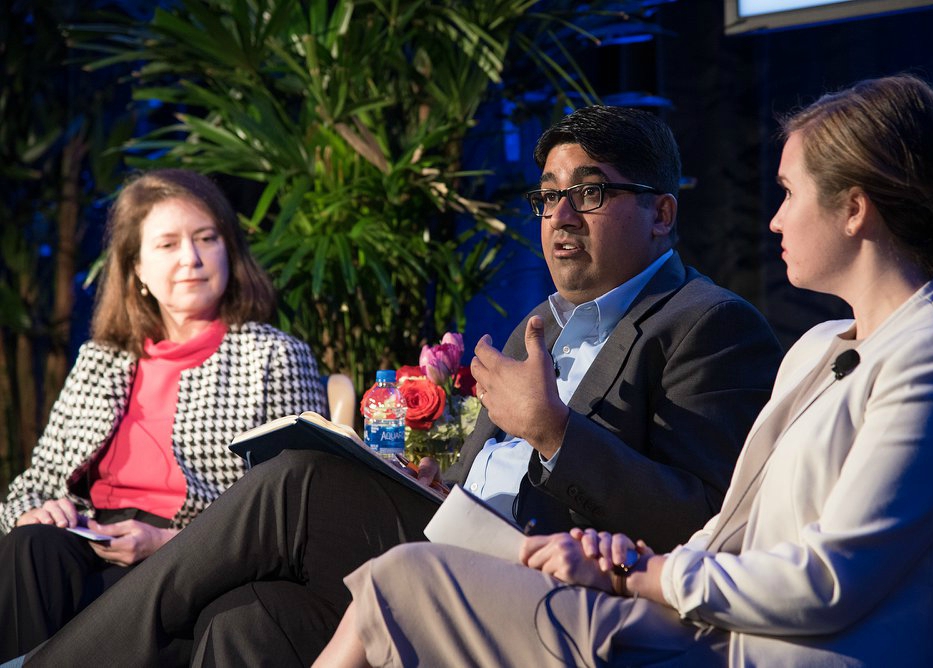 Trusting Relationships: Watching the evolution of partnership conversations over the course of the two-day event was a fascinating experience from the front of the room. On day one, I heard from many StriveTogether Cradle to Career Network members that examples of partnership modeled from the stage by Baltimore, Las Vegas, Memphis and Salt Lake City provided inspiring calls to action of how their own communities might align efforts for better results. They talked about reductions in chronic absenteeism in Memphis and Salt Lake City, systemic changes in the way data is shared and used across Baltimore, and the power of shared language and improvement approaches in multiple communities.
Day two opened with local students singing and reading poetry, bringing real life and energy to the room. As local Houston partners came on stage to share their stories of working together in the post-Hurricane recovery, Snapchat, Instagram and Twitter were abuzz as #StudentsattheCenter started trending with more than 200,000 impressions on social media. But the mark of a great event is the state of participants as the program closes. When I stopped to speak with Bridging Richmond about its efforts to build a culture of continuous improvement in the school district, the room was, to my surprise and delight, full of community partnerships discussing action plans and next steps even after the convening closed.
Cross-Sector Partnership: Imagine truly aligned partners working regionally and locally, in schools and out of schools with a common approach to facilitation and data utilization — what could be accomplished? How much faster could we move? How much progress could be made to eliminate disparities and ensure the success of every child? I truly believe that the individuals working together in the room in Houston have the knowledge and expertise to create this type of movement for the success of every child. If we can continue to ensure nationally that we create the kinds of aligned opportunities for our networks to engage, learn and work together for impact, I’m confident that we’ll not only achieve the StriveTogether goals of changing systems and improving outcomes, we’ll create a new model for communities across the country to come together for students in new and powerful ways.
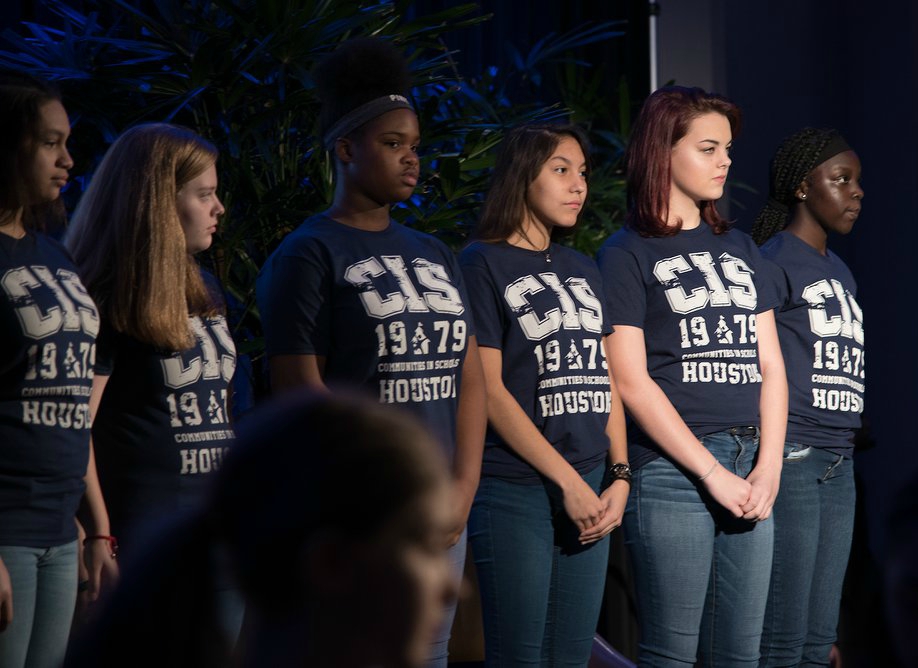 Purposeful Engagement: The morning of day two opened with a choral performance and poem from local Houston students who inspired the crowd with their incredible talents. We often forget in the day-to-day grind of convening partners, crunching numbers and working to change adult behaviors that this work is ultimately about supporting students to reach their full potential. Engaging students and families in the process of improvement and empowering their creativity, knowledge and expertise will only accelerate our collective efforts nationally and locally, and ensure the kind of harmonious collaboration we saw these talented students model in Houston.
Actionable data: If I were to channel my inner Jeff Edmondson (StriveTogether’s founder and former managing director), the actionable data principle might feature the image of an annotated run chart. Numerous examples were shared on stage of how providing real-time actionable data is driving impact on a variety of outcomes across the country. Whether you’re talking about a partnership between Communities in Schools and Seeding Success (Shelby County, TN) to reduce chronic absenteeism by more than 20 percent, or the Baltimore Promise team sharing key insights on the development of its integrated data system, there is no doubt that providing actionable data to those on the ground doing the hard work of making change is leading to better, more equitable results for kids all over the country. Our national partnership with Coalition for Community Schools and Communities In Schools has the opportunity to ensure this work continues and is strengthened to ensure that we have the actionable data to support every child cradle to career.
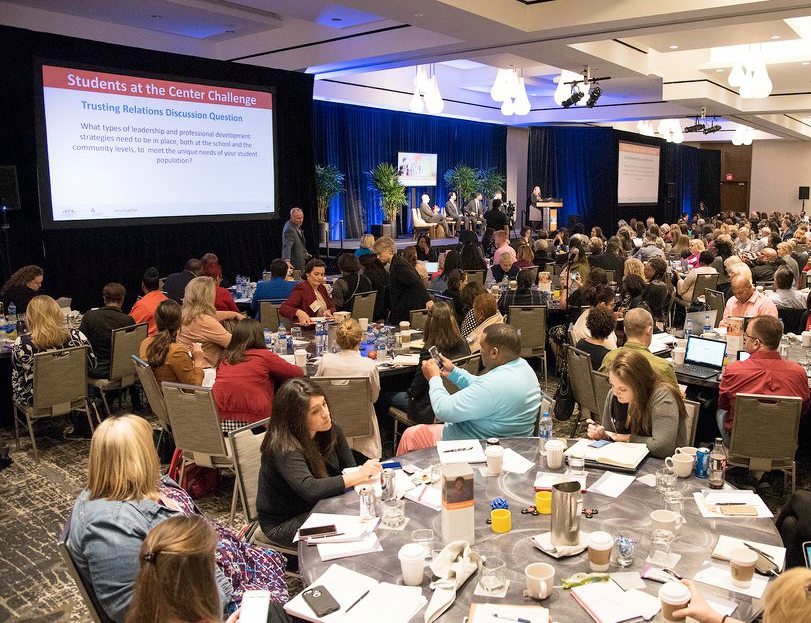 Shared accountability: “There are no such things as broken systems … all systems are perfectly designed to get the results they produce.” This is a line often heard in the social sector as we work to change systems to produce better, more equitable results for children and families. How can we move from the traditional view of the educational “system” — focusing on the traditional schoolhouse/school district approach — to a learning ecosystem that coordinates and aligns supports along the cradle-to-career continuum for every child’s success. To change outcomes in the ways that we desire requires recognition that our systems aren’t broken. They ARE in fact perfectly designed to get the results that they get. The partnership among the Coalition for Community Schools, Community In Schools and StriveTogether is recognition that we must realign our systems and resources to put students at the center of our collective efforts.
One of my main takeaways from the February convening is that often the journey is just as important as the destination. Seeing the discussions that happened in the hallways, over dinner and even at the karaoke bar down the street brought fresh energy and perspective to this work and powerful opportunities to think differently about how community partners can come together for student-centered learning.
At StriveTogether, we often close our meetings with one-word “checkouts” for how individuals are leaving our meetings. My mantra for these checkouts for the past year has been “urgent,” and I’ve felt that urgency every morning in that reflective time thinking about those 10 million kids. In Houston, for perhaps the first time in a long time, I’d add a second word to my sense of the world … urgent as ever, but for the first time in a long time, I’m cautiously optimistic about the state of the world in the years ahead. Many thanks to all the participants in Houston for that gift!
The post Working together across national networks for student-centered learning appeared first on StriveTogether.
]]>