The post Key factors for success in collective impact appeared first on StriveTogether.
]]>The post SXSW EDU: David Brooks on the power of collective impact appeared first on StriveTogether.
]]>The post frank 2019: Closing the space between us through stories for social impact appeared first on StriveTogether.
]]>“You don’t need permission to make space.”
These powerful words by a young woman named Mary-Pat Hector set the stage for three days of community and creativity at frank 2019 in Gainesville, Fla. I’m still feeling inspired and invigorated by the gathering earlier this month, when I was in the company of 300 movement builders and change makers from around the world.
frank is not your typical conference. It’s named in honor of the late Frank Karel, who led communication for the Robert Wood Johnson and Rockefeller foundations. The idea behind frank is simple: Create a community of mission-minded, passionate people who use communication and evidence-based strategies to drive positive social, institutional and behavioral change. This annual event, which draws a mix of writers, researchers, activists and artists, features short speeches, storytelling, comedy, art, live music and more on and around the University of Florida campus.
I attended frank to learn more about the science behind storytelling — and to get a refresher course on best practices. What I hadn’t expected were the lessons about the power of comedy and pop culture in bridging differences and changing hearts and minds. Here are two that stood out:
- Give yourself the freedom to be silly. The work of getting better outcomes for kids is hard and messy and complex. We need to know it’s OK to bring brevity into the workplace. We should also explore ways to incorporate this in our communications. Tragedy is not the only way to inspire people to act — comedy can be very persuasive. And bringing joy and laughter to communities also recognizes their humanity.
- Get rid of the individual hero’s journey. No one can change the world singlehandedly. So why do we keep telling the story of a lone hero? Let’s share the journey of the world, with ordinary people who have the power to create extraordinary change. You see the effectiveness of this approach in the Black Panther film and the Harry Potter books and movies. The best world building allows you to be a citizen of the new world.
Here are five more insights I gained at frank 2019 about using stories to move people to action:
There’s a science to the art of storytelling. I learned three key aspects of this science at the gathering. First, telling stories using well-known plots (rags to riches, the quest, rebirth, etc.) can make the new familiar and the familiar new. Secondly, use emotions with intention. Instead of relying only on fear or sadness, invoke awe or pride or appeal to parental love. Thirdly, be strategic about what details you reveal and when — and leave room for your audience to fill in some blanks. That gives the audience space to connect the story to their own experiences. The most powerful part of your story may be what’s not said.
Effective communication is not about pushing your own message. Bring value to your community by entering their world. What problem are you trying to solve? Who is best positioned to help you solve that problem? Are you connecting with what your community cares about most? In one amazing example, learn how a campaign by one of Brazil’s biggest football clubs to encourage organ donation among its fans has led to a massive rise in the number of life-changing transplants.
Talk in pictures. This doesn’t mean hiring an expensive photographer or videographer. Paint pictures with your words. Use concrete, vivid language. Every single word matters when you are constructing experiences and making memories. A powerful example is Martin Luther King Jr.’s iconic “I Have a Dream” speech. He uses powerful images and metaphors — from “the red hills of Georgia” to “a state sweltering with the heat of injustice” — to help people get the complex issues he’s conveying and to connect people with his ideas on an emotional level.
Connect your call to action to a result. We’ve all been guilty of weak calls to action, like “get more information,” “sign up,” “follow us on Facebook” or “share this on Twitter.” A call to action must be concrete and specific. People need to see how their action works to solve the problem. And they need to know how to do it. Keep in mind goals and calls to action are not the same. The goal of the Montgomery Bus Boycott was desegregation, but the call to action was, “Don’t take the bus” — something that was tangible and easy for people to understand.
Make sure your stories are actually stories. Stories are one of the most powerful ways we have to communicate with each other. Every social movement starts with a story. Science shows memories attach to stories and stories can create lasting change in our brains. Stories are not messages or vignettes. They have a beginning, a middle and an end. They have characters, settings and dialogue. Stories increase empathy and trust, and help us understand the abstract problems we are trying to solve.
At StriveTogether, we have a history of celebrating great quotes. With so many wonderful speakers at the frank gathering, it’s hard to choose just a few to share, but I hope these words inspire and invigorate you as much as they did me.
“How we win is as important as what we win.”
“The podium is better fashioned as a dance floor.”
“Put data in the hands of people who need it the most.”
“Never be silent in the face of injustice.”
The post frank 2019: Closing the space between us through stories for social impact appeared first on StriveTogether.
]]>The post Networks and American renewal appeared first on StriveTogether.
]]>The post Networks and American renewal appeared first on StriveTogether.
]]>The post Three key insights from Racial Equity Summit by Grantmakers for Education appeared first on StriveTogether.
]]>Such was the parable shared by Deborah Santiago of Excelencia of Education as she recounted a conversation with a friend about how to frame inequity as systemic. Instead of simply treating the symptoms of inequity, we need to change the structural forces that perpetuate it.
Santiago was one of many expert speakers at a regional summit on racial equity held last month by Grantmakers for Education in Washington, D.C. The summit was filled with people from many of our country’s top grant-making institutions. And despite the racial diversity at the summit — a scenario that would not have been possible in previous decades — more work needs to be done to reach grassroots organizations that might not have access to a room like that. Diversity alone doesn’t get to power issues without equity and inclusion.
At StriveTogether, we believe improving education and upward mobility in the U.S. requires closing gaps and transforming the multitude of systems that shape opportunity for every child. In other words, we are working to find out who’s throwing babies in the water. Those of us working to make measurable differences in the lives of students and families — to ultimately create a better, more equitable world — also need to agree on a common vision of what that looks like. To Michelle Molitor of The Equity Lab, the summit’s moderator, equity is about all lives having value and therefore investing in everyone.
With that goal in mind, here are three other key takeaways from the summit:
- Understand the difference between equality and equity. Equity is about ensuring fairness in a world where not everyone has the same privileges. We need to stop using the term equity if we are not willing to give oppressed people more money and resources. Equity is also about listening and learning, and not always valuing academic knowledge over lived experience. In the same room, a person of color and a white person can say the same thing, but only one voice is heard. Equity in this country means absolutely including Native American and Native Alaskan people.
- Don’t just engage the community — empower the community. How do we give marginalized groups more control over their own destiny? Most foundations and nonprofits are run by white male leaders. Those with power and privilege must hold space for other voices and ideas to be heard. For people of color, education is crucial to exercising their freedom, said Dr. Howard Fuller of Marquette University. If we truly believe in the freedom of people of color, at what point does the transfer of power take place?
- Acknowledge there are contradictions in our work. Policies supported by community leaders and philanthropists may enable them to do good but also may cause harm. For instance, organizations often try to figure out ways to pay fewer taxes, and fewer taxes means fewer resources for society. Another example: We also need to empower the people who already live and work in the communities we are trying to help. Otherwise, we are perpetuating inequities if we divert funds from communities of color because local groups lack “capacity.”
The stakes are high, but so are the opportunities. Across the StriveTogether Cradle to Career Network, we can look at how school districts and organizations are using resources to address inequities in their community. We also can investigate whether communities are spending more annually per student in affluent neighborhoods and, if so, what we can do to bridge that gap.
I’ll end this blog post with four questions posed during the summit:
- Why are you doing this work?
- How does it serve you and your personal growth?
- How does it serve the needs of others?
- In what ways do you interact with the people you are trying to serve and what can you do to have more authentic connections?
An effective plan for real change begins with an understanding of the current landscape. Give some thought about where you are today, so you can map out where you should go tomorrow. Feel free to leave comments below.
The post Three key insights from Racial Equity Summit by Grantmakers for Education appeared first on StriveTogether.
]]>The post Be the Change: Highlights from the 2017 Cradle to Career Network Convening appeared first on StriveTogether.
]]>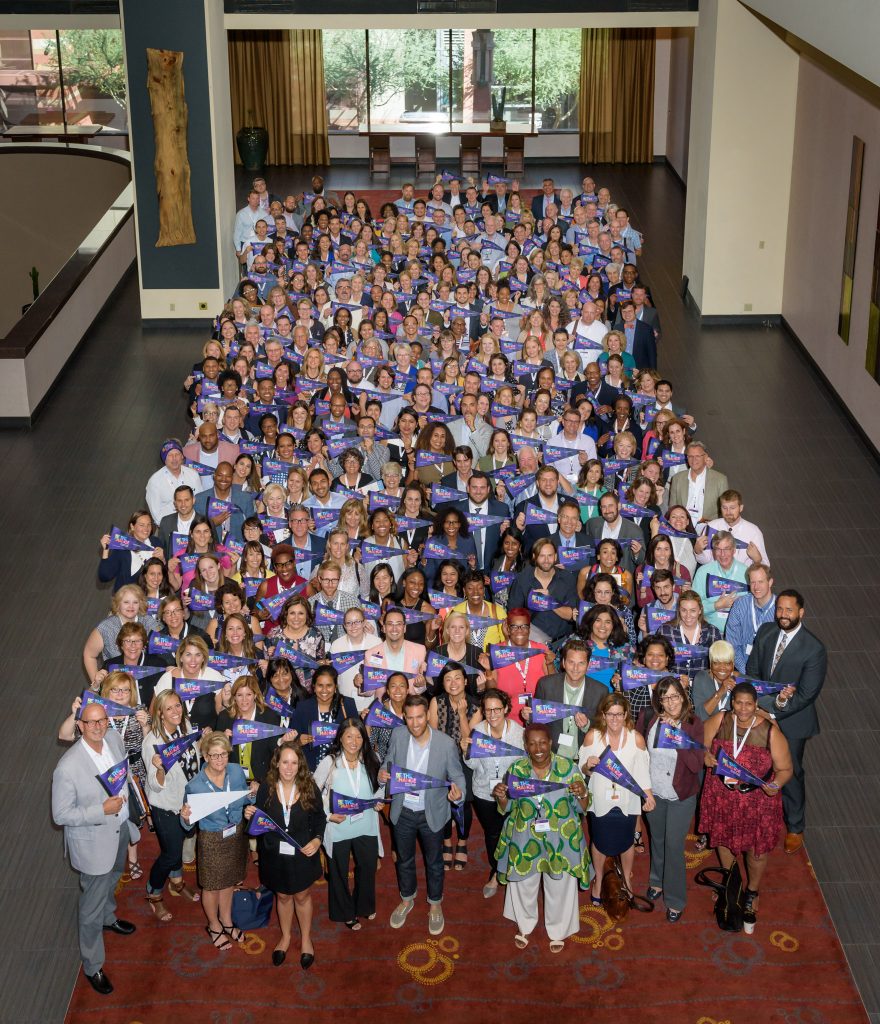
Amid sharing and learning from each other during 2 ½ days of workshop, plenaries and other fun activities, StriveTogether made some exciting announcements that validate the complex and challenging work of ensuring the success of every child, from cradle to career.
- The Commit Partnership is our second Proof Point community. What this really means is that two Cradle to Career Network communities — Dallas County and Cincinnati/Northern Kentucky — are changing systems and seeing 60 percent of their success indicators improving or being maintained year after year. We are one step closer to reaching five Proof Points in 2018! We hope to share more good news and stories as other communities change systems and improve outcomes. Read our blog here about Commit.
- We have adopted a new strategic plan to guide our work for the next five years that has garnered a major investment from Ballmer Group. We are in the early stages of determining how the community challenge fund will work, and we will keep you updated throughout the process. You can read more details about the plan in our press release. If you’re a member of the Cradle to Career Network, you can visit the Partner Portal and access our communications toolkit.
- Let’s congratulate John Stockwell again for winning the 2017 Cradle to Career Champion Award. Stockwell is executive director of Spartanburg Academic Movement, which was one of the first community partnerships in the Network to frame its strategic plan around our nationally recognized approach.
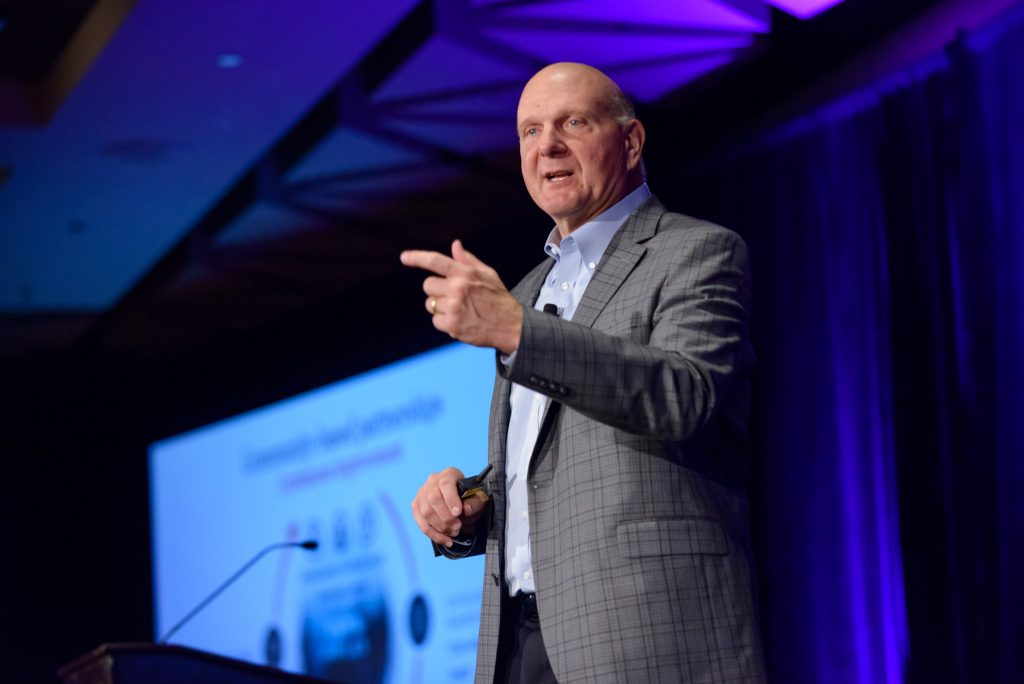
From former Microsoft CEO and current Ballmer Group Co-founder Steve Ballmer to PolicyLink President Michael McAfee, we had so many fantastic speakers and presenters during our plenaries and workshops. Many of them spoke about the importance of using local data to inform action, engage the community and improve equitable outcomes.
During our national event, we also acknowledged that we absolutely must be explicit about equity. We need to concentrate on helping children of color and low-income children — and to be clear in our communications that this is our focus. As Michael McAfee said during the closing plenary: “Equity is not a side thing — it IS the work!”
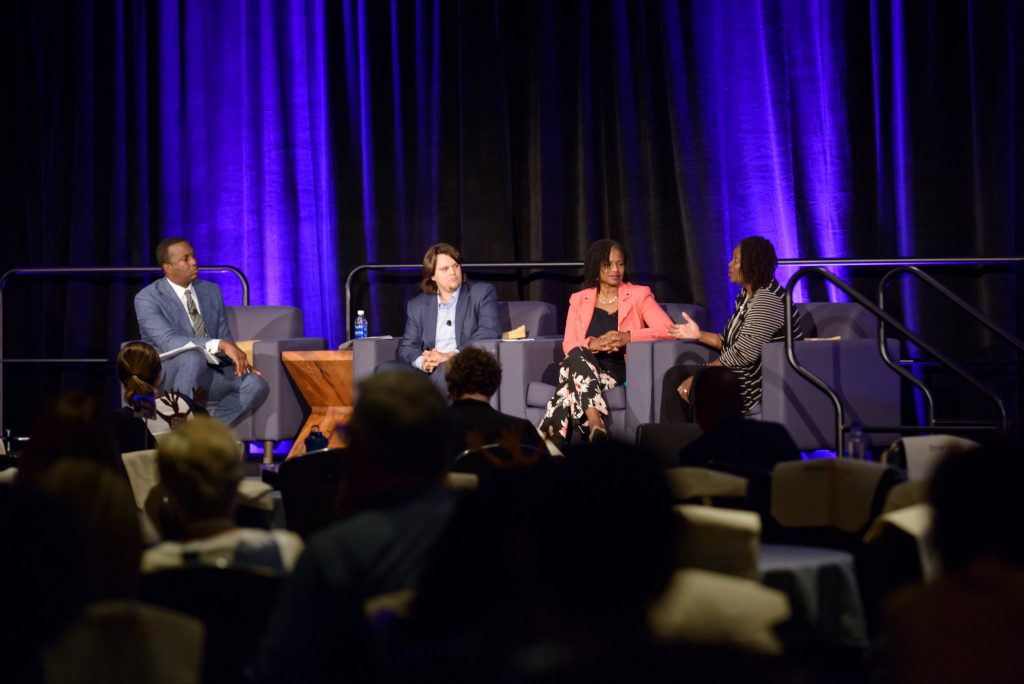
(From left) Michael McAfee of PolicyLink, Munneer Karcher-Ramos of Promise Neighborhood, Sondra Samuels of Northside Achievement Zone and Michelle Walker of Generation Next at the closing plenary.
A number of other key insights emerged for me from the amazing lineup of plenary speakers we had at this year’s Convening.
- Be unequivocal about race. Multiple plenary speakers urged us to be clear that we mean race when we say equity. We need to have honest and tough talks around race, class and culture in our community — and with each other — to dismantle structural racism and help our most vulnerable students. As Michelle Walker of Generation Next said: “If you don’t call out race, you’re not going to change policies and practices. Equity can mean a lot of things if you’re trying to hide from race.”
- Commit to policy work. We can’t be complacent with broken systems. What matters in this work is population-level results. We must work with policymakers and advocate for the changes needed in communities to break down structural barriers, advance equity and spread effective practices. As Mark Sturgis of Seeding Success said: “We need to address disparities. If we don’t do something, a system built on slavery will continue to get the result it is designed to get.”
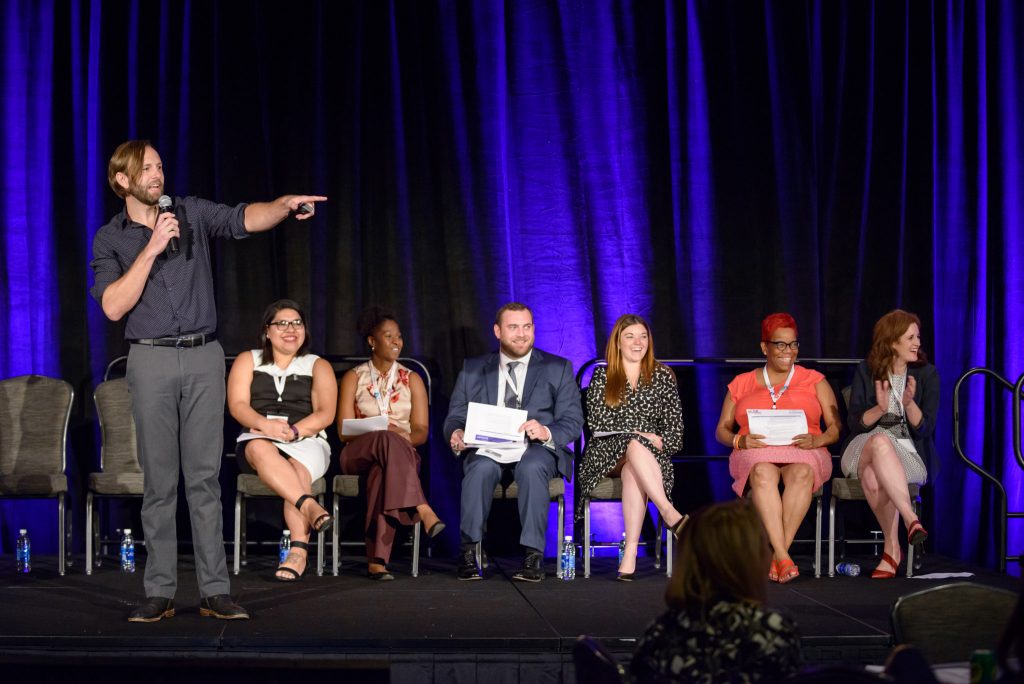
Mark Sturgis of Seeding Success during the plenary on the strategic plan with partners and members of the Cradle to Career Network.
- Invest in capacity and capability. This work requires investment in capacity and capability at multiple levels, yet both remain under-resourced in nearly every community. Both figure heavily as core capacities and strategies in our new strategic plan. We encourage Network members to take advantage of leadership development opportunities coming up. Make sure to keep reading News You Can Use for updates!
- Simplify the message. As Steve Ballmer said while on stage at the opening plenary, we have to eliminate jargon and “get the narrative right.” One of the core components of our approach is a shared community vision. How can we achieve that if people don’t understand what we’re saying? Clear communication is never a one-time solution; it’s an ongoing process. We need to stop trying to sound so smart and start simplifying our messaging!
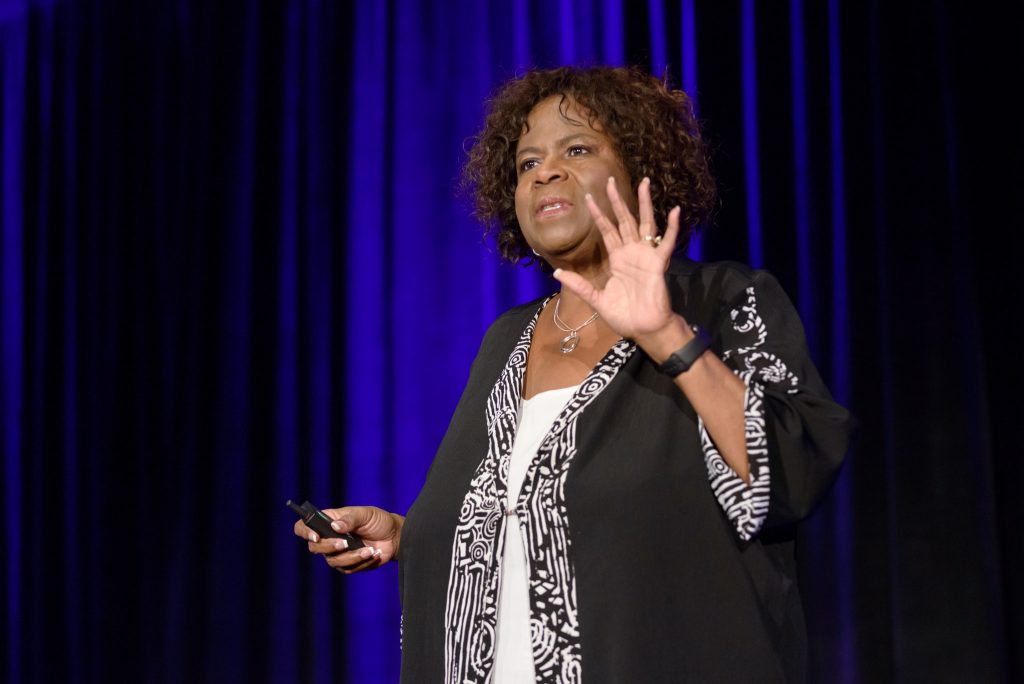
Carla Santorno, superintendent of Tacoma Public Schools, shares a story of impact during the Being the Change plenary. She spoke as a partner of Graduate Tacoma.
We can continue to accelerate progress and sustain success if we internalize these insights and use them to inform our behavior. As we’ve said before, insights must lead to action for true impact. I’d also love to hear your thoughts about what resonated most with you, so leave comments below and let’s get a discussion going!
As an organization, StriveTogether is committed to building on the momentum from this event. We want to maintain and strengthen the connections made among Cradle to Career Network members, and to further share out the tools and lessons that are accelerating progress in communities. Over the next year, we will offer more opportunities for us to work and learn together — faster.
The time we spent together in Phoenix last week was deeply insightful and inspiring. Thanks to everyone who was able to come. Your dedication to the success of every child is what keeps moving this work forward. As we look ahead to what remains to be done, think about what contribution you can make in your community — no matter your role — to get better results for kids and families.
The post Be the Change: Highlights from the 2017 Cradle to Career Network Convening appeared first on StriveTogether.
]]>The post Where are they now? StriveTogether catches up with past Bill Henningsgaard Cradle to Career Champion Award winners appeared first on StriveTogether.
]]>A tireless advocate for kids, Bill Henningsgaard brought together partners with a common vision for helping every child in his community succeed through Eastside Pathways, a cradle-to-career partnership in Bellevue, Washington. Eastside Pathways was one of the first members of the Cradle to Career Network and Bill was known for being a consistent voice, thoughtful contributor and critical friend from the beginning.
StriveTogether established this award to honor his legacy after he and his son, Max, died in an airplane accident in 2013. The award is given to an individual involved in a Cradle to Career Network community who embodies the passion, commitment and persistence modeled by Bill every day in his local work and in the broader collective impact field.
Mary Jean Ryan, the Road Map Project’s executive director, says the example set by Bill remains a daily inspiration. She received the award in 2013.

Mary Jean Ryan
“I realize how lucky I am to be able to do the work I do and contribute to my community,” Mary Jean said. “Bill was a very generous person — a great giver. His death was untimely and particularly tragic — in part because he had so much more to give. It is our giving that defines our lives. If I start to feel a little tired or worn down by the endless pushing against the status quo, I think of Bill and summon renewed energy for our collective crusade for a better future for children.”
In honor of the fifth year — and fifth recognized champion in this work — we wanted to reintroduce you to our past winners and share their stories as they work tirelessly to improve outcomes for every child, cradle to career.
Dan Ryan, 2014 Champion Award winner and All Hands Raised CEO
What accomplishment have you seen in your community that you are most proud of since receiving the Cradle to Career Champion award?
As a community, we have focused more closely on reducing the disparities that exist in suspensions and expulsions across the county, and over the course of the past five years have made progress on improving the systems that impact our students — our partner districts all have adopted equity policies and discipline incidents were reduced. Over the last year, we have focused at the school community site level to find those practices that most directly correlate with increased engagement and a subsequent decrease in referrals. And, the practices look promising: at one partner school, behavior referrals are down 46 percent as a result of this work, and at another partner school, referrals for boys of color are down 46 percent compared to last year.
Dan Ryan (left)
How do you embody the mantra “be the change” to achieve results for kids in your community?
All Hands Raised staff members walk the talk: as a group we are adaptive, agile and culturally responsive. This is necessary to deliver over $1.5 million in pro bono services to our seven partner school districts and engaged community partners. The integration of Results Count into the work allows us to be confident in the “be the change” stance.
Why do you believe it is important to recognize champions for change in this work?
It is critical to share the work. All Hands Raised has the gift of partnering with school and community organizations to tell stories — stories of impact, stories of lessons learned and stories of hope — that reveal champions who deserve recognition and are often unseen. It is an honor and a responsibility to serve this role in the community.
If you had to share a few words of wisdom for folks working to change systems to eliminate disparities and improve outcomes for every child, what would they be?
Be confident and calm to hold the space for uncomfortable dialogue. Keep kids at the center of everything you do, especially this. Allow the data to frame the dialogue, yet allow the personal stories to build the trust that will actually change the systems. Listen, listen and then listen some more.
Greg Landsman, 2015 Champion Award winner, The 767 Group CEO and former StrivePartnership executive director
What accomplishment have you seen in your community that you are most proud of since receiving the Cradle to Career Champion award?
In November 2016, we passed the Cincinnati Preschool Promise, one of the largest expansions in quality preschool in the country. This effort, which will provide two years of quality preschool for Cincinnati’s children, was part of a larger effort to provide much needed funding for our schools as well. Voters approved the measure with the largest margin of victory of any education levy in Cincinnati’s history. This was a major “cradle-to-career” policy change.
StrivePartnership is also very close to securing Ohio’s first ever Pay for Success investment as part of our early literacy venture philanthropy fund, Every Child Capital.
Greg Landsman
How do you embody the mantra “be the change” to achieve results for kids in your community?
I helped to lead the Cincinnati Preschool Promise and Every Child Capital, both of which provide systemic change on behalf of children, particularly those who have been left out and behind.
Why do you believe it is important to recognize champions for change in this work?
To inspire others to appreciate the enormous power they too have in leading change.
If you had to share a few words of wisdom for folks working to change systems to eliminate disparities and improve outcomes for every child, what would they be?
Have big ideas and the perseverance to get them done, no matter the obstacles.
Scott and Anne Jones, 2016 Champion Award winners and Every Hand Joined supporters
What accomplishment have you seen in your community that you are most proud of since receiving the Cradle to Career Champion award?
Every Hand Joined’s data manager has now been on staff for a year. There is a marked difference in the work of our networks (action teams) and in the analysis of their decision-making by having access to a deeper level of data. One example is that data collected from kindergarten readiness instrument demonstrated the importance of preschool, regular attendance and going for two years. Another example: The Math Network is reevaluating the delivery of its early numeracy kits to all families of kids in preschool based on data that pointed to the need to rethink how to train parents in using the kits. Also, the Every Hand Joined Network is working on social/emotional development and it has captured the attention of the middle school principals, counselors and teachers. They now implement a Search Institute survey called REACH and build strategies for linking kids to after-school programs and mentors based on the kids’ “Spark.”

Anne Jones

Scott Jones
How do you embody the mantra “be the change” to achieve results for kids in your community?
Strong partnerships with the co-leaders of our networks. Each network has an Every Hand Joined facilitator and two leaders — one from the school district and one from community. Together they represent different perspectives and can impact others.
Data presented in a user-friendly manner is more convincing than assumptions and helps get the attention of the non-believers.
Every Hand Joined is doing a more effective job of communicating its successes as a result of working with partners throughout the community. More people are open to ideas if they understand the impact — ideas that show measurable progress rather than mandating change.
Why do you believe it is important to recognize champions for change in this work?
It is particularly helpful if the champions represent diversity in your community. Smaller communities need to know “everyone” can be a champion. Too often it is the same people who get recognized.
If you had to share a few words of wisdom for folks working to change systems to eliminate disparities and improve outcomes for every child, what would they be?
As frustrating as it is when it seems that everyone is on a different page and holding to what worked for them, be patient. The only changes that stick are those that are supported by a broad base of people who will be affected by the change.
Know someone at or involved with your local cradle-to-career partnership who displays exceptional leadership, vision and commitment to ensuring that every child is supported in his or her educational journey, from cradle to career? Visit the Partner Portal now to learn more about the nomination criteria before the August 18 deadline. This year’s award recipient will receive a professional development stipend and will be recognized during a special presentation at the 2017 Cradle to Career Network Convening October 3-5 in Phoenix, Arizona.
The post Where are they now? StriveTogether catches up with past Bill Henningsgaard Cradle to Career Champion Award winners appeared first on StriveTogether.
]]>The post 7 tips to ensure your storytelling moves people to action appeared first on StriveTogether.
]]>Here are seven tips for effective storytelling:
- Always start with a purpose. In most cases, we are storytelling for advocacy — we are telling the story in the hope of getting some kind of reaction or action. Identify your overall goal and know your audience.
- Experiment with different formats. Your story can be written or oral; it can be a video, infographic or a Q&A piece.
- Invest in some good photography. A great story can be told by a dramatic or evocative image, a strong headline and a clear call to action. Ninety percent of information we’re processing at any moment is visual.
- Keep your message short and simple. Use a fourth-grade level vocabulary and edit until you’ve omitted all jargon. Make your story easy and quick to share.
- Realize storytelling is about people, not just numbers. Deliver emotional content with a purpose. Highlight a real person going through a real thing.
- Make it memorable. Fact sheets on their own aren’t memorable. Tell a story where you solved a problem or where real people are being affected by what’s going on.
- Let everyone participate. Build a culture of storytelling in the workplace. It’s everyone’s job. Encourage people to tell stories in their own words so you have different voices.
Although the best stories often can be generated by a writer on staff, there are still times to turn to the media to raise visibility for an announcement, event or issue. Organizations often believe they need to safeguard their brand by only focusing on the positive. They usually contact a reporter once they’ve had a big win. But you’re more likely to land coverage if you are upfront and honest about your successes and struggles — at the time you are facing them. Reporters value results, but they love telling process stories.
Here are six tips for media coverage:
- Know what they’re saying about you. Use a media monitoring service. If you can’t afford a service like Cision or Meltwater, sign up for Google alerts.
- Go where the reporters are. Sign up for HARO (help a reporter out), a daily email that helps reporters find sources for stories they already are working on.
- Get smart on social media. Follow your favorite reporters on Twitter and retweet them when it makes sense. Start building a relationship — well before you make your first request for coverage.
- Build your own newsroom. Post your press releases on your website. When a journalist visits your site, this provides them with background information on you that they like to have before reaching out.
- Be your own reporter. Take photos and videos. Post online immediately. Or stream to Facebook Live.
- Repurpose content. Turn that failed op ed into a video script for Facebook Live. Post your own stories on Huffington Post or Medium.
So the next time you and your communications staff meet, remember there’s more than one way to tell a story. Try different formats and venues for pushing out your content, and measure the responses and results you get, whether that’s visits to your website, clicks in your newsletter or comments from community members.
Achieving a shared community vision — one of the four pillars of the StriveTogether approach — requires frequent and consistent communications, and storytelling and media coverage remain among the best ways to highlight the work in your community.
The post 7 tips to ensure your storytelling moves people to action appeared first on StriveTogether.
]]>The post 7 ways to improve your campaign message and more lessons, tools from The Campaign Workshop appeared first on StriveTogether.
]]>Along with another colleague, Robert Harris, I learned more about the many elements of advocacy, like lobbying and fundraising, but regardless of topic, we constantly heard about the importance of communications and messaging.
Advocacy campaigns require developing a strong, consistent message for your target audience(s). Every communication you send out needs a clear call to action. And all communications should be strategic and not spontaneous, whether you plan your outreach using a calendar in Outlook or a timeline in an Excel spreadsheet.
If I had to boil down those lessons to three key components, they would be:
- A strong, consistent message
- A clear call to action
- A communications calendar
We learned about the 7 Cs of a Good Campaign Message, the message box tool and some other cool tools to help you in your work, whether you’re doing advocacy or trying to improve the effectiveness of your communications and messaging.
The 7 Cs of A Good Campaign Message
As an English major and lover of literary devices, I appreciate any way of thinking that can be made memorable through alliteration! The 7 Cs to consider are:
- Clear
- Concise
- Contrastive
- Connective
- Creative
- Coordinated
- Consistent
Clear. We need to cut the jargon. Every field has its own lingo, but in our work, community engagement is crucial. Jargon is confusing and exclusionary. We may not always agree on what constitutes jargon, but when in doubt, use simpler terms. Have you ever heard anyone complain about something being too easy to grasp?
Concise. With so much competition for people’s attention, brevity is critical. When you’re working on messaging, start with a statement that’s only 12 words and edit it down to eight words or fewer. Why so short? Legislators, for example, want to be able to explain bills to their constituents using very few words.
Contrastive. Think about ways to stand out from the crowd in a world where noise is everywhere. Make sure you convey how what you’re doing is unique from other organizations and their campaigns.
Connective. Because our work is steeped in data, we tend to tell stories through numbers. But in topline messaging, we need to connect our work to real people. We respond to the plight of individual humans more than faceless numbers.
Creative. Flex those creative muscles in making your message memorable. If you have a wordsmith on staff, take advantage of that skill to achieve language — and it is an achievement! — that is snappy and compelling. And don’t forget the power of imagery, whether graphics or photos.
Coordinated. Outside of a communications calendar, you want people working together toward the collective goal and not an individual one. Connect your message and theme to everything you do, and make sure everyone is on the same page before campaign launch.
Consistent. Bring everyone together in the same room to determine the core message and get consensus before they leave. Ensuring consistency throughout the campaign doesn’t magically happen. Even after you train everyone on the messaging, someone has to play the role of a communications leader who keeps an eye on these efforts and knows what to do when a team member goes rogue.
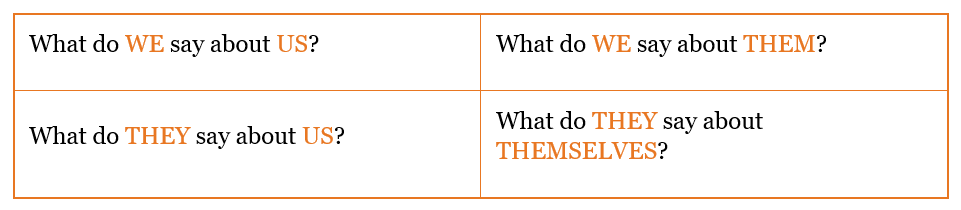
The message box
The message box is a great group activity to lay out all the dialogue surrounding an issue and to carve out your message from all that information. Identify the audience you’re trying to influence and fill out each section of the box with multiple answers. Then, comb through what you’ve come up with to help focus and refine your messaging.
Cool tools
Throughout the training, The Campaign Workshop shared online tools and resources. Some of my favorite cool tools are:
- Canva – good for custom graphics for those without designer experience
- Grammarly – described as grammar on steroids
- Hemingway Editor – described as readability on steroids
- MentionMapp – tracking tool for Twitter
- Word Swag – good for adding text onto photos
I’ll be sharing a few more lessons learned during the advocacy training around media relations and storytelling in later posts. Communicating clearly and concisely about our work is an ongoing challenge, but I know communities across the Cradle to Career Network are having wins in this area. I’d love to hear about yours in the comment space below!
The post 7 ways to improve your campaign message and more lessons, tools from The Campaign Workshop appeared first on StriveTogether.
]]>