The post Thrive Chicago earns national designation for youth-centered work appeared first on StriveTogether.
]]>Here are a few examples of how Thrive Chicago has partnered across the city to change systems:
Supporting youth to connect to opportunities
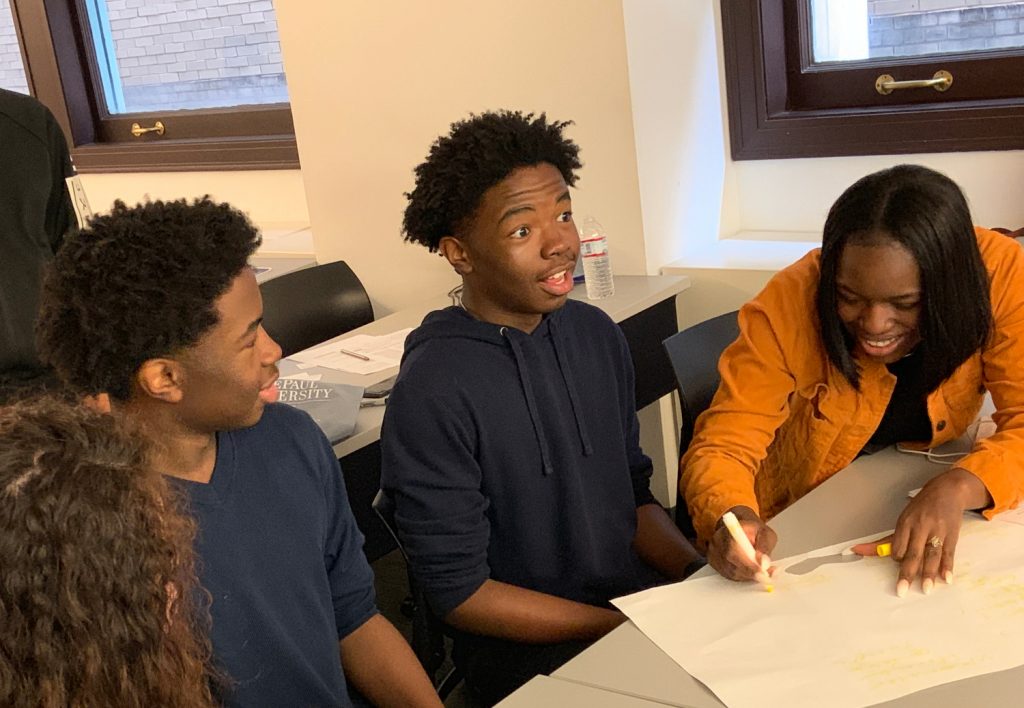 Thrive uses collective impact to unite partners around supporting youth aged 16-24 who are disconnected from work and school, called opportunity youth.
- Thrive convenes the Opportunity Youth Working Group, which used data to shift the City of Chicago’s understanding of opportunity youth. While the public narrative often associates opportunity youth with violence and men of color with low levels of education, data showed that the majority of Chicago’s opportunity youth have their high school diplomas, and 48% are female.
- This data analysis helped city leaders and practitioners develop recommendations for action, created with input from opportunity youth. The recommendations spurred citywide change, including reallocation of funding, shifts in programming (e.g. programming for high school graduates and women) and a change in how providers and policy makers talk about opportunity youth.
- One recommendations launched neighborhood-based Reconnection Hubs, physical spaces designed to help young people navigate the resources they need to reconnect to the education and workforce systems. These Reconnection Hubs, led by Thrive’s direct service partners, have connected 300 opportunity youth to work or school. The City of Chicago’s Department of Family and Support Services initially invested $500,000 to launch the Hubs, which are supported by both public and private funding.
Setting high school graduates up for success
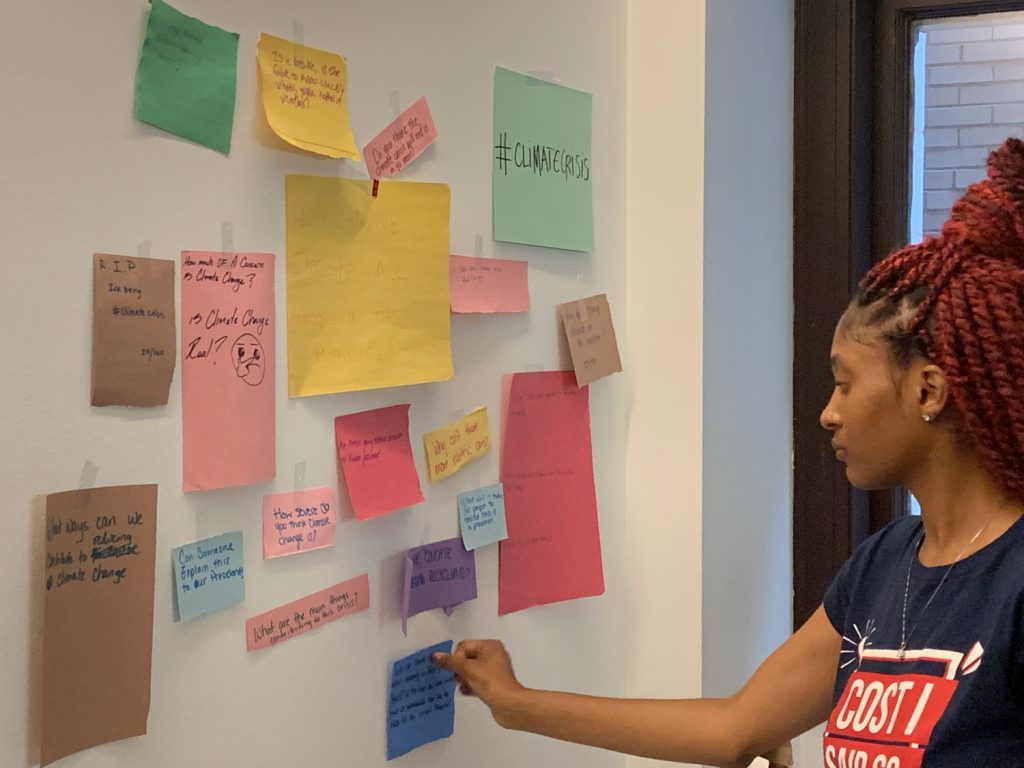 Thrive coordinates efforts to make sure that high school graduates who plan to start college have the support they need to get there.
- Every year, 5,000 high school graduates who intended to go to college do not actually enroll in college in the fall. This is called summer melt. In partnership with Chicago Public Schools and postsecondary support organizations, Thrive Chicago raised funding for and helped support a Summer Transition Coordinator strategy in 55 high schools that had the highest rates of summer melt. Coordinators helped college-bound students navigate hurdles that had the potential to prevent them from making it to their postsecondary institutions.
- After implementing the Summer Transition Coordinator strategy, 1,000 more students successfully started college. The strategy is now integrated into Chicago Public Schools’ broader postsecondary enrollment plan, with funding designated to support it.
In its work to support young people to succeed in school and beyond, Thrive Chicago has put youth at the center, working across the city to change systems. Congratulations to Thrive Chicago for reaching the proof point designation!
The post Thrive Chicago earns national designation for youth-centered work appeared first on StriveTogether.
]]>The post Boston Opportunity Agenda aligns the community for results appeared first on StriveTogether.
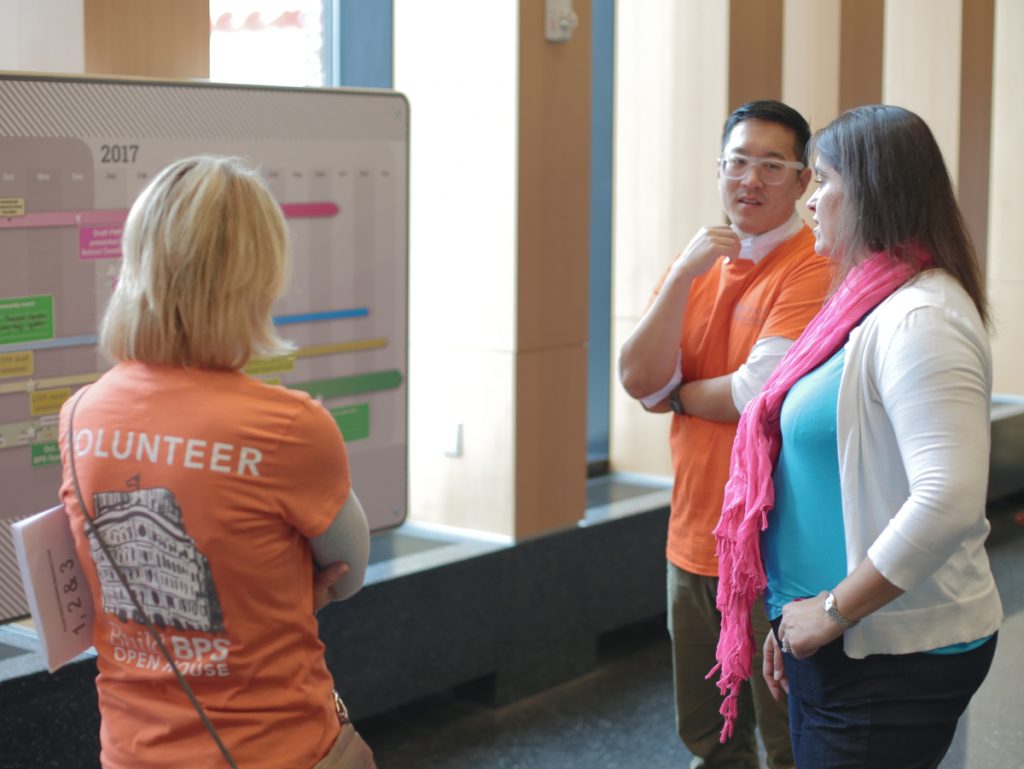
]]>Boston Opportunity Agenda supports community partners across Boston to change systems for youth. Now, the Cradle to Career Network member is one of 15 communities to reach an important milestone along the StriveTogether Theory of Action , earning the designation of proof point. Here are a few examples of how Boston Opportunity Agenda has influenced the way the system operates in Boston:
 Aligning on a shared vision
- With leaders from workforce development, education, philanthropy and more, Boston Opportunity Agenda developed a common definition of college, career and life readiness. Boston Public Schools is adopting the definition and is using it to make decisions, a constant even in leadership transition following a change in superintendents.
- Organizations across Boston are using the same set of measures and tools to improve outcomes for youth. The Summer Learning Community or Fifth Quarter collaborative began as a small set of funded organizations serving 232 youth but has grown in breadth and depth to a network of over 160 organizations serving over 14,000 young people.
Using data to create strategies
- Success Boston and the Summer Learning Community have seen population-level changes in their outcomes as a result of the improvements made using student-level data year over year. The work of Success Boston, the partnership’s postsecondary attainment collaborative action network, has resulted in increases in persistence, performance and progress as well as increasing the regional completion rate from 39% to 52%. These results were achieved while increasing the number of students completing high school and enrolling in postsecondary education.
- Boston After School and Beyond and Boston Public Schools developed a data sharing agreement for their collaboration, integrated with the academic school year system to allow the district and partners to track growth over the course of the entire calendar year.
- At Boston’s Bunker Hill Community College, data showed that Black and Latinx males had the lowest completion rates. The administration is now focusing on system changes to improve college completion and address that disparity. Partners are acting on this data as well. A coaching model being expanded through Boston’s Lumina Talent Hubs initiative now requires that young men of color comprise 40% of the coaching caseload. The Talent Hubs Initiative also set goals for the effort that are broken down by race.
Engaging the community
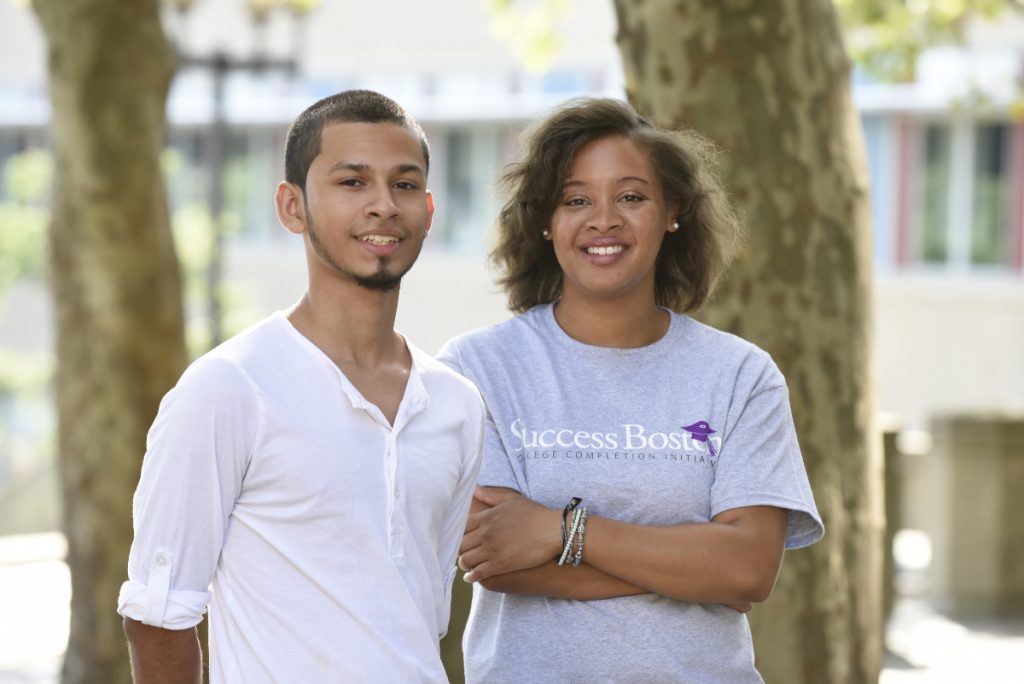
- There is a clear model for local collaboration in Boston. Every action network relies on youth and family voice. Some of the strategies employed by the partnership include family engagement committees with parents and parent coordinators, parent representation at leadership tables, employing youth to gather feedback from their peers, and a student advisory council that gathers feedback to strengthen policies and practices.
- Danubia Camargos Silva, a family engagement partner, shared, “When I first started engaging with Boston Opportunity Agenda, it meant a lot that the issues I raised as the only parent in the room were taken up by the partners. They went back and took a look at the things I said. They took it very seriously and I felt that I was heard. Today, three years later, I can see for the first time on the BOA report, family engagement is an indicator. That is big. They are shining a light on family engagement that was never there before.”
Investing in what works
Across Boston, public and private funding investments advance practices that work to improve outcomes for students.
- Boston Public Schools invested $3.2 million for the Fifth Quarter summer learning initiative.
- University of Massachusetts Boston and Bunker Hill Community College have implemented the navigation coaching pioneered by Success Boston, reaching all incoming freshmen.
- Funding from the Massachusetts Department of Housing and Community Development is expanding on the lessons learned from the Connection Center pilot, connecting youth with postsecondary education programs, workforce development and employment.
Boston Opportunity Agenda’s work shows how policies, relationships, resources and power structure can shift to support students and families of color and those in low-income households. StriveTogether is excited to celebrate the community’s milestone of achieving the proof point designation.
The post Boston Opportunity Agenda aligns the community for results appeared first on StriveTogether.
]]>The post Community commitment leads to impact in Northfield, Minn. appeared first on StriveTogether.
]]>.
Here are a few examples of how Northfield Promise is changing systems to support kids and families:
Aligning the community
When the partnership was formed, Northfield Promise engaged over 500 community members to choose 10 shared benchmarks to improve for students. Northfield Promise partners aligned their goals, structures and funding to support this work. Three of the largest local funding entities in Northfield — Northfield Area United Way, Northfield Shares and Women in Northfield Giving Support — have aligned their youth and education funding to directly support Northfield Promise. The partnership also has a close relationship with Northfield Public Schools, which provides space within school buildings for staff and key initiatives, shares student data to help partners make better decisions and participates in each Northfield Promise action team.
Collaboration for change has become the way of life in Northfield. “Before Northfield Promise, lots of great things were happening independently, but there was no intentional overlap. The shared community vision coordinates resources and creates intentionality for efforts to move in the same direction,” shared Matt Hillmann, superintendent of Northfield Public Schools.
Using data to inform action
Through its relationship with Northfield Public Schools, Northfield Promise has access to the district’s student information system and data reporting system, allowing partners to make data-driven decisions. To increase data support, Northfield Promise tested a one-year pilot program to increase the district’s director of assessment services role from part-time to full-time. Now, that position is a permanent full-time role funded through the district’s general fund. In addition to serving district staff, the director also provides community partners with data analysis and evaluation to help them test new strategies and work more effectively.
 The district and local organizations have created a culture of data use, which can reveal gaps that aren’t immediately apparent. When the Northfield Promise Reading Team looked at schools’ average reading scores, it seemed like students were on track. But after breaking down the data by different demographics, the team learned that low-income students and students of color were reading below proficiency. This realization prompted the school district to adopt a common reading curriculum to support all students in combination with the Move 5 Kids campaign, which focuses targeted reading supports for third-grade students who need them the most.
Empowering youth to make decisions
Local high school students are using their voice and building their leadership capability by serving as active board members through Northfield Promise’s Youth on Boards initiative. More than 85 seats are open on city, school district and nonprofit boards. On these boards, high school students are given an equal voice, votes and decision-making status to positively impact their community.
Youth voice is critical to creating solutions. Students in Northfield Public Schools shared that after-school and before school tutoring or activities were hard to attend, especially for students with responsibilities like caring for younger siblings or working. To address this barrier, the school district adopted a flex period in the middle of the day that provides time for students to meet with teachers, attend clubs and serve on boards.
“Listening to students and what they need for their own well-being allowed us to make changes that have an impact and have shifted the conversation from adults to students,” shares Mark Ensrud, guidance counselor at Northfield High School and co-chair of Northfield Promise’s Career & College Readiness Action Team.
StriveTogether congratulates Northfield Promise for reaching the Proof Point milestone. With strong community commitment and a focus on shared results, the Cradle to Career Network member is ready to meet more goals as it changes systems to better serve kids and families.
The post Community commitment leads to impact in Northfield, Minn. appeared first on StriveTogether.
]]>The post Our 2018 civic infrastructure assessment shows Cradle to Career Network’s strengths and opportunities appeared first on StriveTogether.
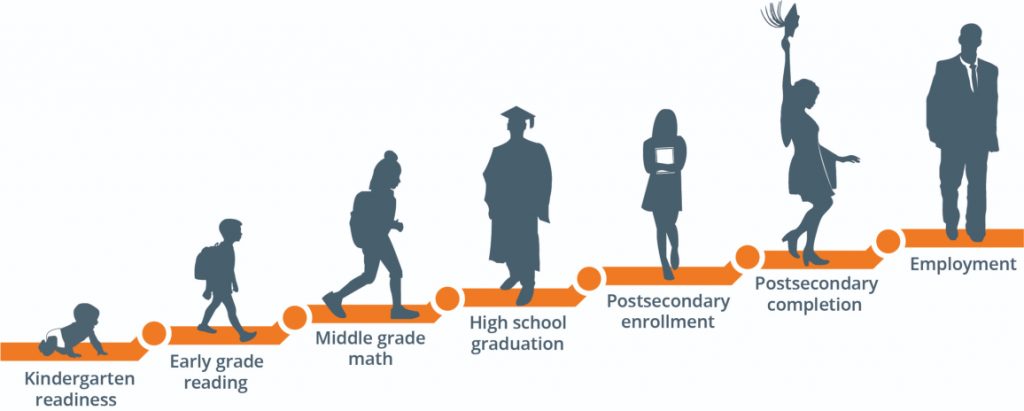
]]> is our proven blueprint for getting better results for kids and families in nearly 70 communities across the country. Through this framework, we help our partners define and measure what impact and progress means in this work.
Our commitment to helping our partners improve outcomes and advance equity has led us to conduct an annual assessment. During this process, we evaluate the work of our cradle-to-career partnerships in four areas:
- Shared community vision
- Evidence-based decision making
- Collaborative action
- Investment and sustainability
These are the four pillars of our Theory of Action. Success in these areas gives a good idea of how close communities are to building the civic infrastructure necessary to support every child from cradle to career. Our civic infrastructure assessment also collects partnership information and data for each of the seven outcome areas that form our cradle-to-career approach.
Over the past four months, we have been digging into lots of exciting data to understand more about the partnerships in our Cradle to Career Network. We especially want to know how to best support communities toward achieving our bold new goal of transforming the systems that surround our kids to serve them more effectively.
Here is what we have learned:
Network demographics
We now have a more accurate idea of the reach of our work — the StriveTogether Cradle to Career Network impacts more than 13 million children! And nearly 9 million are children of color, with most of the students (37%) in kindergarten through 12th grade being Latinx. That’s a vital piece of data for our work moving forward and validates our focus on centering equity in every aspect of our work.
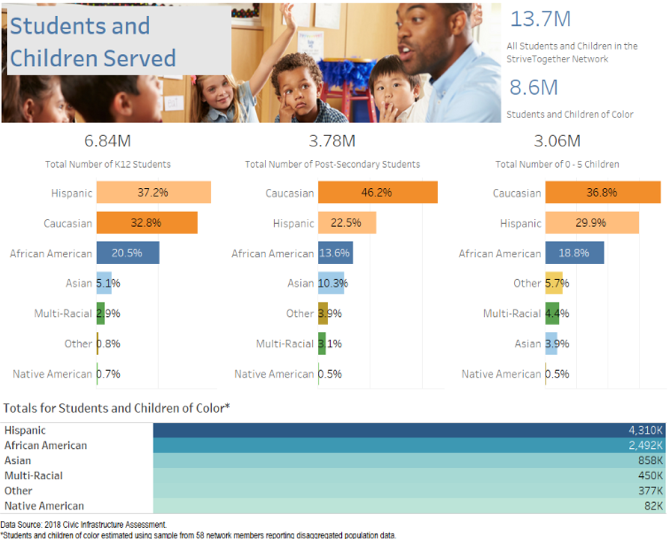
There are many takeaways from this information, but one that stands out to me is the need for targeted universalism. Our Network must have a positive impact on students with diverse identities, and one-size-fits all strategies will be less successful than those tailored to support the unique needs and interests of every student.
Outcomes data
I’m thrilled to share that 90% of the Cradle to Career Network provided multiple years of data for all students. And 60% of the network reported multiple years of data disaggregated by race for our seven cradle-to-career outcomes.
Nearly half of network members reporting disaggregated data for at least two years are seeing improvements for African American and/or Latinx students in at least one outcome area.
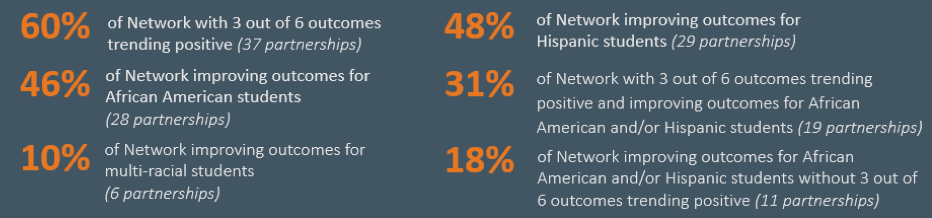
We still have room for improvement — we need stronger data to identify the best strategies to close gaps and get better results — but we were able to determine from the assessment that many network members are seeing outcomes improve for students in their communities over time. Even though we have a lot of hard work ahead of us, that’s truly something to celebrate!
Theory of Action progress
The civic infrastructure assessment shows how partnerships are progressing across the Theory of Action and what benchmarks they are meeting or missing. In 2018, partnerships in the Network met a total of 168 additional benchmarks — indicating significant progress over the past year!
The most met benchmarks involve communication, like informing the community of progress and communicating a consistent message across partners. As the Cradle to Career Network has matured, a focus on communication strategies and metrics has enabled partnerships to develop a stronger shared vision and community alignment.
Benchmarks related to data and continuous improvement are less likely to be met. Although both appear largely technical (e.g., databases, data-sharing agreements, continuous improvement processes, etc.), they require a great deal of trust and capacity — neither of which are built overnight. Check out two examples of how partnerships have built data capacity and continuous improvement capability.
These insights into opportunities for improvement allow us to develop support in the areas where partnerships need help the most. Feedback in the past has resulted in current new offerings, including the StriveTogether Equitable Results Programs, topic-based convenings, communities of practice and virtual supports.
Next steps
The 2018 civic infrastructure assessment produced the most robust data that StriveTogether has had about the Cradle to Career Network. With an advisory council of network members, we are determining ways in which this data can help us toward our bold goal of 24 communities in systems transformation by 2023. It gives us a picture of our network’s strengths and opportunities and helps us identify the support and resources we must provide in service of our 2023 goal.
We are thankful to network members for taking the time to complete the assessment, have learned a great deal about collecting this data and will work closely with partnerships to improve the process. Please leave a comment if you have ideas on how to improve the assessment!
The post Our 2018 civic infrastructure assessment shows Cradle to Career Network’s strengths and opportunities appeared first on StriveTogether.
]]>The post Partners across Salt Lake City reach goals for kids and families appeared first on StriveTogether.
]]>Here are a few examples of how Promise Partnership is changing systems to support students and families:
The partnership is designed to support change.
 The partnership’s organizational structure allows community members and organizational leaders to communicate and align on goals. Partners work to improve results while communicating with the Promise Partnership Regional Council, a regional-level council of leaders committed to changing systems to support students and families. Each group communicates with one another to test ideas, spread best practices and overcome barriers.
One example of this effective flow of communication was the Elementary Reading Network’s support of community schools to spread a successful practice. Data showed that integrating a 90-minute literacy block into enrichment-focused summer programs helped eliminate summer learning loss for students who attended 20 or more days of programming. After expanding this practice across schools and another district, the Elementary Reading Network shared challenges with the council. To address these obstacles, the council rallied support for public policy wins, like passing SB194 Early Literacy Amendments to address gaps in literacy interventions and align state programs and funding.
The partnership also has prioritized the authentic engagement of community members, building a culture of doing work side-by-side with the community. Jadee Talbot, associate director of Granite School District Community Centers, says community engagement is critical. “Data tells us ‘what’ but not the deep roots of the ‘why,’ ” he said. “As you start to know communities and families, you have a stronger place to start at addressing different issues.”
Promise Partnership works to ensure those who are closest to the result can contribute to solutions. School-based staff help design practices and policies relevant to their classrooms and students, and kindergarten teachers helped design the statewide kindergarten assessment. Through an internship program, Promise Partnership hired college-age students who grew up in the neighborhood and are native speakers of critical languages within the community. Their work allows the partnership to meet community members where they are.

The partnership supports partners to use student-level data to make decisions.
Promise Partnership created a data infrastructure to support partners to use data to improve their practices. This infrastructure includes technology like a customized Early Warning System, which is integrated into the student information management database. A Grassroots Community Cloud provides a shared space for partners to access family data. The partnership also has built partners’ capability to use data through training and ongoing support.
Before this support was available, program providers like Big Brothers Big Sisters relied on students to report their own academic status, which led to sporadic and inaccurate data collection. Now, the after-school mentoring program has access to up-to-date data and uses students’ credit status to determine how time is spent with their mentors. Through the use of data for continuous improvement, graduation rates for non-white 12th graders reached 91 percent for Mentor2.0 students, compared to 84 percent in a control group.
Partners across the region see the value in using data to make decisions. “It is important that we use evidence-based strategies that we know are going to make a difference in kids’ lives,” said Karen Gregory, who is the associate director of literacy for the Granite School District and a member of the Elementary Reading Network.
Policy changes are implemented and sustained to improve outcomes.
The Promise Partnership Regional Council, the partnership’s regional decision-making body, has supported significant statewide policy change. With the help of the council, Utah was the first state in the nation to implement a pay-for-success financing model to fund preschool. And, through the efforts of the council, Utah now has a statewide kindergarten entry and exit assessment.
 The Promise Partnership Regional Council has played a key role in the partnership’s efforts to change systems. The work of the council has helped partners across the state prioritize and align on key community-level outcomes. Their efforts also have increased awareness about the importance of early learning by mobilizing grassroots advocates and building shared accountability.
Partners have dedicated themselves to the vision of the partnership, focusing on results to support children in the Salt Lake City region. With support from leaders and community members, Promise Partnership of Salt Lake is changing systems, structures and practices to better serve students.
The post Partners across Salt Lake City reach goals for kids and families appeared first on StriveTogether.
]]>The post The Road Map Project reaches proof point with heightened focus on equity, data and community voice appeared first on StriveTogether.
]]>Below are a few examples of how the Road Map Project has changed the education, government and philanthropic sectors that shape opportunity for children and families.
Partners are committed to racial equity
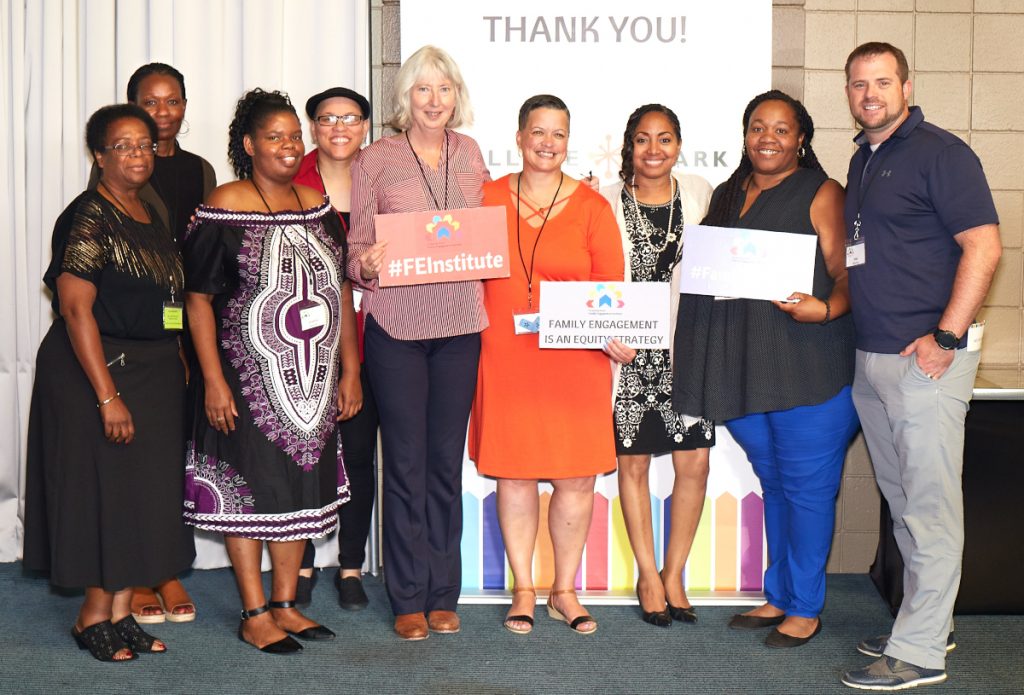 The Road Map Project seeks to close opportunity and achievement gaps between white students and students of color in South King County. At the core of the partnership is the belief that race and income should not determine success.
In 2016, Road Map Project partners established System-Wide Racial Equity Essentials, efforts across the community to help the region advance racial equity and support student success at every milestone, cradle to career. The Equity Essentials are an acknowledgement that current systems were not built to support students of color. To support students of color, the partnership recognizes the need for transformational systems-level changes. The goals of the Equity Essentials are to promote equitable funding and strong civil rights policies; to increase culturally relevant support and climates in schools; to foster strong family engagement practices; and to increase access and dismantle barriers to opportunity.
Partners use data to make decisions
The Road Map Project helps partners use data for continuous improvement, tracking progress and adjusting strategies for success. The partnership has built and maintains a database and a data dashboard where partners can access data, from pre-kindergarten through postsecondary. The Road Map Project helps partners develop the skills and knowledge to use this data, and the partnership uses the data to track outcomes, conduct research and support practice improvement.
The partnership supports a variety of networks to use data to make improvements. The King County Reengagement Provider Network is a group of partners working to reengage youth in work and school. Network members come together monthly to learn and collaborate with peers, share data about regional opportunity youth and discuss strategies developed from the data.
 “Census data about who opportunity youth are in our county showed that we made an incorrect assumption; the data showed that 40 percent were young people with a diploma or GED, but who were not working or in college, and we had no resources for them. We thought they were without high school diplomas,” said Jennifer Hill, youth programs manager for King County. “We shifted funding to a credentialing strategy and funded more postsecondary navigation and programming for apprenticeship programs.”
Parents and youth are engaged
The Road Map Project recognizes the importance of input from community members most impacted by policies and decisions. Over the last several years, the partnership’s community engagement efforts have lifted learner and family voices on topics including college access, family engagement and career exploration opportunities.
As part of the Road Map Project’s strategic update in 2016, the partnership shifted to having a community-led leadership table — historically, the leadership team included superintendents, funders and education advocates. In 2017, the Road Map Project created an ongoing opportunity for community input and leadership through the Community Leadership Team.
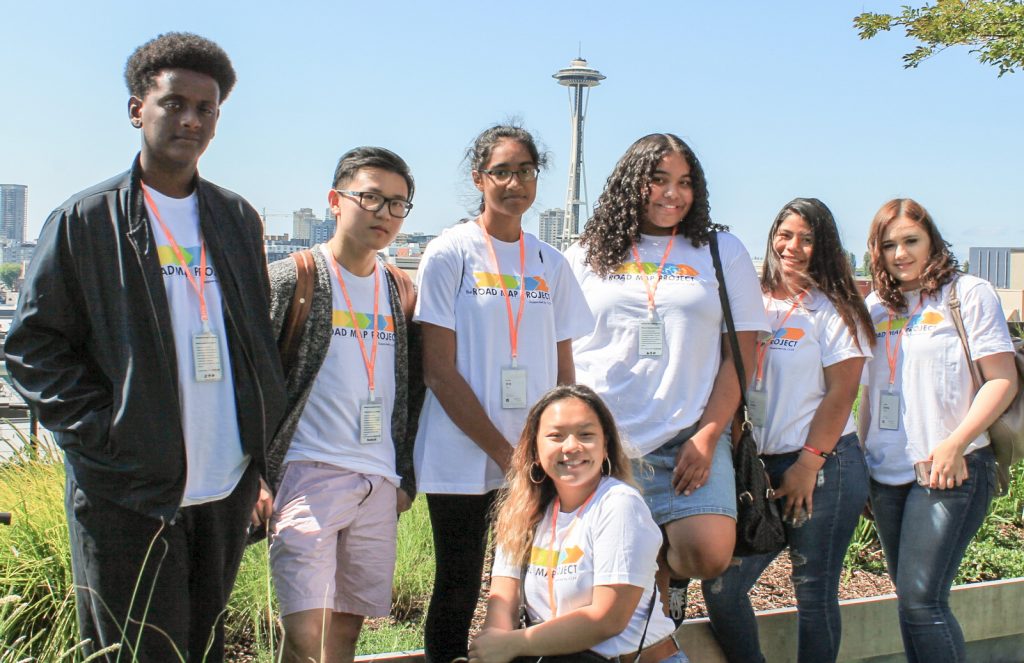 Another example of community engagement is the English Language Learner Work Group, a policy and advocacy work group with the goal of supporting refugees, immigrants, English language learners and undocumented youth in the Road Map Project region. The work group, comprised of community members, leaders and practitioners, identified an opportunity to advocate for students to receive credit for knowledge of their home language.
Isabel Muñoz-Colón, program officer for the Bill & Melinda Gates Foundation, shared, “The ELL Work Group is evidence of change. The Speak Your Language campaign, supported by OneAmerica, a state-wide immigrant rights organization, to celebrate the power of bilingualism, advocated on behalf of ELL students to be able to receive credit for being proficient in their home language. This had such an impact that the work group was able to obtain funding for statewide implementation of the policy. This would not have happened without the Road Map Project infrastructure.”
The Road Map Project has shifted the work of individuals and organizations in the King County region to focus on creating opportunities for every child. By focusing on racial equity, providing access to data and emphasizing community engagement, the partnership has supported the community toward shared goals of student success.
The post The Road Map Project reaches proof point with heightened focus on equity, data and community voice appeared first on StriveTogether.
]]>The post E3 Alliance reaches proof point with data-focused strategies and community collaboration appeared first on StriveTogether.
]]>Here are a few examples of how E3 Alliance has changed systems in Central Texas:
Prioritizing school readiness
 E3 Alliance and partners recognized the need to measure whether children were ready to succeed in kindergarten. To support this process, E3 Alliance led teachers and early childhood experts to develop the state’s first comprehensive, multi-competency school readiness assessment, called Ready, Set, K! This assessment has been transformative in the Central Texas region, allowing stakeholders to improve strategies using data. School districts use Ready, Set, K! to develop support for individual students, communicate with parents about their child’s strengths and areas of growth, and shift budget priorities.
The community used the robust, student-level data from Ready, Set, K! to understand the factors affecting school readiness and to build strategies to address these factors. Comparing years of data, E3 Alliance found that attending pre-K, taking into account other factors such as student demographics, makes it three times as likely that a child will enter kindergarten ready for school. Being school-ready, the data showed, makes it four to five times as likely that a student will be on grade level by third grade. Based on this data, two central goals emerged: To increase the number of eligible children who enroll in free, public pre-kindergarten programs; and to increase the effectiveness of pre-K programs.
An action team implemented a variety of initiatives across Central Texas to increase pre-kindergarten registration. Pediatricians, a trusted authority for many parents, gave “Pre-K Prescriptions” to their patients, including information for enrollment in English and Spanish. To reach families that may be undocumented, partners tailored information requests – instead of asking for parents’ proof of residency, they now ask for proof of address. Also, the team worked with district superintendents to make sure each district had a dedicated phone line for pre-k enrollment. Additionally, E3 Alliance supported a noted Texas musician in creating a music video highlighting the importance of pre-kindergarten in English and Spanish. The video is shared in doctors’ offices and through Austin Community College, Univision and the city’s TV channel.
 To track the effectiveness of these efforts, districts submitted monthly pre-kindergarten enrollment data during the fall semester for three years. Districts participating in the effort saw a 7 percent increase in enrollment for two consecutive years after the initial pilot year. The enrollment campaign helped identify best practices and resources that are now part of a state toolkit on pre-kindergarten enrollment.
To complement efforts in schools to help children succeed, E3 Alliance developed supports for caregivers through the School Readiness Parent Guide, available in English and Spanish. Over 140,000 copies have been distributed to families through a partnership with the City of Austin, public libraries and public utility companies. The parent guide is also distributed at health clinics, WIC clinics and during pre-kindergarten and kindergarten registration events. The guide is used by teachers to help form partnerships with families, and the Austin Independent School District superintendent tweets pages of the guide in August to encourage families to prepare for school. Since 2015, the rate of school readiness for children who stay home from pre-kindergarten with a relative has almost doubled.
Using data for decision making
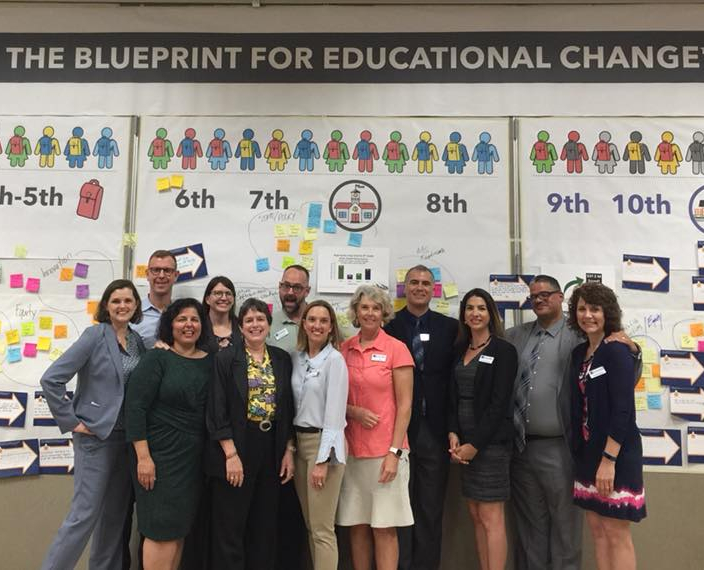 In 2014, E3 Alliance commissioned research from the University of Texas that examined the impact of three community-based organizations on college persistence. This research showed significant initial results: Low-income students who had been supported by a community-based organization enrolled in college at twice the rate of their peers who had not received the support. Three years later, however, the students who had received the support looked no different than their peers when it came to persistence in college. Based on the findings from this research, the Austin College Access Network (ACAN) determined that a data-sharing system was needed to serve students more effectively.
To build an effective data system, ACAN developed a regional data-sharing agreement and a common FERPA-compliant student data release form. These tools allow higher education partners to share student-level data with community partners. One partner is Austin Community College, a nationally recognized community college with ten campuses across Central Texas, developed a lifetime opt-in policy for students so that students have the option to sign an agreement to grant access to their data on an ongoing basis, allowing specific partners to access their data on a real-time basis.
Partners use this data to prioritize which students need additional timely support. For example, KIPP Through College wanted to provide better support for recent high school graduates as they navigate the postsecondary system. With access to real-time student-level data, KIPP has seen improvement in college persistence from year to year, with an increase from 51 percent to 77 percent of students persisting.
Committing to equity
House Bill 5, passed by the Texas Legislature in 2013, made Algebra II and any further math optional for almost all students in Texas by reducing expectations for math achievement. But research performed by E3 Alliance, with funding from the Greater Texas Foundation, showed that students who took and passed Algebra II as their highest math in high school had just a one in five chance of getting any postsecondary credential within six years, which includes certificates, two-year or four-year degrees.
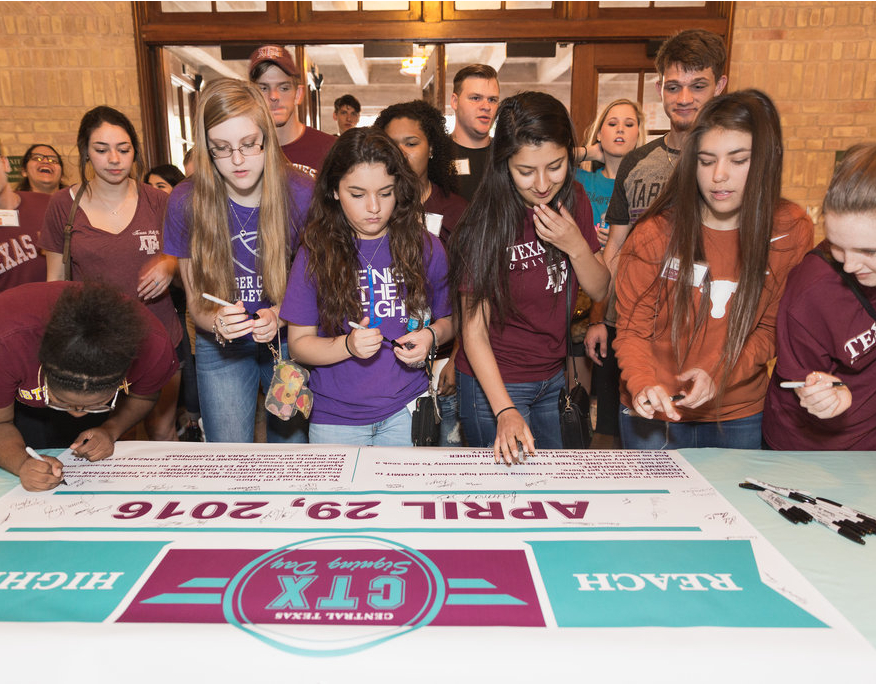 To support students to build math skills for college and career success, districts across the region set common goals for improving advancement and equity in math. These goals focus on increasing the number of students who enroll in Algebra I by eighth grade, as well as ensuring that historically underrepresented students access more rigorous math courses. One school has seen an increase from 132 to 212 students enrolled in eighth-grade Algebra I. Teachers’ mindsets around student achievement have also begun to shift, with opportunities to examine attitudes and beliefs about students of color while recognizing the need to have high expectations for all students. To lift promising practices that address systemic inequity in STEM subjects, a Central Texas STEM Equity Collaborative will launch in the fall of 2018.
With E3 Alliance serving Central Texas, systems are changing and outcomes are improving. E3 Alliance leverages data and relationships so that partners use effective strategies and provide equitable support for every child to succeed.
The post E3 Alliance reaches proof point with data-focused strategies and community collaboration appeared first on StriveTogether.
]]>The post Spartanburg Academic Movement earns proof point through shared community vision appeared first on StriveTogether.
]]>Here are a few examples of SAM’s impact:
 All seven school districts in Spartanburg share student-level data with SAM.
Spartanburg County is comprised of seven school districts, each with its own culture and processes. SAM joins all seven school district superintendents during their monthly meetings to share challenges and promising practices. The trust built between SAM and district leaders led to the superintendents’ practice of sharing data with one another to highlight areas of strength and opportunities for growth. Now, a countywide data-sharing agreement gives SAM access to all student-level data.
The collaborative nature of the partnership has expanded beyond the school district.
Previously, when a major industrial entity moved into a particular school district, that school district would receive the tax revenue from the project. This practice created significant inequity within Spartanburg. The County Council enacted a revenue change so that the home district will receive 30 percent of the tax revenue, with the remaining 70 percent distributed among the other six districts. SAM played an integral role in creating a culture of trust and collaboration, establishing an environment that enables equitable shifts in public funding.
SAM has built a culture of continuous improvement in schools.
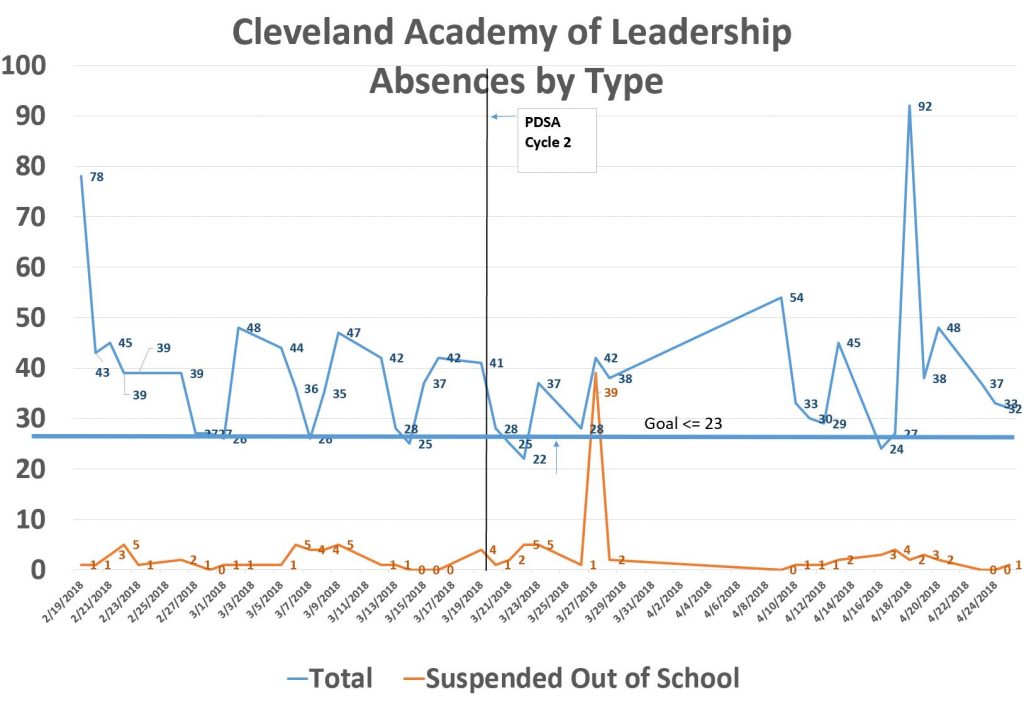
Continuously improving has become the norm in the local school systems. Cleveland Academy of Leadership has worked with SAM to improve student attendance from a baseline of 94 percent. With the data in hand, the school recognized that Mondays and Fridays have the lowest attendance rates. Using continuous improvement strategies, the school developed a plan to remind families about the importance of school attendance through robo-calls on Sundays and Thursdays. As a result of rapid-cycle continuous improvement, the average number of students absent has been reduced from 33 to 27 students. The school is continuing to refine its attendance strategies using rapid-cycle continuous improvement strategies.
With SAM’s partnership, preschool programs in Spartanburg schools have improved.
A block grant from South Carolina’s Education Oversight Committee supports two school districts’ partnerships with Quality Counts, a preschool quality improvement organization. With Quality Counts, these school districts are refining their practices and improving kindergarten readiness for the students they serve. The partnerships have led to promising results. Teachers are modeling proactive, student-centered behavior, and children are growing as a result. Pre- and post-assessment results in the 4-year-old kindergarten classrooms show significant improvement: Several areas measured by the Early Childhood Environment Rating Scale (ECERS-3) grew more than 75 percent, including language and literacy, learning activities and interactions. The Classroom Assessment Scoring System (CLASS) also showed improvement.
SAM has been a champion of student-centered collaboration in Spartanburg, and behaviors, practices and policies are changing as a result.
The post Spartanburg Academic Movement earns proof point through shared community vision appeared first on StriveTogether.
]]>The post Seeding Success reaches proof point through community collaboration and data use appeared first on StriveTogether.
]]>Here are a few examples of how systems are changing in Shelby County:
Partners are aligned around a cradle-to-career vision.
Seeding Success was chosen to lead the Community Foundation of Greater Memphis’s Beyond the Classroom initiative, supporting community organizations to improve practices and, ultimately, outcomes. Through this initiative, Seeding Success identified opportunities to build the capability and capacity of five organizations that support youth from kindergarten to high school graduation.
One of the five participating organizations, Porter-Leath, is an Early Head Start and Head Start provider that prepares preschool students for kindergarten. Through Beyond the Classroom, Porter-Leath adopted the data-driven culture of Seeding Success and has started using data more effectively. For example, the organization updated its process to ensure that teachers have student-level academic data 15 days after assessments. This update allows teachers to react more quickly to test results and better support students in reaching their goals.
The data-capability building Porter-Leath gained from Seeding Success has led to significant results. Over three and a half years, the percentage of students ready to learn in kindergarten has increased from 33 percent to 82 percent. The use of real-time data has become so fundamental to Porter-Leath’s practices that it has been embedded in their strategic plan, a direct result of the Beyond the Classroom initiative.
Partners have access to real-time, student-level data.
Seeding Success is the lead data expert in Shelby County, supporting a centralized database of student-level data that provides real-time academic data. Twenty-five partner organizations access the database daily to support 130,000 students in the community.
To gain access to the database, partners undergo a rigorous onboarding process and participate in monthly collaborative action network meetings and monthly data meetings. Partners also attend ongoing training focused on using student-level data for continuous improvement.
With access to this data, organizations and institutions in Shelby County have seen improvement in student achievement. Emmanuel Center’s summer literacy program recognized that regular attendance was critical for students to avoid losing skills over the summer. They accessed the Seeding Success database of student-level data to identify how to customize supports for students. These targeted supports led to student success, like one student who improved two reading levels over a seven-week period.
Partners use data to improve outcomes for students.
Partners in Shelby County adopt Seeding Success’s continuous improvement methods by using student-level and programmatic data. As a result, partners can measure their strategic and organizational impact, expand their efforts and share practices with other organizations to improve outcomes across the community.
Seeding Success supports partners to implement strategies to accelerate outcomes for students in Shelby County. By sharing academic, behavior and attendance data provided by Shelby County Schools, Seeding Success helps partners learn about the barriers students face in and out of school. Seeding Success has created an online toolkit for continuous quality improvement so that partners can access new tools and strategies to strengthen their work.
Porter-Leath used continuous improvement strategies to reach a population-level improvement. In 2017, students enrolled in Porter-Leath’s pre-kindergarten program outperformed their peers who had not been exposed to pre-kindergarten, performing 14 percent higher on the fall Measure of Academic Progress (MAP) Reading RIT. Gains in fall MAP scores were so significant that Porter-Leath’s students increased the overall level of kindergarten readiness in Shelby County.
What’s next?
Seeding Success has led partners in Shelby County to use data to make decisions and improve outcomes, and the entire community is stronger as a result. By collaborating with organizations that affect different aspects of a child’s life, Seeding Success is positioned to spread and grow the culture of continuous improvement throughout the community to ensure every child is successful, from cradle to career.
The post Seeding Success reaches proof point through community collaboration and data use appeared first on StriveTogether.
]]>The post Understanding identity appeared first on StriveTogether.
]]>A component of moving toward educational equity is working to change education systems to achieve better outcomes. But another equally important and complicated component is understanding how mental models affect the work we do. We each hold mental models — perceptions and ways of organizing the world around us — that are largely influenced by our identity. A combination of our race and ethnicity, gender, age, income, religion, sexual orientation, place of birth and more, our identities have many layers that have been formed over many years and will take a long time to fully grasp. But our identities impact our work — which is why it is so crucial to unpack their implications.
Recently, I attended a weekend-long retreat for people who identify as white to confront the ways in which our white privileges can reinforce systemic racism and cause harm to the communities we work with. At the Leadership for Educational Equity (LEE) White Anti-Racist Summit, we also discussed how white folks can do anti-racist work with courage and humility. In the aftermath, I feel as though I have taken one step forward and two steps back, because truly understanding the effects of identity is difficult and hazy. I’m a member of a nation whose laws, policies and practices are set up to serve one group of people while oppressing another, and taking responsibility for the subsequent negative consequences is critical. Here are two key insights from the summit.
- I am responsible for perpetuating systems of oppression. The People’s Institute‘s definition of racism was shared with the group at the LEE retreat: racism is power plus prejudice. Based on this definition, you could argue every white person is racist. That’s a hard idea to grapple with, let alone accept, especially as a former educator who worked with students of color and now is working to change the education system to improve outcomes for children and families. But I have benefited from systems, institutions and interpersonal relationships in ways that others haven’t and want to take responsibility by working to prevent the continuation of this inequity.
- From the beginning, systems of oppression have been designed to control power. Thomas Jefferson, known to many as a founding father and strong advocate for public education, proposed “A system of general instruction, which shall reach every description of our citizens from the richest to the poorest.” His proposal sounds equitable and democratic, but Jefferson also suggested creating a scholarship for only a select few of the laboring class to advance by “raking a few geniuses from the rubbish.” This last quote illustrates a critical and often forgotten point: since the foundation of this country, systems were established and preserved to keep power in the hands of one group while preventing any other from obtaining it. You can find other examples of laws and policies designed to perpetuate discrimination and inequality here.
The effects of systemic racism can be seen in communities across the country, including those in the StriveTogether Cradle to Career Network. But our local community partnerships are dedicated to eliminating gaps and disparities in academic outcomes, economic mobility, health, housing, employment, criminal justice and more. Disproportionate outcomes between white people and people of color are the result of generations of discrimination and racial inequality, beginning before the foundation of this country and persisting today.
As I move forward in my journey to ensure opportunity for every student, I am bound to make mistakes, but I am committed to approaching this work with courage and humility. I cannot stand idly by, not doing or saying anything at all, when some of my students, and students across the country, are not able to fulfill their dreams because of systems, structures and people in power. Being non-racist is no longer enough. I want to be anti-racist, meaning I am committed to working to combat systemic, institutional, interpersonal and internalized racism. Learn more about the difference between the two in this video with author Marlon James.
There are many frameworks to consider your place on the continuum of being complicit to actively anti-racist, but the one that I find most beneficial is the ladder that illustrates the path from being innocent/ignorant to building a community to “heal the remnants of racism.” While new to this space, my former students — and all the students out there — are my main motivation to keep trying to get it right. And if I do not embrace being anti-racist at my core, I am responsible for prolonging unjust systems and institutions that I claim to be working to change.
The post Understanding identity appeared first on StriveTogether.
]]>