The post Get the soil right for social change to prosper appeared first on StriveTogether.
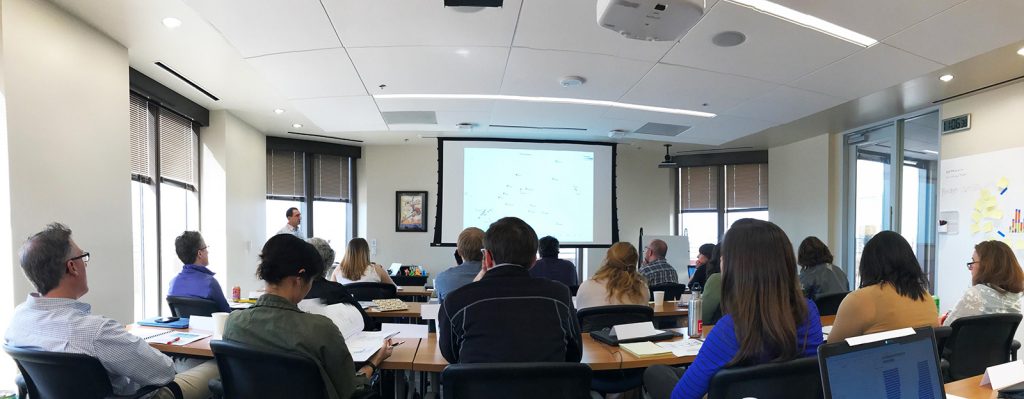
]]>StriveTogether joined the American Public Human Services Association (APHSA) and MDC at the Kresge offices to generate ideas and share learning on helping people, especially children and families of color, move out of poverty. As we exchanged thoughts about our approaches to centering racial equity, engaging those most impacted by decisions and getting to outcomes that really matter, one thing became clear: You have to get the soil right before you plant the seeds. Organizations and initiatives across the country are quickly adopting visions to tackle social and economic mobility, but this is no small feat. Systems have perpetuated negative outcomes for hundreds of years — can they really turn around in a single grant cycle?
The answer, of course, is no. Economic mobility is rooted in systems, and systems are built by people with mental models that exist far below the visible surface. Changing these systems requires groundwork and cultivation. This is a marathon, not a sprint. But the exciting part is that it’s possible — and we’re on a path to get there. We lifted up a few key themes that can serve as mile markers along the marathon that is systems change.
Communicate what we do effectively. The idea of radical social change can feel riveting, but when you start peeling back the layers of how to get there, it can seem exhaustingly complex. Part of what inhibits our ability to mobilize effectively around change is that we can’t clearly articulate who we are, what we do or how we know if we’re making progress. It’s imperative to reach people where they are by speaking to their heads and hearts.
Encourage urgency — with patience. In my mind, I have no doubt about the importance of supporting more equitable outcomes in communities. Philanthropy and investors provide invaluable resources to help good organizations fulfill that mission. But sometimes — and this comes as no surprise to any grantee — philanthropy has an unrealistic view of the timeline needed to realize systems-level impact. This is because philanthropy may not always be as close to the work happening on the ground. Innovative funders can help their peers embrace the mindset that activities on the path to change are critical (and it’s OK to hold folks accountable to those) and that population-level change takes time.
Incentivize innovation. Have you ever asked yourself “is the risk worth the reward?” When we perceive resources to be finite or limited, we naturally feel more risk averse. To achieve our results, system leaders need to find strategies to incentivize innovation. I’ll be honest — we didn’t crack the nut on how to do that in a four-hour learning session, but we identified that this must be a priority if we seek to sustain the behavior change needed for systems change.
Stop assuming we know other people’s goals. One of my biggest insights from the day was realizing how paternalistic our systems and organizations can be, even when we don’t intend to act that way. We often easily assume we know what a child or family wants or needs. Our frameworks or logic models create molds that we stick communities in. But how often do we ask (and really listen to) what community members values or what goals they set for themselves? Definitions of success are individual — they may vary by cultural background or neighborhood. There is no “one-size-fits-all” in keeping people at the center of this work, and that’s OK.
So, back to that houseplant. I really wanted that plant to thrive. But I only addressed its needs once it started to look a little rough around the edges. I tried watering it more, only to find out that it needed water only about once a week (after I basically drowned it!). And this is how we often do systems change in the nonprofit sector. We know the end goal but don’t pay enough attention to the groundwork and cultivation it takes to create an environment that will accelerate better results. We can only plant the seeds when we get the soil right.
The post Get the soil right for social change to prosper appeared first on StriveTogether.
]]>The post There’s no secret sauce to creating real change in communities, but trust is part of the recipe appeared first on StriveTogether.
]]>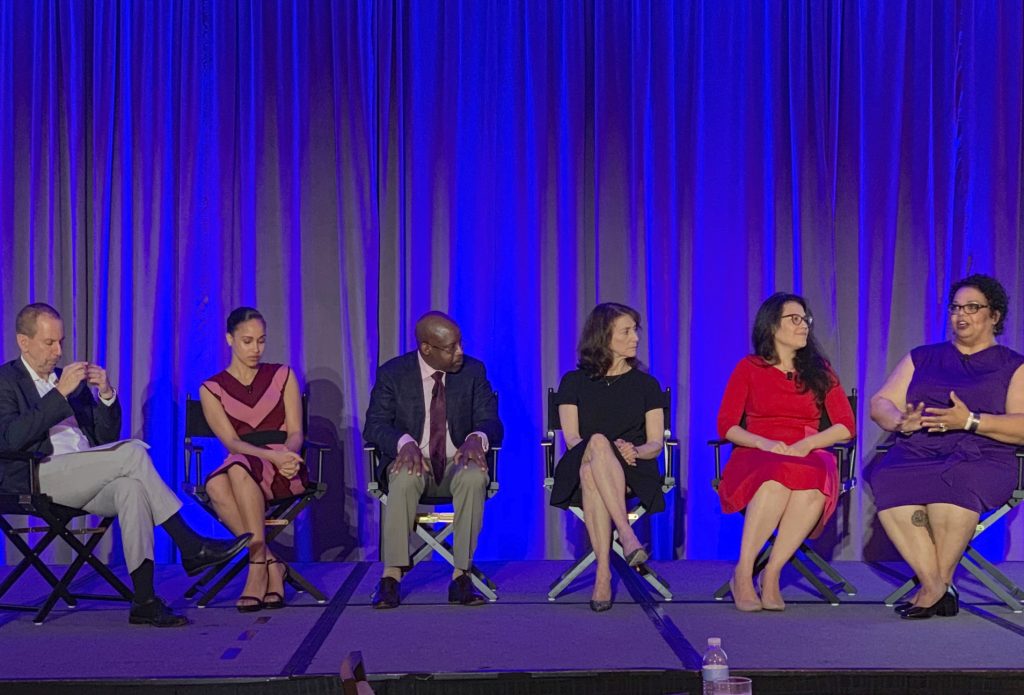 Last week I had the privilege to be an interloper at the American Public Human Services Association (APHSA) annual summit. More than 400 people from human services organizations — mostly public, as the name would suggest — joined together to discuss how to best serve children, young people and families. As I sat in on sessions, chatted with attendees and admitted to my outsider status, I realized one REALLY BIG thing. These are our brothers and sisters in service of our vision. I sometimes feel like we’re isolated in our work or that we have to pull people along to achieve our goals. This feeling is at best myopic and at worst dishearteningly pessimistic. As I met new friends and allies, I heard them speak our language about race equity, systems transformation, practice improvement and policy change.
There are many truths in the work we do (although not everyone wants to admit to or face them):
- Wealth gaps are increasing between people of color and white people
- About 60% of people experiencing incarceration are people of color
- One in eight children experience abuse or neglect by age 18
This data tells a story. Not one of individual deficits, but one of systems that perpetuate oppression and allow harm to the most vulnerable. To achieve better and more equitable outcomes for every child and family, we need to support one another as humans AND work to upend the systems that enable these results to occur. Nelson Mandela once said that “there is no keener revelation of a society’s soul than the way in which it treats children.”
Communities are better when we work together differently
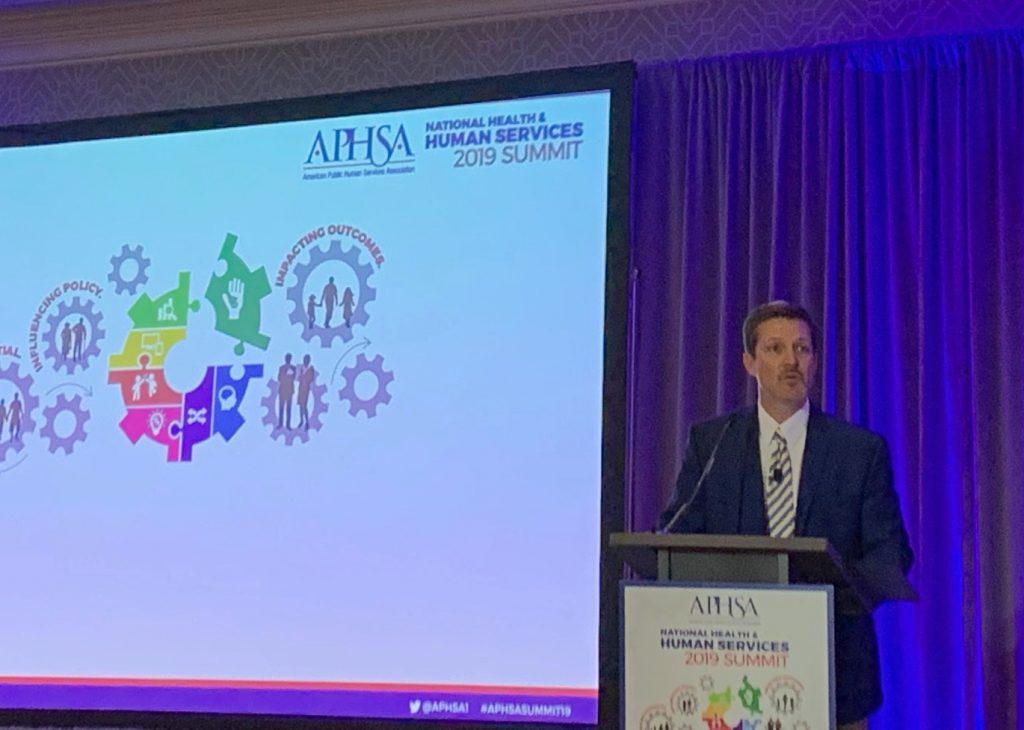 The StriveTogether Cradle to Career Network is focused on economic mobility, especially for kids and families of color and those experiencing poverty. To achieve this goal, we talk about engaging “adjacent sectors.” I often get confused expressions or eye rolls when I use this term or questions about what fresh jargon we’re using. I reflected and remembered that the StriveTogether approach is built on multiple sectors co-designing and co-developing better outcomes. We are circling back to our roots by embodying the notion that communities are better when those who make them up work differently together.
Understanding the alignment that exists across sectors is huge. The report A National Imperative: Joining Forces to Strengthen Human Services in America was written in partnership with APHSA and the Alliance for Strong Families and Communities. If you look at the executive summary, you’ll also notice a few familiar names identified as investors. The recommendations from the report mirror what our Network has identified in the StriveTogether Theory of Action :
:
| National Imperative Recommendations | StriveTogether Theory of Action Pillars |
| Commitment to outcomes — Focus on agreed-upon set of outcomes to drive the work | Shared community vision — Work with people throughout the community to create one vision everyone can support |
| Capacity for innovation — Develop capacity for innovation through better data sharing, analytics, technology and knowledge exchange | Evidence-based decision-making — Gather, assess and act on the evidence in front of us |
| Strategic partnerships — Establish deeper and disruptive partnerships to realize maximum value | Collaborative action — Have a bias toward action that is taken together |
| New financial strategies — Develop diverse financial strategies and generate public and private funding | Investment and sustainability — Engage investors to ensure we have enough sustainable resources to do the work |
The public health services sector aligns with our approach to transform systems. We share common values and concepts in our work. This feels like the start of something special.
 I left the conference and returned to Cincinnati again as a social worker, but also with an extra dose of belief in the work we do as a Network. Our CEO Jennifer Blatz wrote a blog last week on the need for us to build authentic relationships to create real change in communities. There’s no secret sauce for how to do this, although I imagine the recipe requires a dash of trust, a pinch of love and a few crushed egos.
So, how can we ensure we’re partnering with human services organizations to achieve the results that every community deserves? I am looking to you, readers, to share your examples of how this is taking shape in your own backyard.
The post There’s no secret sauce to creating real change in communities, but trust is part of the recipe appeared first on StriveTogether.
]]>The post Witness the Network Effect appeared first on StriveTogether.
]]>If you’re familiar with StriveTogether, you’re probably familiar with this question: What does StriveTogether really do? I get this question all the time, every week, and have for six years. It never gets old because what we do at StriveTogether is so unexpected — and impactful.
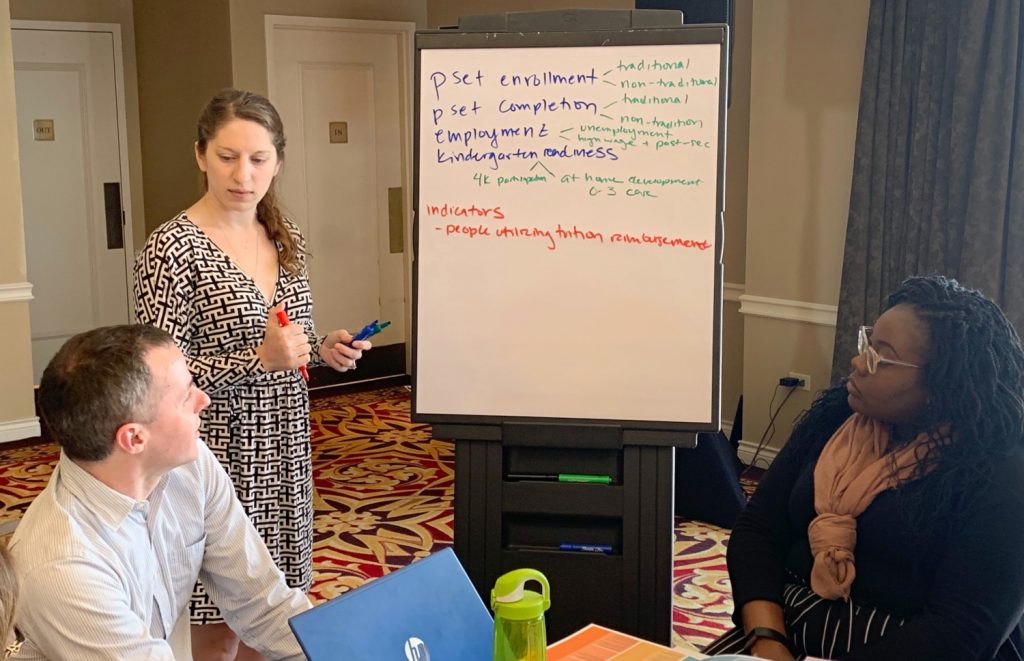 StriveTogether brings together a network of communities tackling similar tough issues and challenges. Then StriveTogether gets out of their way as they challenge, support and learn from each other. We create spaces for Cradle to Career Network members to be the experts in their own work and share their expertise with others.
This Network Effect was extra powerful in Denver earlier this month when our Opportunity Fund communities convened for two days. These nine communities are supported through our Cradle to Career Community Challenge. Each of these communities are on the leading edge of improving outcomes, closing disparity gaps and addressing the root causes limiting economic mobility for children of color and children and families living in poverty. We know these are some of the most complex challenges we face in our country. And we know there is no better time than now to start working on them together.
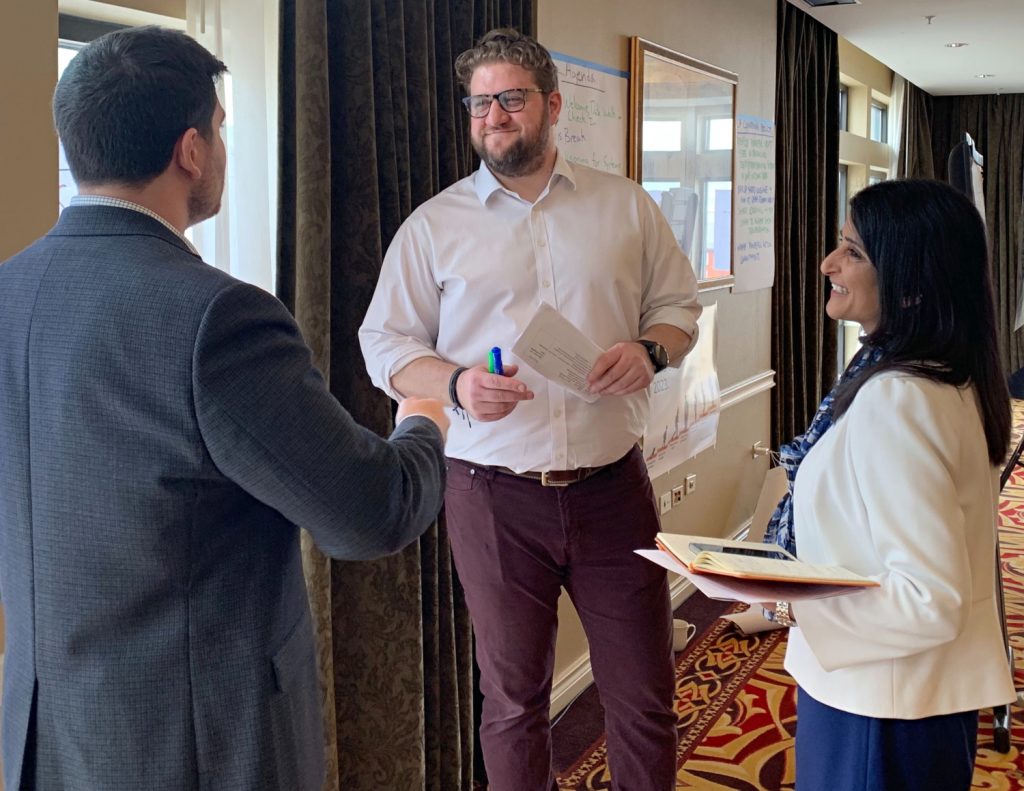 Why now? Because the Network is getting stronger as more and more communities are learning and improving cradle-to-career outcomes. The Network impacted the lives of 13.7 million children last year, and we are just getting started.
The Network’s goal is to reach the systems transformation desgination along StriveTogther’s guiding framework, the Theory of ActionTM, in 24 communities by 2023. The nine Opportunity Fund communities that gathered in Denver focused on pathways to economic mobility. They shared insights to better understand the bright spots and challenges along the journey. They know from looking at the disaggregated data in their communities that current systems are failing children of color and children living in poverty. They are building a new civic infrastructure designed around the needs of children by bringing schools, housing, transportation, business and families together. They are witnessing successes like these:
- In Central Texas, the E3 Alliance partnership has helped close racial disparity gaps in kindergarten readiness by understanding and addressing the things that truly support readiness — quality early childhood programming and the frequency and access to services. With this clear set of factors in mind, the partnership has moved 17 percent of low-income students to full-day, pre-K programs, resulting in an increase in kindergarten readiness.
- In Tacoma, Washington, the Graduate Tacoma partnership is working with Degrees of Change to improve postsecondary completion rates. This includes collaborating with the Tacoma Housing Authority on the College Assistance Housing Program. Students experience stable and affordable housing, leading to improvements in their grade point averages and persistence to complete their education.
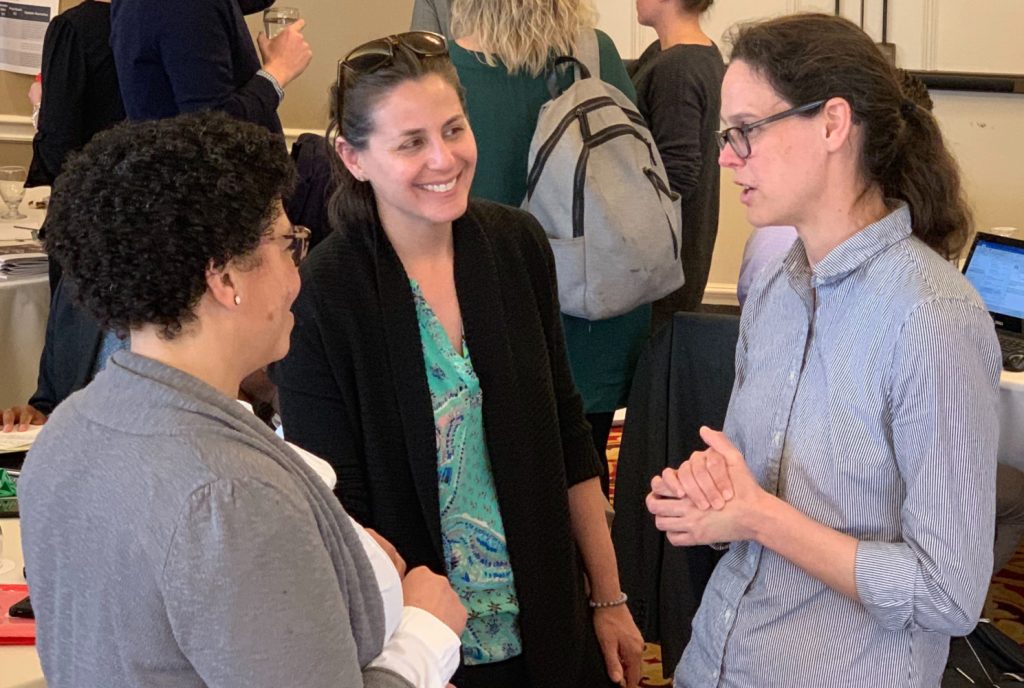 The Network Effect is far more than celebrating the successes of partners. The Network Effect pushes communities to challenge their own thinking and iterate on what their peers are learning or testing across the country. After hearing Tacoma’s story, other communities committed to engaging the housing sector to address issues facing youth and families.
A major component of systems transformation is the realization that education strategies alone will not contribute to reducing disparities for children and families. We must engage all of the sectors that touch our children, like health, housing, transportation and human services. We need to work with these sectors as they dismantle their own systemic barriers that limit opportunities.
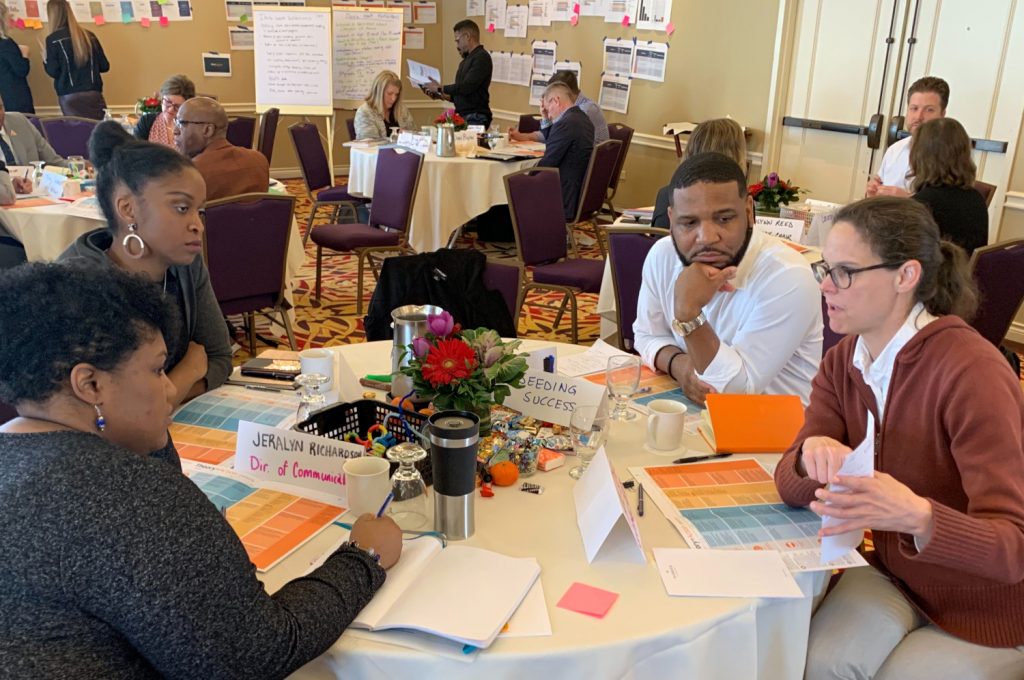 As I sat in Denver, I reflected on the energy, commitment and expertise of the Cradle to Career Network in accelerating progress to achieve zero disparities for kids and families. I know this is possible because they have each other. A colleague recently wrote about the notion of finding your beehive — that moment when you find your people and your purpose. When you see this up close — in the faces of the Network — the effect is powerful. You see commitment to dismantling systems to create better and more equitable outcomes for every child. You see what’s possible.
So, what do we really do at StriveTogether? We bring communities together and get out of the way as they tackle complex problems. We create the space and tools to transform systems. That’s the power of the Network Effect.
The post Witness the Network Effect appeared first on StriveTogether.
]]>The post Moving from talk to action: Internalizing equity in organizations appeared first on StriveTogether.
]]>In real life, those of us dedicated to equity work know that recognition of the racial injustice in our world doesn’t automatically lead to its elimination. Neither does education alone: We can read countless books and article, watch documentary after documentary, and share blogs and posts on social media. To be woke, we must be aware and active, with the clear understanding there are no gold medals as a reward — and there shouldn’t be any.
Yet our personal equity journey doesn’t amount to enough if our organizations, systems and structures don’t model the equity principles we hold as individuals. Earlier this week, I spent the day with 15-plus organizations at the Kresge Foundation’s North Star Convening: Lifting Up Racial Equity in Human Services meeting. Our charge was mighty: Identify strategies and practices to advance racial equity in our organizations internally, not just in the programmatic support we provide.
The Kresge Foundation takes racial equity seriously in its grantmaking. Recognizing that it still has a long way to go, the foundation noted three critical components of operationalizing equity:
- Embrace risk taking. Many of us, especially my fellow white folks in this sector, talk a big racial equity game. But when it comes to actually taking action, we shy away from policies or practices that might make people uncomfortable. We must take risks on behalf of the people we care about — those people in our communities we work to serve AND the very people we work with each and every day.
- Get comfortable being uncomfortable. If it was easy, everyone would do it. Distilling racial equity in your organization is damn hard work — and invaluable. In a country where deep poverty rates have increased for people of color by 15 percent over the last few decades, there’s no excuse to not start moving people into productive disequilibrium.
- Identify allies. Racial equity is not a solo mission. As you work to create more equitable internal processes and structures, find your coalition of the willing. Some of those people will look like you and some of them won’t. Identify your champions from across the organization and move with them into action.
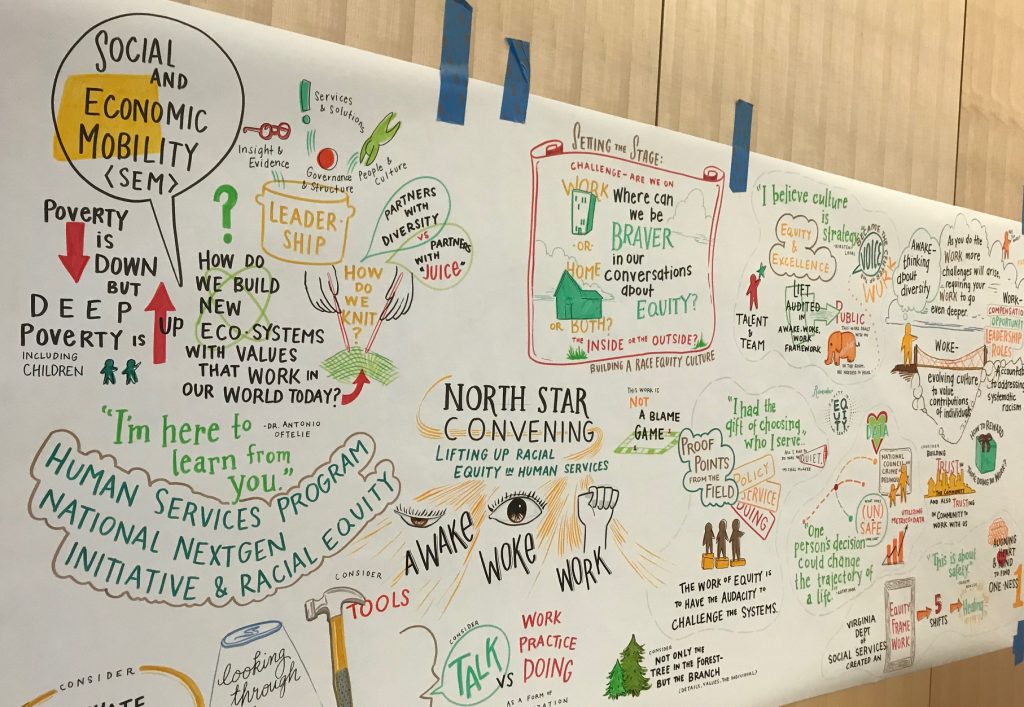 At StriveTogether, we recognize that we, too, have so much more to do to create a more racially equitable organization. We’ve looked at our data, listened to our team and have started to mobilize on an action plan. Over the past year, we have engaged with the Interaction Institute for Social Change to help us uncover the biases and systems in our organization that perpetuate a white dominant culture. Our team members have started to discuss anti-racism and healing through affinity groups, creating safe spaces to share and learn together. Every other month, you’ll find the StriveTogether team participating in equity lunch and learns, where we discuss racial equity and racism through history, pop culture and academia. We are awake and continue to build a race equity culture that’s truly inclusive.
But this is just a start. We’ve still got miles to go before we achieve racial equity — before race no longer predicts social outcomes like how much education you get, what kind of job you hold and how much money you make. What else do our organizations need to do to truly operationalize equity?
- Create porous boundaries with constituents. Organizations in the social sector are frequently plagued by the “thanks for your feedback” mentality. Although keen to elicit feedback from those we want to serve, more often than not, we take it from there. Only when community and constituents come together to co-develop solutions — and own those solutions from ideation to execution — are we shifting systems.
- Equity is doing the work, not just talking about it. I know a cadre of brilliant and smart people who can discuss the hell out of an equity frame and create masterful slides using all the popular theories. But this work is about so much more than talking — remember, there’s no medal for that. Racial equity is only possible when we act. Frames and theories, while helpful in unpacking a problem, can also be work avoidance. We need to step up and act, while recognizing that sometimes we need to get out of the way and rally around others that can lead, inspire and get stuff done.
- Don’t let perfect be the enemy of good. A sure sign of white dominant culture is perfectionism. Like the perfectionism I sought as I wrote, rewrote and twisted myself inside out coming up with the beginning of this blog. In this work, we can’t wait for the perfect solution or the perfect frame. You have to be willing to learn in public. A friend, mentor and coach to StriveTogether — Marian Urquilla — reminds us often that you can start somewhere as long as you’re willing to go anywhere. What can we do now that will enable us to do so much more later?
At the Kresge event, it was powerful to be “in community” (thank you, Christian Paige, for introducing me to that empowering term) with organizations that are grappling with strategies to embrace and further racial equity. We don’t need to win gold medals when we come together, share learnings and commit to doing better. We win something far greater — the humanity that racism takes away.
The post Moving from talk to action: Internalizing equity in organizations appeared first on StriveTogether.
]]>The post Graduate Tacoma reaches proof point as graduation rates climb appeared first on StriveTogether.
]]>In 2010, just over half of Tacoma students were graduating high school, prompting USA Today to label Tacoma schools as “dropout factories.” Collaborative effort in the community has turned this headline on its head. Today, more than 240 community partners own a clear and common goal for students in Tacoma. For the last seven years, Tacoma Public Schools (TPS) has seen an increase in high school graduation rates, currently at 86.1 percent. This improvement, though, is just the beginning.
Here are a few examples of the systems-changing work of the partnership:
Organizations, institutions and community members in Tacoma have aligned their work to support the cradle-to-career vision. TPS has set measurable graduation goals that align with communitywide goals facilitated by the Graduate Tacoma partnership. The city also has integrated these goals into its own strategic plan, with high school graduation as a strategic priority, demonstrating the commitment to students across the community.
“When people think about education improvement and engaging families, the first thought is usually the PTA. We have broadened our reach to include different community members,” said Amanda Scott-Thomas, director of the TPS Community Partnership Office.
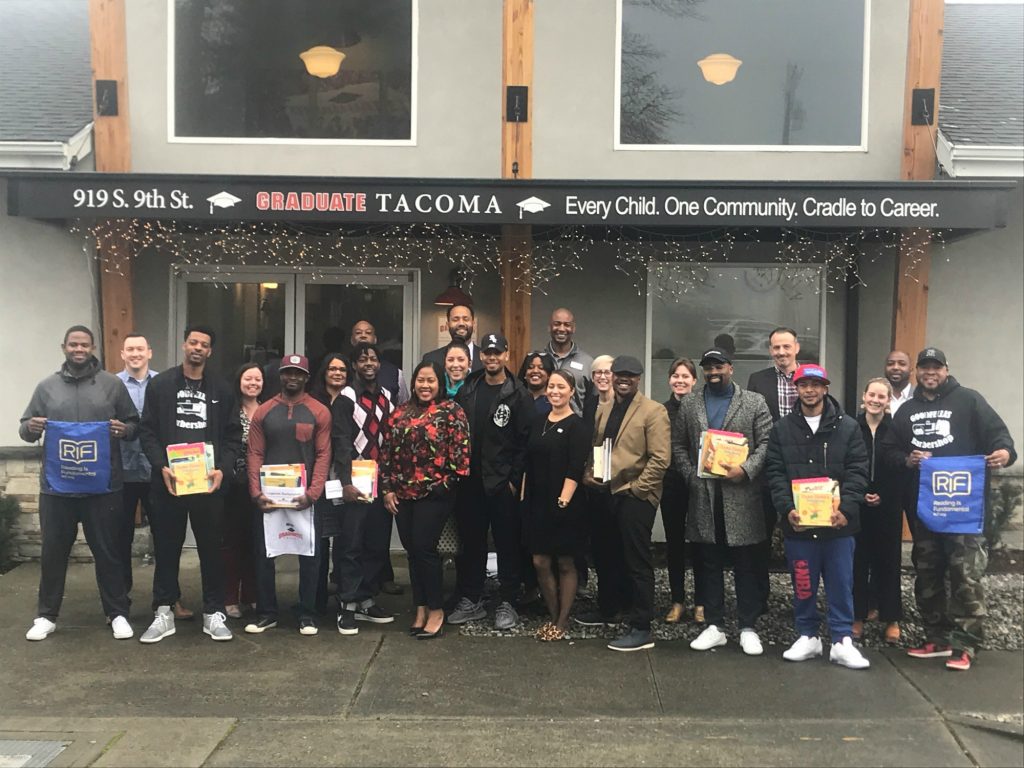
Thanks to the work of Graduate Tacoma, business owners and community members see and embrace their role in improving education for every child. This sense of ownership is seen daily, like in the Hilltop neighborhood, where barbers are sharing books with boys of color. The community doesn’t just look at data and “admire the problem” — they are aligning their actions toward shared goals.
 Graduate Tacoma and TPS have partnered to increase and improve data use. The organizations’ data-sharing agreement yields student-level information on achievement, attendance, testing and more, disaggregated by race/ethnicity and income level. Student-level data is used to target interventions to students on their path to high school graduation and beyond.
Student-level data is used to target interventions to students on their path to high school graduation and beyond. As one example, Tacoma students now rank second in the state on applying for state-sponsored scholarships like Washington State Opportunity Scholarships (WSOS). And when the district noticed that certain types of students were disproportionately underrepresented in advanced placement courses, they created a policy to automatically enroll them. Now high school students who may have never thought of themselves as candidates for college credit-eligible classes are enrolled in these more rigorous courses, a policy shift that has doubled the number of students of color, students in poverty and the overall number of students taking these classes from just three years ago.
The school district has developed a robust data infrastructure to ensure students are on track and supported to succeed. “A focus on current data, as opposed to just historical data, is helping teachers get the data they need to work with the students in their classrooms right now,” said S.J. Jacobson, data manager at TPS.
Part of this infrastructure allows community partners to have access to students’ academic data to provide more targeted support for children in all areas of the community. Results indicate that partners are changing the way they work and moving at a faster pace because of their increased access to data.
Graduate Tacoma’s Collaborative Action Networks (CANs) have grown, becoming more results oriented and data driven in addressing community challenges. CANs are engaging partner organizations strategically to create impactful practices. These groups consist of cross-sector practitioners and individuals who use a continuous improvement process to develop action plans to improve community-level outcomes.
The Out-of-School and Summer Learning Network created a summer learning system that tracks participants across partners and enables them to identify and serve additional students. Over the last three years, partners have served an additional 5,840 students with expanded programming slots. The Early Learning and Reading Network has worked with TPS on preschool programming. Now, 30 of the 35 elementary schools have preschools on site.
What’s next?
Graduate Tacoma has been designated as proof point in recognition of its work to rally the Tacoma community around data-driven results. The work doesn’t end there, however. By the class of 2020, Graduate Tacoma is committed to increase by 50 percent the graduation rate of TPS students and those who complete a college degree or technical certificate.
StriveTogether congratulates Graduate Tacoma on this milestone along the path to success for every child in Tacoma, cradle to career!
The post Graduate Tacoma reaches proof point as graduation rates climb appeared first on StriveTogether.
]]>The post Cracking the code: Communicating the work of a cradle-to-career partnership appeared first on StriveTogether.
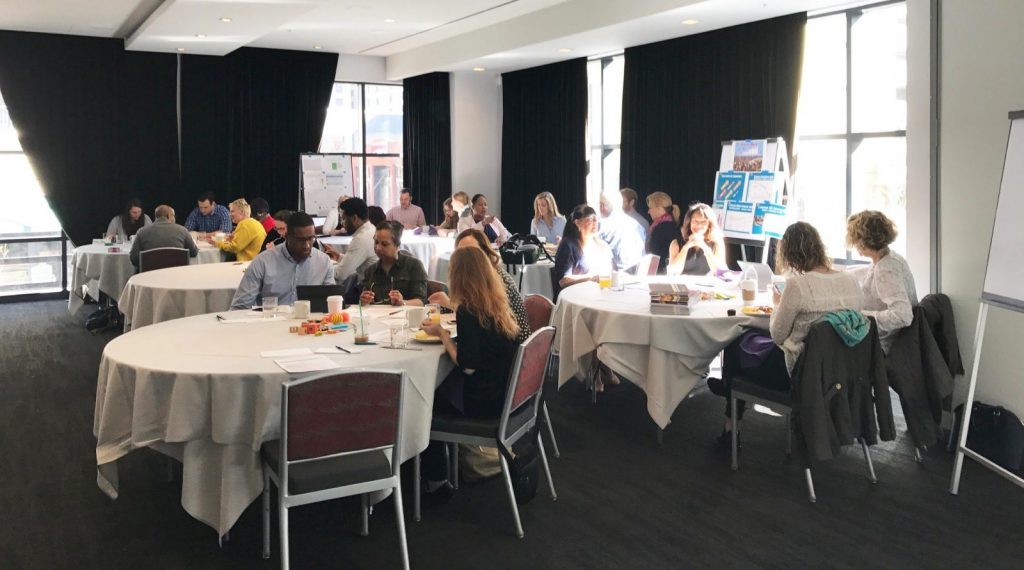
]]>On March 7-8, 2017, we brought the first cohort of the StriveTogether Accelerator Fund communities together in San Diego to learn from one another to advance their progress to Proof Point. Attendees from the six community partnerships learned collaboratively from one another to refine their strategic priorities for the rest of the year and were introduced to new frameworks for data infrastructure, community engagement and communication. One tool that particularly resonated with attendees was the I2L2: A Formula for Change.
Developed by ORS Impact and the Hawai’i Community Foundation, the I2L2 Framework helps social change initiatives communicate impact and value as levers to sustainably moving the need on major issues. It’s based on a seemingly simple equation: Impact = Influence + Leverage + Learning.
The authors of I2L2 note: “Too often, however, we underestimate or altogether fail to acknowledge other powerful changes that occur as the result of implementing thoughtful strategies aimed at creating sizable and lasting impacts. These other types of changes are an inherent part of the formula for creating durable change across multiple systems in complex circumstances” (I2L2: A Formula for Change).
The framework is predicated on the notion that communicating four components of change work is necessary and helpful to realize the full value and contribution of an initiative. Each component of the equation reflects a key communication strategy a partnership can use to emphasize the different work and strategies taking place.
- Impact – This reflects the change that an individual, population or geographic region experiences. You can think of this as the “better off” needle-moving results of the work — the results that take time to achieve but are game changers for a community.
- Influence – The systems-level changes experienced by partners (organizations, sectors, etc.) are major wins. These are the changes in practices, policies, norms and structures that take shape by virtue of this collective work to sustain cradle-to-career infrastructure and outcomes.
- Leverage – Working with partners to shift or redirect resources is a primary role of a partnership. As resources begin to flow to the practices, behaviors or strategies that achieve results, a partnership can showcase the value of shared commitment and action.
- Learning – The knowledge or field-building work — part and parcel of what a cradle-to-career partnership is meant to do — is often an under-utilized messaging strategy. Sharing the “fail forward” stories, key takeaways and contributions to the field can shine a spotlight on the ongoing efforts to positively impact all kids in the community.
As the Accelerator Fund communities began mapping their own communication efforts — and strategized to build messaging for each part of the I2L2 equation — I was struck with an “aha” sense of joy. A sense of joy that comes from people uncovering opportunities to overcome a challenge that, while similar across communities, is deeply rooted in local context. As partnerships recognize and codify the multiple ways they bring value to their community with their partners and stakeholders, they can start to crack the code around communicating complex efforts to achieve results.
The post Cracking the code: Communicating the work of a cradle-to-career partnership appeared first on StriveTogether.
]]>The post One data visualization is worth a thousand data points appeared first on StriveTogether.
]]>Lee is standing in front of 17 data managers from across the StriveTogether Cradle to Career Network, all of whom are intent on identifying the correct answer. They offer several suggestions in response to his question — pie charts, bar graphs, scatter plots. With a knowing look, Lee states, “The best way to visualize data is whatever is most effective to achieve your result.” Even in the world of data — a world that can often seem rife with technical solutions — we see that achieving result is fundamentally rooted in adaptive solutions.
The data managers were gathered in February for a convening of the second cohort of its data analytics fellowship program offered in partnership with Tableau Foundation. The fellows are using Tableau data software as a tool to help build a continuous improvement culture and data-driven decision-making in their local community partnerships. They met at the Tableau corporate offices in Austin, Texas, to learn strategies and best practices for maximizing impact in data visualization. The fellows also had the opportunity to work with experts like Feinberg — and one another — to address key challenges and advance their own visualizations.
Over the last year, Feinberg has provided pro bono training support to the fellowship and lends his expertise to help the program participants use data visualization to tell their stories in a compelling manner. Key takeaways from his talk include:
- Focus on intent before content. The purpose and informative capabilities of a “viz” should come before the data is actually shared.
- Keep the “viz” simple. Get rid of components that are challenging for people to understand.
- Help create insights for viewers. Think about your end user and determine if the “viz” makes sense for informing the decisions they need to make.
Although it’s not a “silver bullet” solution for the sophisticated data infrastructure needed to improve educational outcomes for kids, Tableau helps data managers communicate complex information in a simple way. One data visualization can be worth a thousand data points.
The Adams County Youth Initiative (Adams County, Colo.) is using Tableau to highlight attendance data to decrease chronic absenteeism. Identifying and targeting supports to local transient families is a focus area for 90% by 2020: Anchorage United for Youth (Anchorage, Ala.). The P16Plus Council of Greater Bexar County (San Antonio, Texas) is creating annotated run charts that depict completion rates for federal college student aid applications over time and the interventions that improve those numbers.
The fellowship program participants are halfway through their eighth-month journey to use data to drive action and help partners involved in their local work make more informed decisions. The cohort will meet in person again in April and June.
The post One data visualization is worth a thousand data points appeared first on StriveTogether.
]]>The post How do you know your education system is changing? appeared first on StriveTogether.
]]>The StriveTogether approach is about positively improving the educational experiences of every learner from cradle to career. We believe that no matter what a student looks like, where they come from or what challenges they may face, they deserve fair access to resources and opportunities that can help them reach their goals in life.
We also believe that this kind of change cannot happen unless we remodel the systems that exist today.
Collective impact partnerships in communities across the country have shown that education equity can become reality, supporting every child from cradle to career. Though changing systems is a long, continual process, these communities are seeing early wins by illuminating disparities, shifting student supports and testing ways to improve.
Stories from communities give evidence this change is happening. From reducing chronic absence in San Antonio, Texas, to creating new public funding for preschool in Dayton, Ohio to changing the teaching and learning approach for middle schoolers in Austin, Texas — systems are changing to support better outcomes for students.
Through our work, we’ve gained a better understanding of what it actually means to sustainably change behaviors, practices and policies to support student success. We’ve recently updated the Systems Change gateway of the Theory of Action to reflect the learnings we’ve acquired over the years. Built on lessons from StriveTogether Cradle to Career Network members, the StriveTogether Theory of Action offers quality benchmarks that distinguish this work, not only from traditional collaboration, but from other collective impact approaches
We’ve learned that systems change requires the entire community to change or adapt in ways that best support learners — and we wanted the indicators to better reflect this collective effort. The new indicators in the Systems Change gateway essentially provide a more comprehensive picture of sustainable systemic change throughout a community:
- Organizations, institutions and community members align their work to support the cradle-to-career vision
- Partners effectively communicate in ways that demonstrate shared accountability for results and build community engagement
- Student-level data is accessible and used regularly by relevant partners to inform actions to improve outcomes and narrow disparities
- Partners use a variety of data to continuously improve and implement strategies that intentionally accelerate outcomes for populations facing persistent disparities
- Collaborative action efforts are sustained to improve outcomes and narrow disparities
- Community members are involved in the co-development of solutions to improve outcomes
- Public and private dollars are targeted to spread and sustain data-driven practices
- Partners consistently build capability and staff are supported with sustainable funding to implement the evolving partnership strategy
- Public and organizational policies change to support improvement of community-level outcomes and narrow disparities
Our new indicators make room for the diversity we expect to see in the unique work partnerships take on to change systems and allow for flexibility while staying focused on the impact that is vital to see real, sustained change.
The actions that must be taken to change systems look different in every community. Cogs and wheels may come in standard shapes and sizes, but people and communities don’t.
The post How do you know your education system is changing? appeared first on StriveTogether.
]]>