The post StoryCorps: Danae Davis and Parvathi Santhosh-Kumar appeared first on StriveTogether.
]]>The post StoryCorps: Danae Davis and Parvathi Santhosh-Kumar appeared first on StriveTogether.
]]>The post Creating possibilities with outsider leadership: Lessons from Stacey Abrams appeared first on StriveTogether.
]]>Even before Abrams set foot in the jam-packed ballroom at the 2019 StriveTogether Cradle to Career Network Convening in Washington, D.C., the crowd was already cheering for her arrival and ready to learn from her experiences.
As she shared stories of her own childhood in Mississippi and how her parents grew up, Abrams underlined the importance of public education and the ecosystem of supports that are necessary to lift people to their full potential — from strong, supportive mentors and family members to food security, housing, health care and basic needs like clean clothes.
Her lessons on leadership were not just inspiring, but they resonated with the work of network members in communities across the nation. Here are a few of her motivating insights:
Find places of common cause to get things done
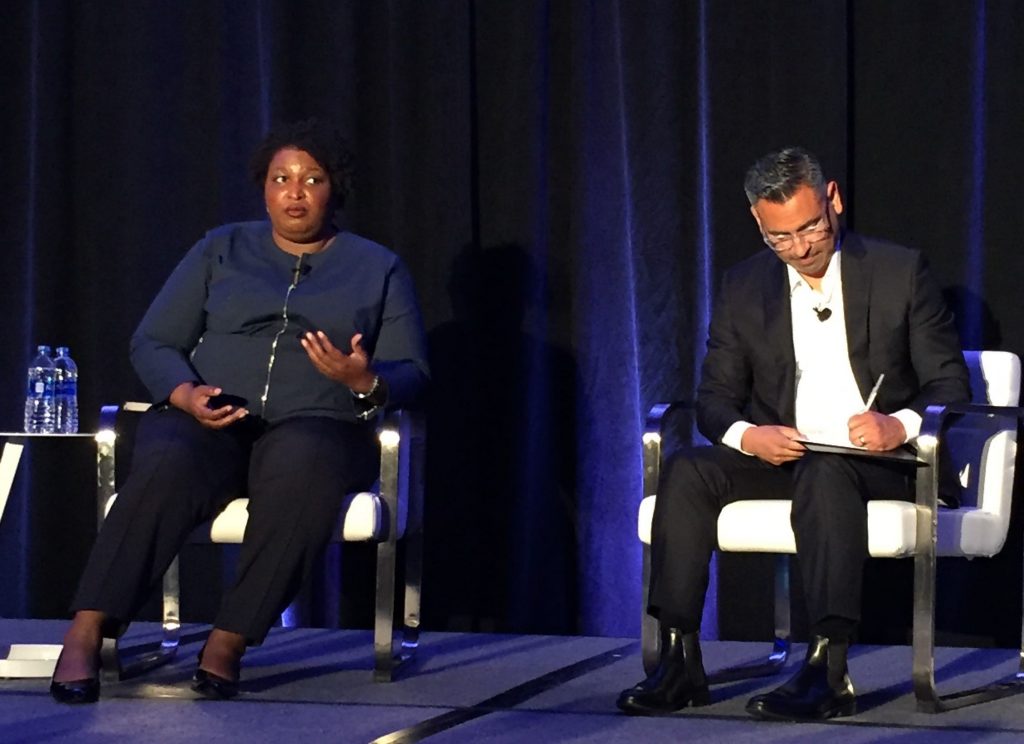 Lesson #1: “Ideology is not the same as intention.” Abrams shared stories of not settling for just fighting back against a bad bill but working with legislators across the aisle to find solutions, because she wasn’t going to be blinded by ideology but instead stayed focused on results. The difference between ideology and intention is an important message for anyone working across sectors to achieve better, more equitable results.
“I don’t believe in conversion,” she said. “I don’t try to make them agree with me. I try to find places of common cause where you can make advances. I believe in incrementalism. You’re not going to get everything you want at once, but you can get more of what you need the longer you’re willing to work at it.”
As our cradle-to-career partnerships work to transform systems, a focus on changing mindsets, beliefs and mental models can yield long-lasting impact, but it can’t happen overnight. Instead of focusing solely on changing hearts and minds, our communities can — and are — changing systems: changing policies, shifting funding and disrupting power structures.
Speak the whole truth
Lesson #2: “Transparency is essential to transformation.” Abrams encouraged us to be willing to admit our mistakes, own our responsibility in our successes and our failures, and hold ourselves accountable by measuring ourselves against real numbers.
Public accountability is no stranger to the StriveTogether Cradle to Career Network. As Abrams said, “Collective impact partnerships have at their core the notion we are in this together and the work that has to be done has to make certain that everyone has a stake.” To help everyone to truly own their role, our cradle-to-career partnerships use data as a flashlight to illuminate gaps and mobilize people into action to create opportunities for kids of color and kids from low-income families.
Her push to be vulnerable and admit our failures and mistakes is critical. We have to be more willing to admit our shortcomings and invite others in to help find solutions. StriveTogether’s own racial equity journey is a powerful example of learning from failure and not allowing that failure to be fatal, but rather to use stumbles as lessons for improvement.

Lift up unexpected voices and show up
Lesson #3: “Lead from the outside.” Abrams has written a whole book about this, and her invitation to leaders to bring unexpected voices to the table was met with loud applause. “If you want to know how to help a struggling child, talk to a struggling child,” she said. “When we’re willing to work not with community, but in community, that’s when transformation is real.”
Her wisdom on how to influence policymakers is timely as our Network is seeing more policy wins and as we enter yet another election cycle. “Politicians respond to three things: money, peer pressure and attention,” Abrams said. As advocates, we have a responsibility to show up in the places where politicians are in public and explain the problems we’re facing through data and stories, explaining why these challenges are problems and being clear about the solutions.
As communities work to change power dynamics in communities and empower youth and families to determine their own destinies, take stock of what Abrams shared: “People do not cede power. You take it. You can’t wait for people to cede power. Power is seductive and attractive. … It’s not about getting them to cede power; it’s making sure they understand it’s not their power to hold.”
What’s next?
Abrams describes herself as a meliorist — not an optimist or a pessimist, but someone who believes that the world can be made better by human effort. Our job, she says, is to believe in possibilities and find antidotes. As unstoppable changemakers, all of us have an obligation to find common cause to get things done, speak the whole truth and lift up unexpected voices. We have to take bolder swings at policy change and learn in public.
And some of us — I’m looking at you, fellow women and people of color — need to run for something.
The post Creating possibilities with outsider leadership: Lessons from Stacey Abrams appeared first on StriveTogether.
]]>The post Test, learn, improve and repeat! appeared first on StriveTogether.
]]>As I’ve learned in my work with communities across the country applying StriveTogether’s collaborative improvement approach, one of the most underused steps in any improvement process is learning from what happened — good, bad or otherwise. In part, that’s because of our sector’s misplaced urgency to jump from symptoms to solutions instead of prioritizing time to reflect, analyze and dig into the root causes. It’s also in part because of the deeply entrenched elements of white supremacy culture that dominate our workplaces — patterns of perfectionism, defensiveness and either/or thinking. These behaviors are keeping the status quo in place.
Only if we give ourselves permission to be vulnerable with one another — to be truth tellers — will we be able to truly create a culture of learning that drives equity and results. The practice of emergent learning (or making thinking visible) can be a powerful way to create a learning culture on your team.
I was at the #GEOLearn conference to speak on a panel and share how StriveTogether has worked to embed principles of emergent learning in our work with cradle-to-career partnerships. This approach is meant to help combat human tendencies of leaping to solutionitis and instead test, learn, improve and repeat.
Emergent learning begins with asking powerful questions. Borrowing from the world of human-centered design, we start with broad, forward-focused “How might we …?” questions to unleash our full creativity in problem solving. In crafting a question, avoid fuzzy language — shorthand, overgeneralized words and phrases (e.g., effective leadership — What does effective mean? What about leadership?).
| Fuzzy Language | Clear Language |
| Community engagement | Students and parents have decision-making power to define and prioritize strategies and allocates resources |
| Bias/racism | Implicit bias of educators that leads to disproportionate rates of suspensions and extensions for African-American boys |
| Data use | Practitioners use student-level data on a daily/weekly basis to target support and improve how they work |
Fuzzy language can lead to weaker inquiry, overly global solutions and a false sense of alignment in partners. For example, people generally agree “community engagement” is a good thing, but you may not really have buy-in about sharing and ceding decision-making power to young people unless you are explicit about the goal. “De-fuzzify” your language so that your “How might we…?” question drives targeted inquiry, insight and action.
After hearing lessons and takeaways from my co-panelists — a consulting group (Ross Strategic Group) and a grantmaker (the Ewing Marion Kauffman Foundation) — I began to reflect on the evolving role that StriveTogether has played over the last decade.
When we work with communities in the early stage of this work, we operate somewhat like a consulting group, sharing the wisdom and expertise of communities that have built the civic infrastructure to get better results for children and youth at scale. When we work with Cradle to Career Network members that are more advanced in this work, we serve as a connector and a coach. And with the Accelerator Fund and other funds in the Cradle to Career Community Challenge, we have added the role of grantmaker.
As an organization, we are learning and continuously improving. Progress is one of our core values: We aspire to share learning and progress in real time, view professional development as personal growth and fix problems through continuous improvement. Because as Hanh Cao Yu said, “It’s not about beating the odds. It’s about changing the odds.”
If we are to collectively make progress on transforming systems to change the odds for every child across our country, we need to intentionally build a culture of equity and results — with a powerful learning engine.
So take time to reflect. Be brave enough to share your learning — particularly when your views diverge from the norm — and turn those insights into action with others. When we make thinking visible, we increase our ability to get things done.
The post Test, learn, improve and repeat! appeared first on StriveTogether.
]]>The post Social justice and teamwork are the future of globalization appeared first on StriveTogether.
]]>How might we prepare global residents for the future of work? Past waves of globalization offer lessons on what it will take to more effectively weather the transition. As leaders consider how to shape a new architecture for Globalization 4.0 (the theme of the World Economic Forum’s 2019 Annual Meeting), we must prioritize the goal of addressing persistent inequalities – particularly those based on race, income, gender and place. This is the moonshot of our generation.
Growing up in the 1990s with the global proliferation of American consumer goods and the start of the digital revolution, globalization seemed inevitable. Creative disruption threatened every industry, blue-collar and white-collar jobs alike. But the interconnectedness of our world accelerated by globalization was also thrilling. Millennials grew up expecting change, knowing that because it’s impossible to unwrite the past, we must accept the uncertainty of change.
It’s time to be unapologetic about the emergent nature of our ever-changing world. No problem of human destiny is beyond human beings, so here are three prescriptions for leaders to embrace as we prepare for the future:
1. Take a systems approach
Communities and countries can’t pretend to build walls around themselves. Let’s face it: our world is interconnected, and our fates are linked. The reality of climate change makes this crystal-clear. To combat nationalism and nativism in favor of globalism and humanism, we must remember the African proverb that if you want to go fast, you can go alone, but if you want to go far, we must go together.
Leaders working towards large-scale social change are taking a systems view on a range of issues from Built for Zero (to end homelessness) to Campaign Zero (to end police violence). In my hometown of Chicago, hospitals are working alongside residents to reduce health disparities through West Side United.
If you take the long view, we’re living in the best possible time to be alive, according to Harvard psychologist Steven Pinker. While we should be optimistic, society still seems more polarized than ever, with people talking past one another, arguing to win instead of arguing to learn. Speaking on this topic at the 2018 World Economic Forum Annual Meeting, I shared strategies to help others and ourselves take a systems view and slow down our thinking to address the root causes before moving to action.
2. Disrupt the accrual of power and privilege
Our current systems are perfectly designed to get the results we’re getting, and the market alone will not generate the best outcomes for those most burdened – particularly people of color, women and other minority populations. To disrupt the accrual of power and privilege, we need to create new systems that intentionally reverse structural inequities. We must embrace john a. powell’s targeted universalism and work with community partners to create systems that work for those most burdened.
This is the crux of my work to coach hundreds of cross-sector leaders toiling to build a brighter future for every child in 70 regions across the United States. The community partnerships in the StriveTogether Cradle to Career Network concurrently work to change everyday practices and behaviors, while advancing policies to transform the patchwork of systems that young people encounter across healthcare, education, housing, public safety, food security and more.
3. Leverage the power of networks
Systems thinker Donella Meadows ranked the power to create self-organizing systems as one of the most powerful leverage points to transform systems. As leaders consider ways to make globalization work for the greatest number of people, supporting networks that make thinking visible will be key. From professional learning communities among educators to Collaborative Improvement and Innovation Networks in the maternal and child health sector, groups of leaders and practitioners are increasingly coming together to share ideas, lessons and promising practices – and these networks need to get better about moving from sharing knowledge to transferring learning into action.
One network of which I’m proud to be a part is the Global Shapers Community, an initiative of the World Economic Forum spanning nearly 400 city-based hubs in 171 countries. Global Shapers self-organize to create local projects to improve the state of our communities – and share ideas and innovations with Shapers around the world to accelerate impact on a global scale. This movement is a positive example of what can happen when the power of globalization is harnessed for good.
As leaders around the world work to future-proof globalization, combat nativism and tribalism, and find solutions to global risks like pernicious inequalities, let’s find ways to work together to build better, stronger systems where everyone has the potential to succeed.
The post Social justice and teamwork are the future of globalization appeared first on StriveTogether.
]]>The post Connection, inclusion and renewal: 5 insights from the Heartland Summit appeared first on StriveTogether.
]]>The idea behind the event was to connect people from the coasts and the center of the country to spark ideas and drive renewal and sustainable development across the country. Beacons of hope are emerging in these places, and innovation at the local and regional levels is a refreshing contrast to the national political and cultural climate in which we live. Here are five takeaways from dialogues, conversations and experiences I had at the summit:
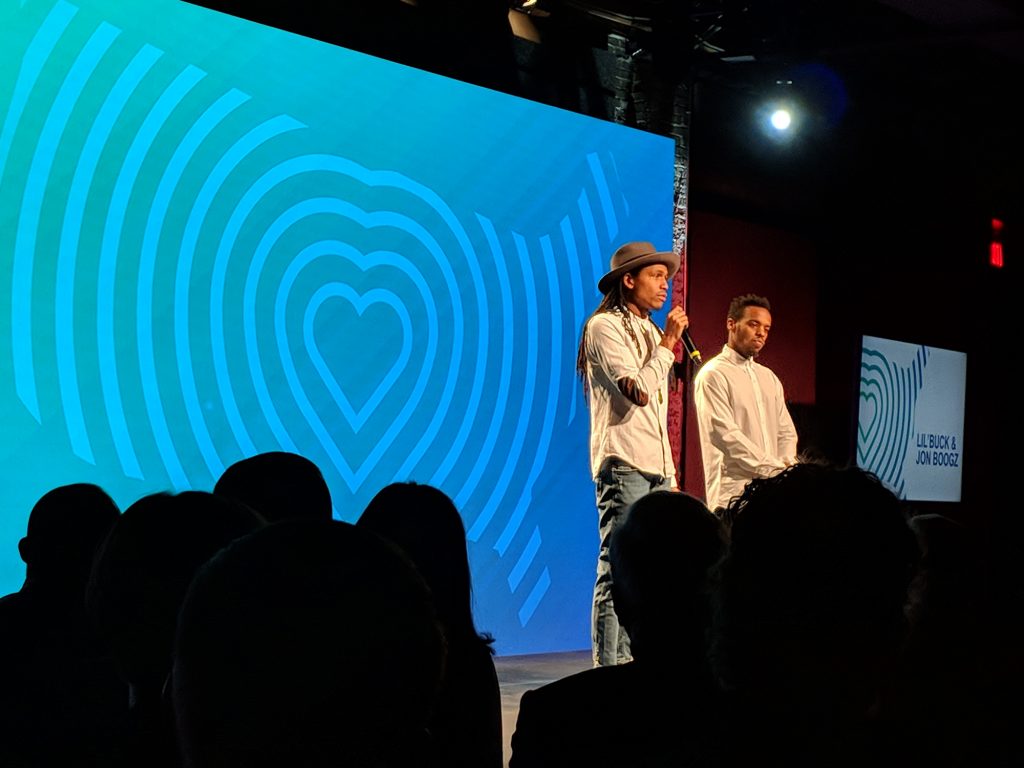 Build networks of change agents to power a shared future. The summit opened with a dance performance by Lil Buck and Jon Boogz on building bridges and healing through love. As people across the country find common ground and work across lines of difference, it’s important to start with the strengths of a community. The notion of asset-based community development — celebrating and starting with what you have, rather than focusing on what’s missing — resonated strongly. Consider ways to bring communities together through arts, culture, fitness and food. Ultimately, this hard work is about finding the humanity in one another and connecting people across cultures so that we don’t feel alone in our struggles.
- Communities need to do more to embrace inclusiveness. At a time when less than 1 percent of venture capital dollars in the U.S. go to African-American entrepreneurs and less than 10 percent support women entrepreneurs, we shouldn’t be surprised that our communities continue to perpetuate white male dominant culture. As leaders working to disrupt the status quo, we must be more intentional about how we rebuild communities — to focus on affordability, opportunity and strategies that get real results. In doing so, we need to pay equal attention to physical infrastructure, like renovated parks, and human infrastructure, like support for minority entrepreneurs.
- Ignite optimism and believe in the power of place. At StriveTogether, this idea feels fundamental — we don’t settle for anything less than the audacious goal of achieving more equitable results for every child in every community from cradle to career. Research reminds us of the connection between geography and inequality, and as leaders we must ignite urgency and action — not navel-gazing and admiring the problem. Our systems and cultural beliefs are human constructs, which means that we collectively have the power to change them. So let’s keep the work going.
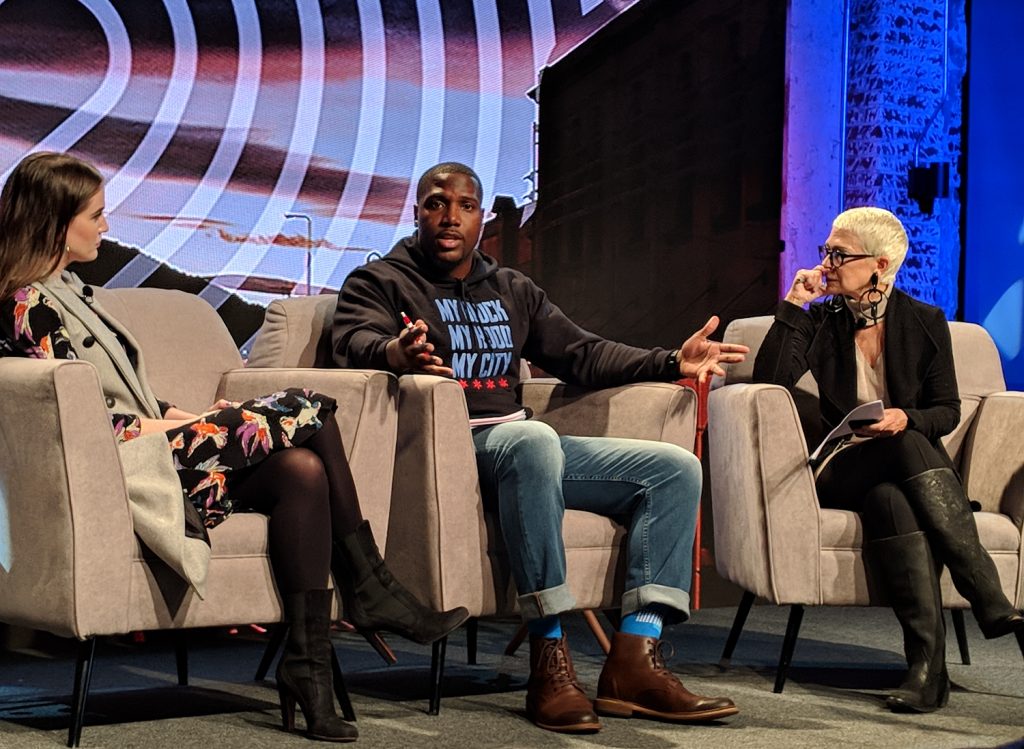 Embrace resilience and renewal. Hand in hand with optimism is the idea of renewal, which Anne Marie Slaughter defined as a new commitment to old ideals, best done with sincerity and humility. In conversations about preparing people for the future of work, developing new skills is reframed as lifelong learning. We ought to unapologetically embrace the emergent and ever-changing nature of our world and celebrate that improving is a way of life. This aligns with StriveTogether’s work to help cross-sector leaders to create and sustain a results-oriented culture so that outcomes improve for children and families. By working together to solve regional challenges, urban and rural communities can make a measurable difference.
- Create opportunities for locals to lead. We must temper our audacious goals with a healthy dose of humility — and turn to community leaders and partners to chart the course. The best ideas and solutions will come from those closest to the lived experience. At the summit, Shamina Singh from the Mastercard Center for Inclusive Growth spoke about income inequality, information inequality and the need to use the power of data for good. Civic institutions have a critical role to play in collecting and connecting data to inform community solutions. That’s why so many cradle-to-career partnerships help local leaders and practitioners interpret data, allowing them to better understand the stories behind the numbers to yield more informed strategies.
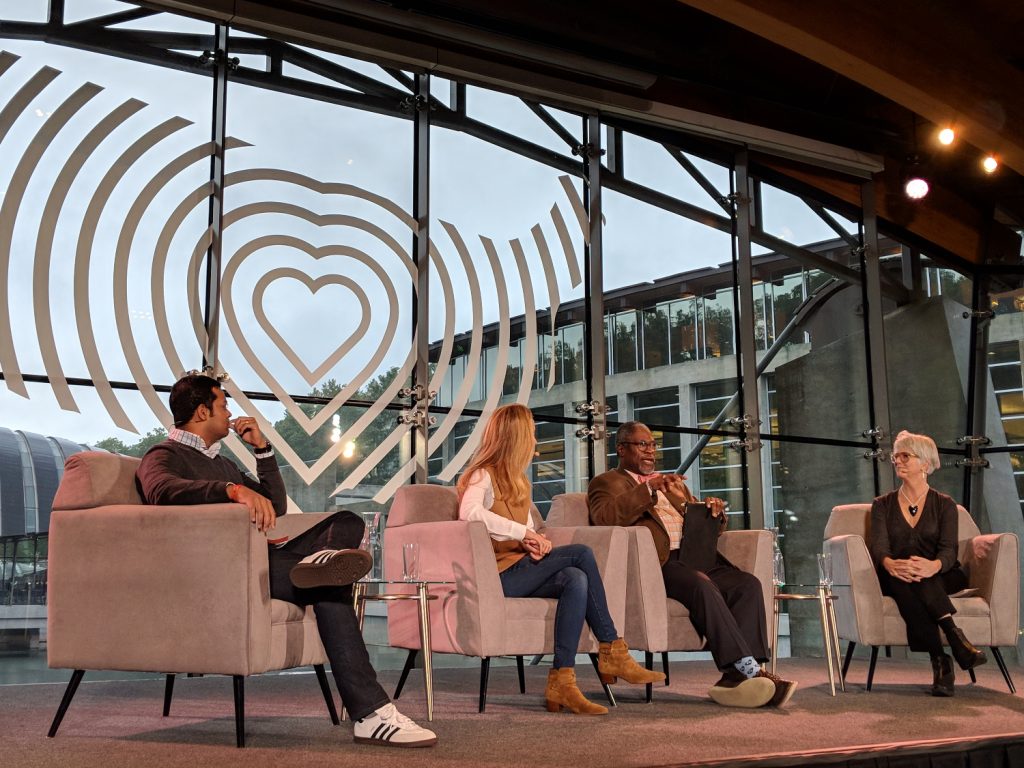 To move our country forward, we must double down on our work to strengthen the heart of America — in both rural regions and in cities. As our 70 Cradle to Career Network members continue their work to improve outcomes for 10.5 million children and youth across America, let’s continue to focus on what we have in common to overcome divisiveness and differences. Rather than seeking compromise, let’s find urgency and ambition in shared, bold goals. And let’s pair that vision with energy and action to get things done.
The post Connection, inclusion and renewal: 5 insights from the Heartland Summit appeared first on StriveTogether.
]]>The post Advancing equity and justice for every child, cradle to career appeared first on StriveTogether.
]]>On April 13, I’ll have the honor of speaking at PolicyLink’s national Equity Summit 2018: Our Power. Our Future. Our Nation. It’s not surprising that the summit, taking place in Chicago, sold out due to unprecedented demand months ago. In this unique moment in our nation’s history, leaders and practitioners, particularly in the social sector, are feeling the urgency of a call to action to advance equity and justice at a greater scale.
StriveTogether has embraced the importance of place from our inception. Leaders in our communities focus on achieving population-level results for the success of every child along the trajectory of birth to adulthood. These outcomes require intentional effort to support asset-based community development, authentic community ownership, and local data and experience.
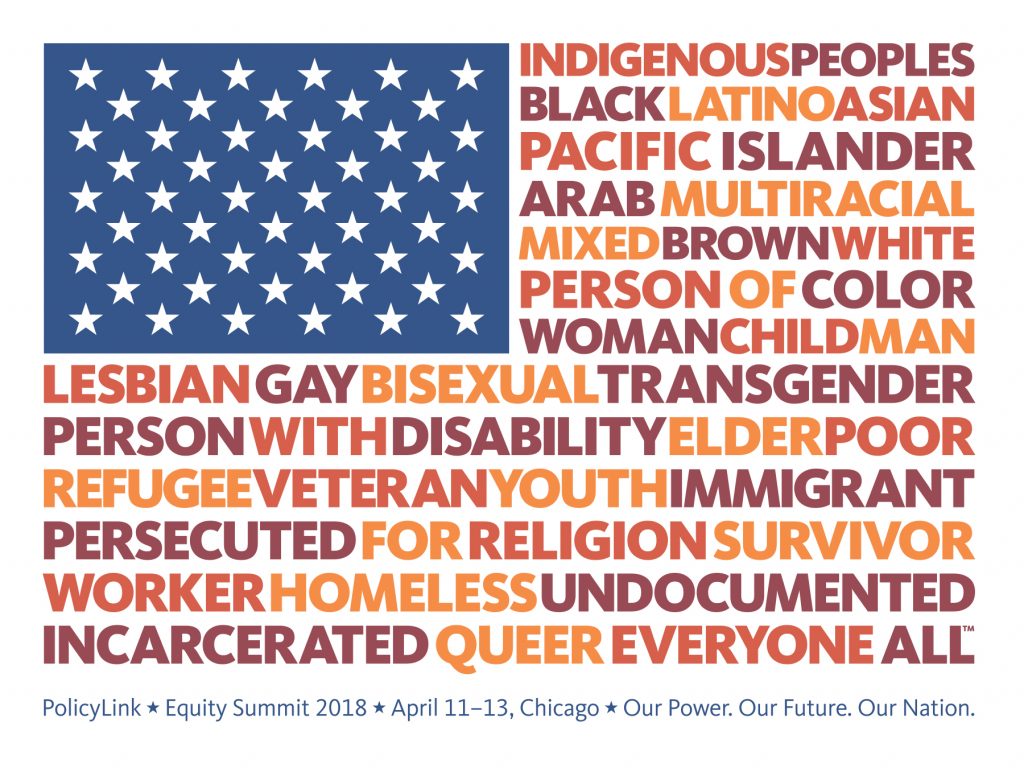
Working to advance equity and justice — particularly racial equity — can seem daunting, overwhelming or downright impossible. Last month, we honored the memory of Linda Brown, who was the lead plaintiff in the landmark desegregation case Brown v. Board of Education, and this week we remembered the assassination of the Rev. Dr. Martin Luther King Jr. We have a long journey ahead to dismantle structural racism and design stronger systems of inclusion — and transformative change has no clear roadmap and endpoint.
Instead of being paralyzed by the breadth of change required, we coach local partnerships at every stage of development in the StriveTogether Cradle to Career Network to integrate various aspects of equity into the core elements of their work.
- In early partnership work, our framework requires leaders to define a broad cradle-to-career vision grounded in the context of the community and publicly release disaggregated data to drive action.
- As partnerships become more mature, they align actions to reduce disparities, co-develop solutions with community members and implement targeted strategies that intentionally accelerate outcomes for populations facing the worst disparities.
- With our new strategic plan, communities are taking a bolder approach to engage people across sectors to drive shifts in public and private resources to advance better, more equitable outcomes toward economic mobility as an overarching indicator of success.
We have seen powerful examples across the Network in reducing racial disparities, authentically involving community and advancing policy change for lasting change. As I prepare to share some lessons from a decade of place-based work from the StriveTogether Cradle to Career Network, I am encouraged by our communities’ passion and commitment to equity and results. And I continue to search for ways to shrink the change to make large-scale change feel more manageable. Here are three ways you can start (or keep) acting differently to advance racial and economic equity in your place-based work.
- Set real targets. When defining the scope of your work, adopt that you genuinely believe you will work to accomplish over time — and hold yourselves accountable to them. For example, when we worked with a team from Raise DC on its postsecondary enrollment strategy, the partnership pinpointed a short-term target to increase postsecondary enrollment of first-generation, low-income students of color with a GPA between 1.5 and 3.0 as that group needed the most support and attention.
- Respect community voice. When we coach communities to identify the root causes of disparities during factor analysis, it’s not enough to look at quantitative data. Using empathic interviews or stakeholder experience can help uncover less obvious factors. In Waterbury, Conn., school counselors followed up with every high school student who was absent during a two-week timeframe and asked why they didn’t attend school. Instead of jumping to conclusions, this approach led to a wider range of root causes and more powerful strategies for Bridge to Success.
- Pursue concurrent strategies. We coach communities to advance strategies — targeted and universal; practice level and system level; and short-term and long-term — that address different depths of the systems iceberg. As an example, Seeding Success leaders and practitioners in Memphis, Tenn., are simultaneously building the capability of nonprofit partners to improve kindergarten reading while advocating for increased public funding for quality preschool.
These are just a few ways communities across the StriveTogether Cradle to Career Network are advancing equity and justice. I look forward to making race equity even more explicit in our work as a necessary step toward our vision.
The post Advancing equity and justice for every child, cradle to career appeared first on StriveTogether.
]]>The post Reflections on representing youth voice at Davos appeared first on StriveTogether.
]]>I was selected as one of 50 young leaders from the Global Shapers Community to participate last month in the World Economic Forum Annual Meeting, a convening of leaders in government, business, academia, and media annually in Davos. I was representing my city of Chicago, amplifying the voice of 20-somethings and raising the profile of StriveTogether.
The theme of Davos this year was Creating a Shared Future in a Fractured World, which is both timely and consistent with StriveTogether’s vision for a future of learning. I shared my thoughts about the theme on the World Economic Forum’s Agenda before I left, and here are a few takeaways from my week at Davos.
Redefine leadership for the future of work
For the first time, all seven co-chairs of the Annual Meeting were women, which is symbolic of the type of transformation needed to change mindsets about power and leadership. Yet only 20 percent of delegates were women leaders.

I spoke on a panel about political correctness.
A few Global Shapers spoke with Carolyn Tastad, North American president of P&G, about women and leadership, and she shared stories about corporate efforts to broaden the mindset of what normal is and to confront assumptions about leadership. P&G partnered with Seneca Women to create an exhibit on Myths vs. Reality, which addressed biases about women in the workplace to change the narrative about fixing the system instead of fixing women.
As we work to build the capability of leaders and practitioners across the country, how might we positively contribute to this shift in mental models about what leadership is and what it requires? Reflecting on the future of work felt very relevant to cradle-to-career partnerships working to change how communities are organized to support children and families.
Canadian Prime Minister Justin Trudeau offered one powerful example when he explained that while 50 percent of his Cabinet are women leaders, 100 percent of the Cabinet is focused on gender equity, applying a gender lens when making decisions. To take this further, our community leaders ought to apply both a gender lens and a racial equity lens in the decisions they make.
Shift your perspectives and be bold
I had the opportunity to moderate an intimate Q&A with former Microsoft Founder Bill Gates, who spoke passionately about how if you take a broader view of history, global well-being is at its peak. Overall, the world is getting better and it is possible for us to work together to achieve the Global Goals set forth by the UN Sustainable Development Goals.
While I was at dinner with a few Nobel Laureates in Economics, much of the conversation focused on place-based strategies to rejuvenate city systems to support vulnerable populations. Angus Deaton had just published an op-ed in the New York Times on the subject, and leaders expressed an obligation to live up to the ideals of a social contract.
Kate Raworth, author of Doughnut Economics, offered a unique perspective to change the goal of global economies. Rather than seeking unlimited market growth, what if we designed our systems given the constraints of our geography and the natural resources of our world in service supporting the most vulnerable populations and societies?
Similarly, John Goodwin of the LEGO Foundation encouraged us to redefine play and reimagine learning, exploring ways to unlock creative ideas and harness curiosity in service of the greater good.

A small group of Global Shapers had a serendipitous meeting with Yo-Yo Ma, who is on the board of the World Economic Forum. We shared ideas about how the Forum can best support youth leaders around the world.
Actions speak louder than words
A new addition to the Programme was a series of dialogues entitled “We Need to Talk About…” I facilitated a dialogue on talking about privilege (a seemingly ironic topic to discuss among the elites at Davos). Participants eagerly shared stories and perspectives, dismantling the myth of the meritocracy, debating the relative efficacy of affirmative action and discussing the political implications of targeted universalism. However, many bristled when I challenged them to make action commitments before leaving the conversation.
Later when I asked Jack Ma, executive chairman of Alibaba Group in China, the first audience question in a livestreamed Q&A session, his takeaway was that “Philanthropy is about action, not about giving money.” This resonates with how StriveTogether has seen civic infrastructure evolve in communities in terms of aligning investments to what works alongside the requisite skills and capabilities to sustain the work.
Serving as a panelist alongside Harvard cognitive psychologist Steven Pinker; Lonnie Bunch, National Museum of African American history and culture director; and social entrepreneur So-Young Kang, I shared examples of how StriveTogether helps community leaders and practitioners work across lines of difference, uncover mental models at the root of structural inequities and work together to take action toward results rather than arguing for the sake of winning.
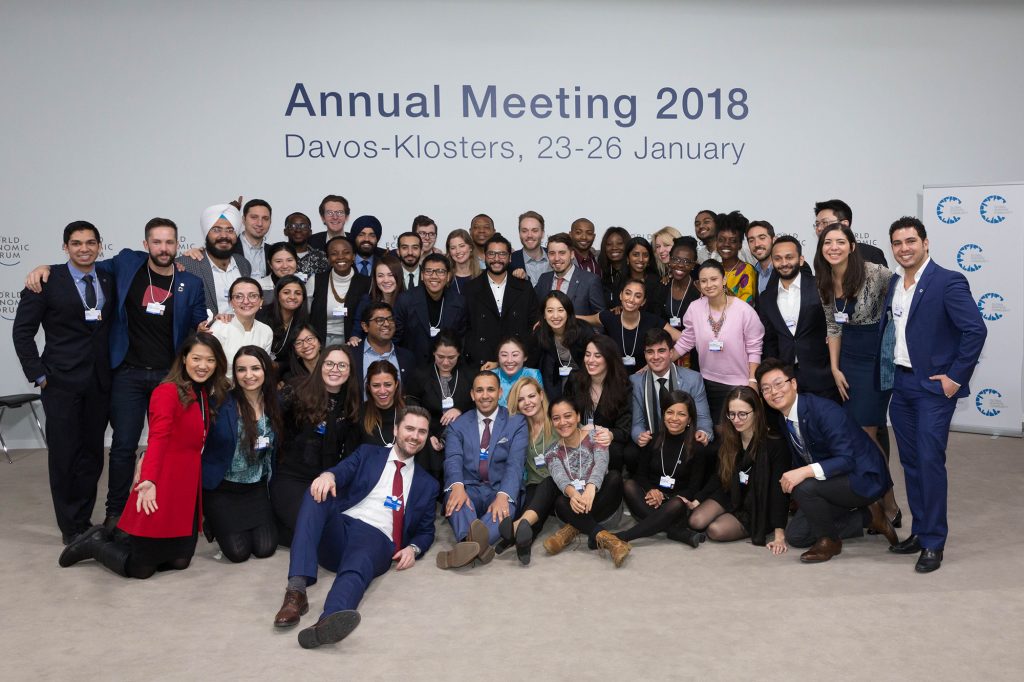
Our delegation of 50 Global Shapers represented cities in 40 countries working on social impact efforts on climate change, education, health care and more.
Ultimately, bringing together the world’s leaders once a year is fruitless if it’s not focused on taking action to achieve better results for the children, families and communities without a seat at the table.
As a young woman of color at the table, it would have been easy to feel marginalized and excluded in the presence of power. Instead, I felt an urgent obligation to speak up, ask tough questions and challenge leaders to do more in service of the greater good. Returning home, I’m reenergized to deepen StriveTogether’s work in communities across America to change the power dynamics and align entire communities’ efforts toward better and more equitable outcomes for every child, cradle to career.
The post Reflections on representing youth voice at Davos appeared first on StriveTogether.
]]>The post Across Dallas County, outcomes are improving and systems are changing appeared first on StriveTogether.
]]>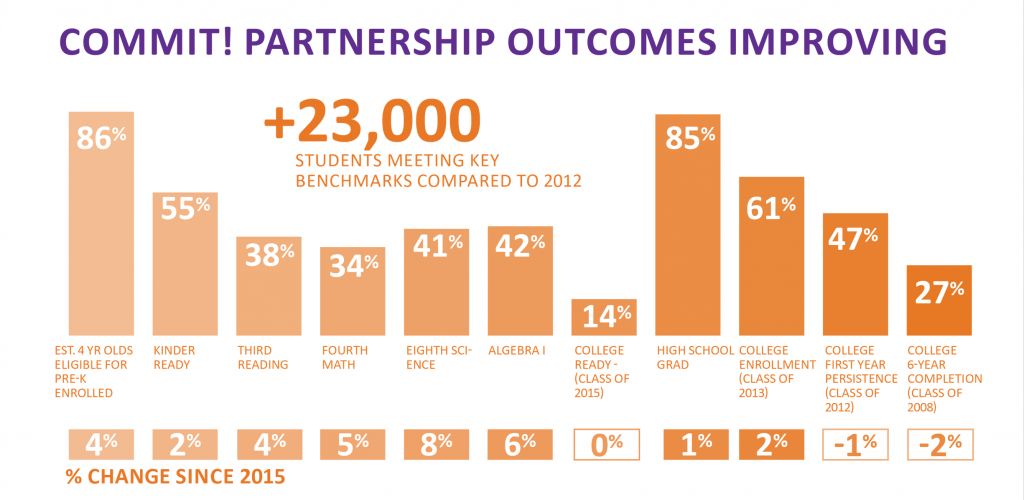
Across Dallas County, most cradle-to-career outcomes are improving, and there are communitywide examples of transformative — and sustainable! — change because of better coordinated actions taken by individuals and institutions across sectors in service of a shared vision for student success. Commit is leading change efforts across the cradle-to-career continuum and seeing results. Here are some examples:
Mobilizing partners around a shared result: Commit has brought together over 100 partners through Best in Class, a communitywide initiative to attract, prepare, recruit and retain effective and diverse teachers and school leaders. This effort began with TeachDFW, a teacher recruitment campaign for Dallas students. Best in Class now has leaders and practitioners across systems involved — including educators, deans, HR directors, school districts, foundations and businesses.
“Until TeachDFW, there was a lack of coherent collaboration among schools of education,” said Dr. John Gasko, dean of the School of Education at the University of North Texas. He describes the shift as creating “positive turbulence in the region with more providers elevating their gaze from ‘my institution’ to seeing this as ‘our work.’ What Commit has done has catapulted traditional and high-quality alternative providers on a different trajectory.”
School districts are playing their part by reviewing data to make decisions and surveying teachers to inform Best in Class’s strategies. In one case, Dallas Independent School District piloted a program to relocate highly rated teachers and principals to turn around schools — a strategy that already has been replicated in a neighboring school district.
To better understand how to attract students of color and low-income students into the teaching profession, partners asked students for input. Based on ideas from Latino students (the teacher demographic most needed currently), the university created a teacher superhero anime character as the mascot for the Emerging Teacher Institute Bilingual/ESL Teacher Program.
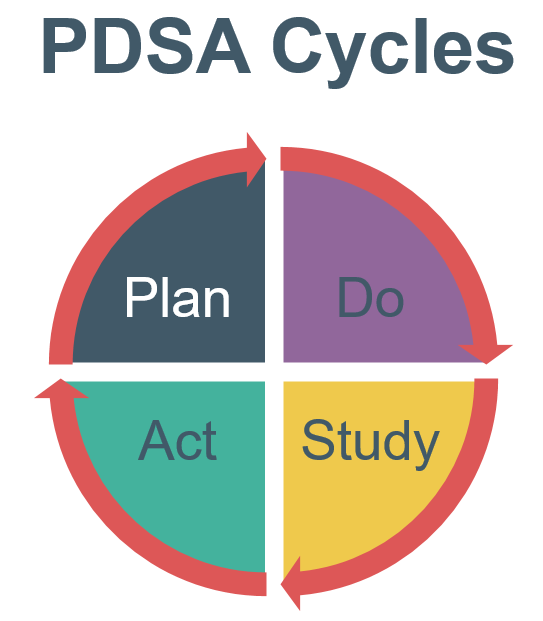
Building a culture of data-driven decision-making: Commit has enabled school districts and nonprofits to strengthen the data infrastructure to regularly collect, access and use student-level data to inform practices. After participating in StriveTogether’s Postsecondary Enrollment Impact and Improvement Network, Commit facilitated a local Impact and Improvement Network with three school districts and two nonprofit service providers to increase Federal Application for Free Student Aid (FAFSA) completion rates using disaggregated data, continuous improvement skills and peer-to-peer learning. Participating campuses helped 63 percent of seniors (1,686 students) complete the FAFSA, up from 48 percent the prior year.
Now, school leaders widely use the continuous improvement process. “Instead of throwing stuff against the wall like spaghetti and hoping it sticks, I’ve become a better advisor and advocate for student success,” said Holly Moore, college advisor at South Grand Prairie High School.
To strengthen a culture of data use across nonprofit partners, Commit created D3, the Data-Driven Decision-Making Institute. The nine-month data training helped nonprofit practitioners learn how to use student-level data — to ask the right questions about data and not be afraid of data. Now, nonprofit partners can access some data directly from school districts to inform their practices.
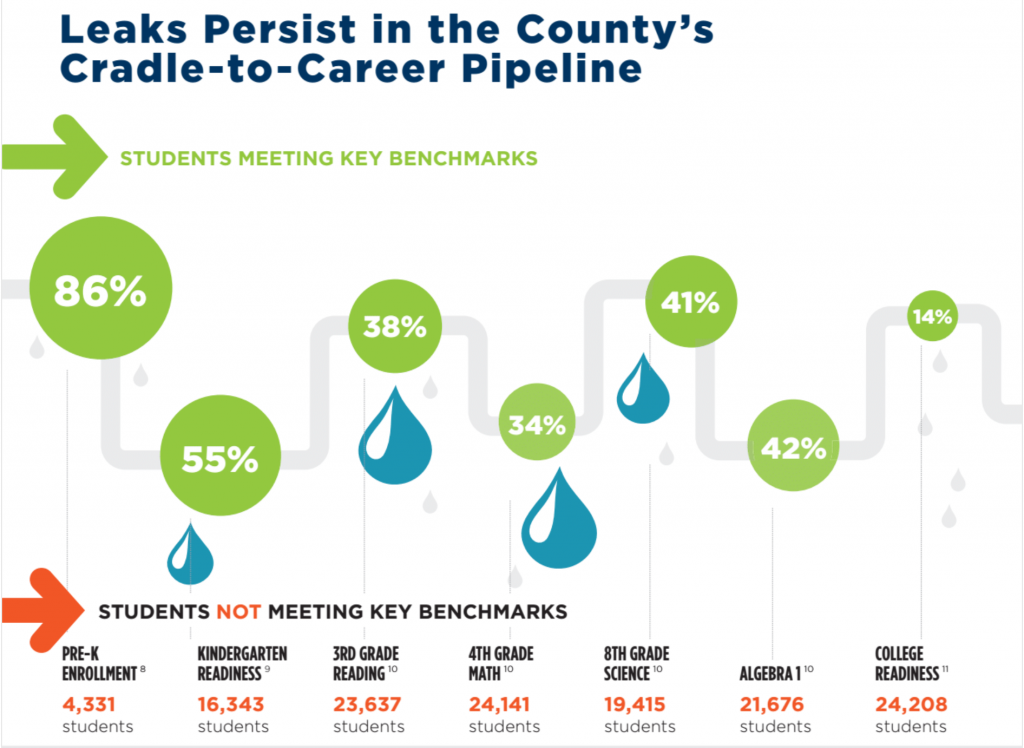
Aligning actions, resources and structures to get results: Commit galvanizes 13 school districts, family-serving nonprofits, investors and the business community around common early learning strategies through Early Matters Dallas. Its pre-k enrollment campaign has significantly contributed to 5,800 additional students enrolling in pre-k over the last three years, representing the largest urban county growth in the state of Texas in that timeframe.
“We’ve increased the number of kids who’ve benefited from quality pre-k, which is a huge testament to what Dallas County as a whole has been able to galvanize people who normally wouldn’t talk together to work together,” said Derek Little, assistant superintendent of Early Childhood at Dallas Independent School District.
The campaign includes a common early learning registration week, a bilingual texting platform for family engagement and widespread dissemination of pre-k registration information through partners including faith leaders, WIC offices, pediatricians and city water bills. Even though districts and partners have encountered turnover and leadership transitions, strategies have been integrated directly into partners’ work — becoming part of how they function as opposed to something “extra” done because of being connected to Commit!
Local and state policies have changed to support this shared vision — including a $30 million budget reallocation by the Dallas ISD Board of Trustees to mandate quality pre-k for all 3- and 4-year-olds and state policy changes to enable community colleges to offer bachelor of arts degrees in early childhood education.
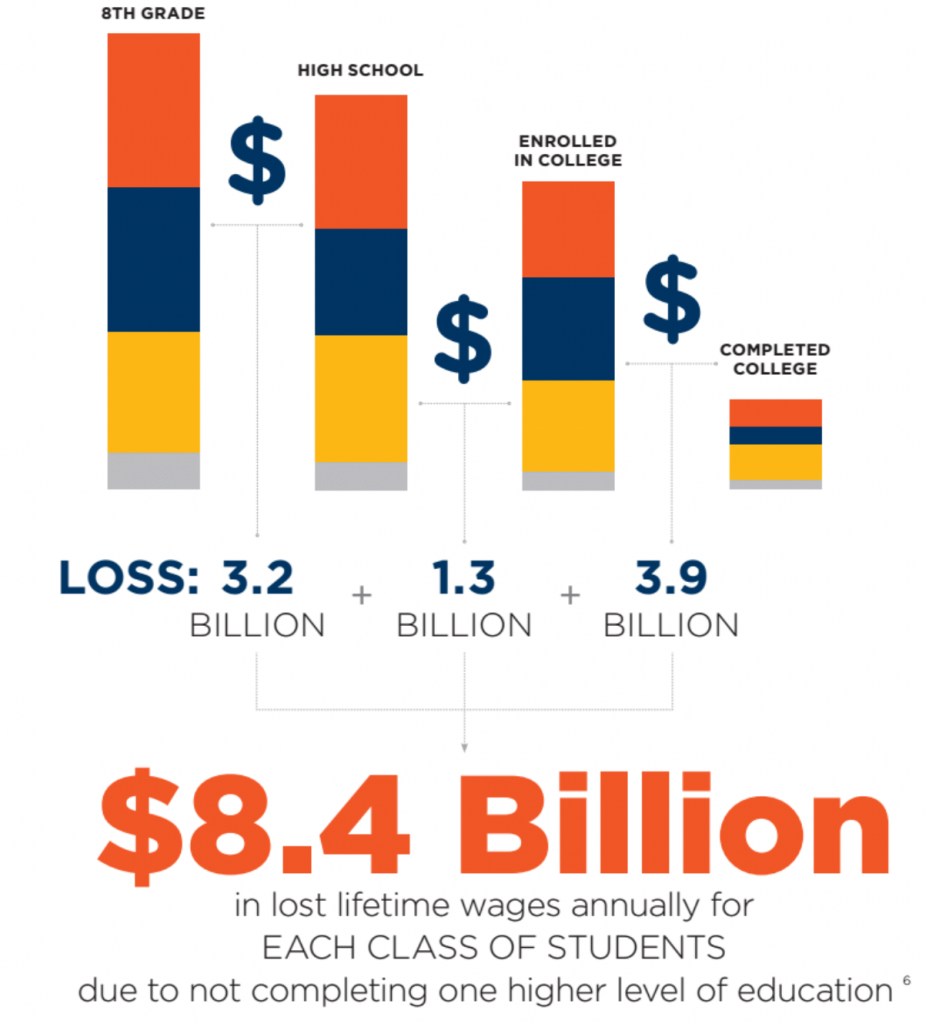
“Using this one piece of data — that kids who attend pre-k are twice as likely to be ready on the first day of kindergarten, that those kids are three times more likely to read by third grade and four times more likely to graduate high school — it’s become part of the dialogue. People understand that,” said Dustin Marshall, Dallas ISD School Board trustee.
What’s next?
Being designated as Proof Point is a major milestone — but it’s not the end of the road. Commit is working toward a 2030 goal to have 60 percent of adults earning a postsecondary credential. Critical strategies are underway to accelerate outcomes and eliminate educational disparities as systems continue to change. We congratulate Commit on this important step in its journey to transform Dallas County for every child, cradle to career.
The post Across Dallas County, outcomes are improving and systems are changing appeared first on StriveTogether.
]]>The post In Cincinnati, systems are changing and student outcomes are improving appeared first on StriveTogether.
]]>After a decade of cross-sector efforts, nearly 80 percent of key indicators of student success are improving. And, behaviors, policies and practices have changed and continue to change across the community to align efforts and resources to improve outcomes from kindergarten readiness through post-secondary completion.
When StrivePartnership started in 2006, a group of leaders from various sectors throughout the Cincinnati area came together with a common goal: to improve academic success in the urban core. More than 300 cross-sector representatives joined the partnership, including school district superintendents, early-childhood educators, nonprofit practitioners, business leaders, community and corporate funders, city officials and university presidents.
By sitting around the same table, partners were able to align around shared educational goals and outcomes.
Now, 10 years later, organizations, institutions, and community members — including Cincinnati Children’s Hospital, United Way, Cincinnati Public Schools and the business community — are aligning their work to support a shared cradle-to-career vision.
Here are some of the successes StrivePartnership and its partners have had recently that exemplify how systems are changing:
1) Investing in what works: Public and private funders are changing the way they think about investments, recognizing the importance of investing in high-impact, evidence-based, scalable interventions in ways that secure sustainable public funding. Every Child Capital, a first-in-the-nation venture philanthropy fund focused on scaling proven early literacy interventions that have a business case for public funding and a secured public partner, has attracted more than $4 million dollars in funding.
Cincinnati Public Schools, in partnership with the Cincinnati Preschool Promise, is pursuing an unprecedented November 2016 levy to significantly expand access to preschool and strengthen the pre-K-12 public school system so every child has a strong start and a strong future.
2) Using continuous improvement: Over the last year, StrivePartnership developed a rapid-cycle continuous improvement capability training series, Impact U, for the region’s education leaders with Cincinnati Children’s Hospital (CCHMC) and StriveTogether. Community leaders are improving early grade reading, and a key Cincinnati Public Schools executive is now working half time at Children’s Hospital to ensure true collaboration.
“The bold experiment of ImpactU to build community capacity to have meaningful quality improvement skills that start small but build up in a systematic way is a critical partnership between CCHMC and StrivePartnership,” Tom DeWitt of Cincinnati Children’s Hospital said.
3) Aligning postsecondary partners: A collaborative of two- and four-year institutions from Ohio and Kentucky are analyzing data across postsecondary institutions to understand root causes for low postsecondary attainment through the Persistence Project. Spending time together strengthened relationships and allowed for sharing data across state lines, which is almost impossible.
“The work done across higher educational institutions might be difficult to continue without the avenue and opportunity that StrivePartnership provides to collaborate. It helps to have a regional focus. With the catalyst to move it forward, that has a bigger impact than working alone,” Dr. Patricia Mahabir of Gateway Community College said.
The StriveTogether Cradle to Career Network, which represents 68 communities across 32 states, is working toward the common result of the success of every child from cradle to career. StriveTogether has developed a method to assess the effectiveness of collective impact partnerships, helping communities stay focused on results and sustain impact over time. A community in the Cradle to Career Network will be designated as a Proof Point community when 60 percent of indicators across six cradle-to-career outcomes are maintained or improved year after year. Additionally, community leaders across sectors must demonstrate evidence of changing how systems work in four key areas: shared community vision, evidence-based decision making, collaborative action, and investment and sustainability.
StrivePartnership and its partners continue to strengthen civic infrastructure to support local efforts to achieve better and more equitable outcomes for children. Local partners are focused on continuing to build capability of leaders and practitioners to use data for improvement, adopt intentional strategies to address structural inequities, and expand parent and community engagement. They continue to pursue innovative approaches to align resources to what works, including public funding through a school levy to expand quality preschool.
Being designated as Proof Point is a significant achievement, but it represents a milestone – not the culmination of the journey. We congratulate StrivePartnership on this milestone, and we look forward to seeing the impact they will continue to make in the future.
The post In Cincinnati, systems are changing and student outcomes are improving appeared first on StriveTogether.
]]>