The post The power of design thinking across the Cradle to Career Network appeared first on StriveTogether.
]]>In the past 15-20 years, we have heard the words “innovation” and “design thinking” thrown around a lot in the corporate world. But what do these words really mean? How do they work in the nonprofit field? I’m a graphic designer and did not understand what these phrases meant when I joined StriveTogether in January for an internship. I have always been told that design starts with a concept and ends as an object or something visual — there is a finished piece of work at the end.
My thoughts on design thinking shifted recently when I took part in a panel discussion at the University of Cincinnati, where I am a student majoring in fine arts and focusing on graphic design. Comments from some participants gave a new perspective to my time at StriveTogether. The work of graphic designers is not limited to the products they create while sitting at a computer. All designers are creative problem solvers who provide or improve an experience for a user. StriveTogether supports the success of every child by providing technical assistance, resources, tools and proven processes. But I know what you may be wondering: How exactly does this national nonprofit organization act as a design team?
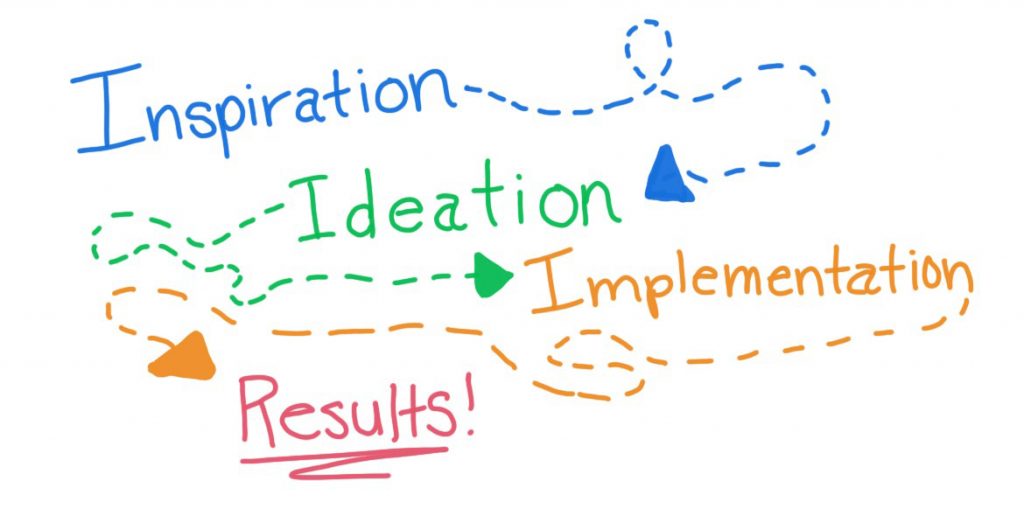
Here’s how it works: Communities join the StriveTogether Cradle to Career Network to get better results for kids. StriveTogether then works with those communities to find and refine solutions to the problems they are facing. StriveTogether also convenes communities to share stories of success. Learning from each other, communities develop strategies and best practices specific to their local needs. This collaboration leads to the Network Effect, which closes disparity gaps and helps create equitable outcomes for every child.
The StriveTogether approach began as an idea inspired by the inequities faced by kids in the U.S. education system. This idea was tested, refined and shared with others, where it was then tested and refined again — growing wider and deeper in scale until it was proven to work in a variety of contexts. Now, challenges and obstacles in nearly 70 communities across the country are being solved in creative and innovative ways.
No, the StriveTogether approach does not produce a singular packaged product for the user and will inevitably continue to evolve, but it is still based in design methodology. In this case, the problems are systems that create disparity gaps and the users are every child in the Cradle to Career Network.

I have come to learn through working at this organization that I am not a designer for a nonprofit. I am a designer for a national movement to get better results for kids, working on a team where every single member is a designer.
Blog post by Connor Johns, who served as the graphic design intern at StriveTogether from January to May in 2019. Connor is a senior at the University of Cincinnati studying fine arts, art history and psychology.
The post The power of design thinking across the Cradle to Career Network appeared first on StriveTogether.
]]>The post frank 2019: Closing the space between us through stories for social impact appeared first on StriveTogether.
]]>“You don’t need permission to make space.”
These powerful words by a young woman named Mary-Pat Hector set the stage for three days of community and creativity at frank 2019 in Gainesville, Fla. I’m still feeling inspired and invigorated by the gathering earlier this month, when I was in the company of 300 movement builders and change makers from around the world.
frank is not your typical conference. It’s named in honor of the late Frank Karel, who led communication for the Robert Wood Johnson and Rockefeller foundations. The idea behind frank is simple: Create a community of mission-minded, passionate people who use communication and evidence-based strategies to drive positive social, institutional and behavioral change. This annual event, which draws a mix of writers, researchers, activists and artists, features short speeches, storytelling, comedy, art, live music and more on and around the University of Florida campus.
I attended frank to learn more about the science behind storytelling — and to get a refresher course on best practices. What I hadn’t expected were the lessons about the power of comedy and pop culture in bridging differences and changing hearts and minds. Here are two that stood out:
- Give yourself the freedom to be silly. The work of getting better outcomes for kids is hard and messy and complex. We need to know it’s OK to bring brevity into the workplace. We should also explore ways to incorporate this in our communications. Tragedy is not the only way to inspire people to act — comedy can be very persuasive. And bringing joy and laughter to communities also recognizes their humanity.
- Get rid of the individual hero’s journey. No one can change the world singlehandedly. So why do we keep telling the story of a lone hero? Let’s share the journey of the world, with ordinary people who have the power to create extraordinary change. You see the effectiveness of this approach in the Black Panther film and the Harry Potter books and movies. The best world building allows you to be a citizen of the new world.
Here are five more insights I gained at frank 2019 about using stories to move people to action:
There’s a science to the art of storytelling. I learned three key aspects of this science at the gathering. First, telling stories using well-known plots (rags to riches, the quest, rebirth, etc.) can make the new familiar and the familiar new. Secondly, use emotions with intention. Instead of relying only on fear or sadness, invoke awe or pride or appeal to parental love. Thirdly, be strategic about what details you reveal and when — and leave room for your audience to fill in some blanks. That gives the audience space to connect the story to their own experiences. The most powerful part of your story may be what’s not said.
Effective communication is not about pushing your own message. Bring value to your community by entering their world. What problem are you trying to solve? Who is best positioned to help you solve that problem? Are you connecting with what your community cares about most? In one amazing example, learn how a campaign by one of Brazil’s biggest football clubs to encourage organ donation among its fans has led to a massive rise in the number of life-changing transplants.
Talk in pictures. This doesn’t mean hiring an expensive photographer or videographer. Paint pictures with your words. Use concrete, vivid language. Every single word matters when you are constructing experiences and making memories. A powerful example is Martin Luther King Jr.’s iconic “I Have a Dream” speech. He uses powerful images and metaphors — from “the red hills of Georgia” to “a state sweltering with the heat of injustice” — to help people get the complex issues he’s conveying and to connect people with his ideas on an emotional level.
Connect your call to action to a result. We’ve all been guilty of weak calls to action, like “get more information,” “sign up,” “follow us on Facebook” or “share this on Twitter.” A call to action must be concrete and specific. People need to see how their action works to solve the problem. And they need to know how to do it. Keep in mind goals and calls to action are not the same. The goal of the Montgomery Bus Boycott was desegregation, but the call to action was, “Don’t take the bus” — something that was tangible and easy for people to understand.
Make sure your stories are actually stories. Stories are one of the most powerful ways we have to communicate with each other. Every social movement starts with a story. Science shows memories attach to stories and stories can create lasting change in our brains. Stories are not messages or vignettes. They have a beginning, a middle and an end. They have characters, settings and dialogue. Stories increase empathy and trust, and help us understand the abstract problems we are trying to solve.
At StriveTogether, we have a history of celebrating great quotes. With so many wonderful speakers at the frank gathering, it’s hard to choose just a few to share, but I hope these words inspire and invigorate you as much as they did me.
“How we win is as important as what we win.”
“The podium is better fashioned as a dance floor.”
“Put data in the hands of people who need it the most.”
“Never be silent in the face of injustice.”
The post frank 2019: Closing the space between us through stories for social impact appeared first on StriveTogether.
]]>The post What makes a story? Insights from Digital Summit Chicago appeared first on StriveTogether.
]]>Not every piece of content is a story. The best way to determine whether something is a story is to ask yourself, “Why would my audience care?” If you can’t answer this question, it’s not a story yet. Readers and listeners have endless content available to them online, and they’re looking for something that will pay off their investment of attention. Always ask why your story matters to them and keep this reason front and center.
You don’t have to tell every story. Part of telling stories well is deciding what to pursue. Collect as many ideas as possible so you have the freedom to say no to stories that may not be the right timing, topic or tone. When choosing stories to tell, consider your audience’s needs and interests.
Combine essential storytelling elements. In her workshop, Megan Jones of The Moth shared her formula for remembering a story’s key aspects: CROWE.
C: Characters
Who are the main actors in your story, and what details do you need to share to connect them with your audience?
R: Relationships
What are the important connections between characters – and between characters and the audience?
O: Objective
What are your characters’ goals?
W: Where
What is your story’s setting? What details can you ground your story in?
E: Emotion
What are the emotions of your characters, the overall tone of the story and the desired reaction from your audience? Remember, you can’t get anybody to do anything if they don’t feel something.
Don’t be afraid to include some small stuff. To help your audience connect with what you’re sharing, weave in sensory details, including audial, visual and physical. Storytelling can be found in details. Consider the difference between this pair of sentences from writer E.M. Forster:
The king died and then the queen died.
The king died and then the queen died of grief.
Think about what moves you. “Stories create meaning and envision futures, creating an impression that remains,” Megan Jones shared. To add meaning to your future stories, reflect on a story from childhood that resonated with you. Why was it so memorable? The next time you tell a story, keep that “why” in mind.
The post What makes a story? Insights from Digital Summit Chicago appeared first on StriveTogether.
]]>The post 7 tips to ensure your storytelling moves people to action appeared first on StriveTogether.
]]>Here are seven tips for effective storytelling:
- Always start with a purpose. In most cases, we are storytelling for advocacy — we are telling the story in the hope of getting some kind of reaction or action. Identify your overall goal and know your audience.
- Experiment with different formats. Your story can be written or oral; it can be a video, infographic or a Q&A piece.
- Invest in some good photography. A great story can be told by a dramatic or evocative image, a strong headline and a clear call to action. Ninety percent of information we’re processing at any moment is visual.
- Keep your message short and simple. Use a fourth-grade level vocabulary and edit until you’ve omitted all jargon. Make your story easy and quick to share.
- Realize storytelling is about people, not just numbers. Deliver emotional content with a purpose. Highlight a real person going through a real thing.
- Make it memorable. Fact sheets on their own aren’t memorable. Tell a story where you solved a problem or where real people are being affected by what’s going on.
- Let everyone participate. Build a culture of storytelling in the workplace. It’s everyone’s job. Encourage people to tell stories in their own words so you have different voices.
Although the best stories often can be generated by a writer on staff, there are still times to turn to the media to raise visibility for an announcement, event or issue. Organizations often believe they need to safeguard their brand by only focusing on the positive. They usually contact a reporter once they’ve had a big win. But you’re more likely to land coverage if you are upfront and honest about your successes and struggles — at the time you are facing them. Reporters value results, but they love telling process stories.
Here are six tips for media coverage:
- Know what they’re saying about you. Use a media monitoring service. If you can’t afford a service like Cision or Meltwater, sign up for Google alerts.
- Go where the reporters are. Sign up for HARO (help a reporter out), a daily email that helps reporters find sources for stories they already are working on.
- Get smart on social media. Follow your favorite reporters on Twitter and retweet them when it makes sense. Start building a relationship — well before you make your first request for coverage.
- Build your own newsroom. Post your press releases on your website. When a journalist visits your site, this provides them with background information on you that they like to have before reaching out.
- Be your own reporter. Take photos and videos. Post online immediately. Or stream to Facebook Live.
- Repurpose content. Turn that failed op ed into a video script for Facebook Live. Post your own stories on Huffington Post or Medium.
So the next time you and your communications staff meet, remember there’s more than one way to tell a story. Try different formats and venues for pushing out your content, and measure the responses and results you get, whether that’s visits to your website, clicks in your newsletter or comments from community members.
Achieving a shared community vision — one of the four pillars of the StriveTogether approach — requires frequent and consistent communications, and storytelling and media coverage remain among the best ways to highlight the work in your community.
The post 7 tips to ensure your storytelling moves people to action appeared first on StriveTogether.
]]>The post Cracking the code: Communicating the work of a cradle-to-career partnership appeared first on StriveTogether.
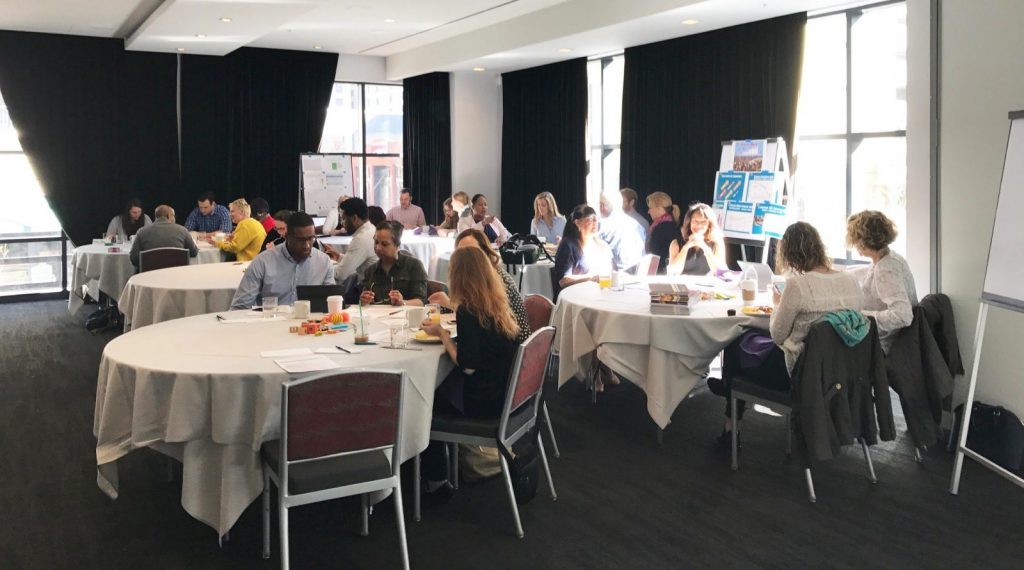
]]>On March 7-8, 2017, we brought the first cohort of the StriveTogether Accelerator Fund communities together in San Diego to learn from one another to advance their progress to Proof Point. Attendees from the six community partnerships learned collaboratively from one another to refine their strategic priorities for the rest of the year and were introduced to new frameworks for data infrastructure, community engagement and communication. One tool that particularly resonated with attendees was the I2L2: A Formula for Change.
Developed by ORS Impact and the Hawai’i Community Foundation, the I2L2 Framework helps social change initiatives communicate impact and value as levers to sustainably moving the need on major issues. It’s based on a seemingly simple equation: Impact = Influence + Leverage + Learning.
The authors of I2L2 note: “Too often, however, we underestimate or altogether fail to acknowledge other powerful changes that occur as the result of implementing thoughtful strategies aimed at creating sizable and lasting impacts. These other types of changes are an inherent part of the formula for creating durable change across multiple systems in complex circumstances” (I2L2: A Formula for Change).
The framework is predicated on the notion that communicating four components of change work is necessary and helpful to realize the full value and contribution of an initiative. Each component of the equation reflects a key communication strategy a partnership can use to emphasize the different work and strategies taking place.
- Impact – This reflects the change that an individual, population or geographic region experiences. You can think of this as the “better off” needle-moving results of the work — the results that take time to achieve but are game changers for a community.
- Influence – The systems-level changes experienced by partners (organizations, sectors, etc.) are major wins. These are the changes in practices, policies, norms and structures that take shape by virtue of this collective work to sustain cradle-to-career infrastructure and outcomes.
- Leverage – Working with partners to shift or redirect resources is a primary role of a partnership. As resources begin to flow to the practices, behaviors or strategies that achieve results, a partnership can showcase the value of shared commitment and action.
- Learning – The knowledge or field-building work — part and parcel of what a cradle-to-career partnership is meant to do — is often an under-utilized messaging strategy. Sharing the “fail forward” stories, key takeaways and contributions to the field can shine a spotlight on the ongoing efforts to positively impact all kids in the community.
As the Accelerator Fund communities began mapping their own communication efforts — and strategized to build messaging for each part of the I2L2 equation — I was struck with an “aha” sense of joy. A sense of joy that comes from people uncovering opportunities to overcome a challenge that, while similar across communities, is deeply rooted in local context. As partnerships recognize and codify the multiple ways they bring value to their community with their partners and stakeholders, they can start to crack the code around communicating complex efforts to achieve results.
The post Cracking the code: Communicating the work of a cradle-to-career partnership appeared first on StriveTogether.
]]>The post 7 ways to improve your campaign message and more lessons, tools from The Campaign Workshop appeared first on StriveTogether.
]]>Along with another colleague, Robert Harris, I learned more about the many elements of advocacy, like lobbying and fundraising, but regardless of topic, we constantly heard about the importance of communications and messaging.
Advocacy campaigns require developing a strong, consistent message for your target audience(s). Every communication you send out needs a clear call to action. And all communications should be strategic and not spontaneous, whether you plan your outreach using a calendar in Outlook or a timeline in an Excel spreadsheet.
If I had to boil down those lessons to three key components, they would be:
- A strong, consistent message
- A clear call to action
- A communications calendar
We learned about the 7 Cs of a Good Campaign Message, the message box tool and some other cool tools to help you in your work, whether you’re doing advocacy or trying to improve the effectiveness of your communications and messaging.
The 7 Cs of A Good Campaign Message
As an English major and lover of literary devices, I appreciate any way of thinking that can be made memorable through alliteration! The 7 Cs to consider are:
- Clear
- Concise
- Contrastive
- Connective
- Creative
- Coordinated
- Consistent
Clear. We need to cut the jargon. Every field has its own lingo, but in our work, community engagement is crucial. Jargon is confusing and exclusionary. We may not always agree on what constitutes jargon, but when in doubt, use simpler terms. Have you ever heard anyone complain about something being too easy to grasp?
Concise. With so much competition for people’s attention, brevity is critical. When you’re working on messaging, start with a statement that’s only 12 words and edit it down to eight words or fewer. Why so short? Legislators, for example, want to be able to explain bills to their constituents using very few words.
Contrastive. Think about ways to stand out from the crowd in a world where noise is everywhere. Make sure you convey how what you’re doing is unique from other organizations and their campaigns.
Connective. Because our work is steeped in data, we tend to tell stories through numbers. But in topline messaging, we need to connect our work to real people. We respond to the plight of individual humans more than faceless numbers.
Creative. Flex those creative muscles in making your message memorable. If you have a wordsmith on staff, take advantage of that skill to achieve language — and it is an achievement! — that is snappy and compelling. And don’t forget the power of imagery, whether graphics or photos.
Coordinated. Outside of a communications calendar, you want people working together toward the collective goal and not an individual one. Connect your message and theme to everything you do, and make sure everyone is on the same page before campaign launch.
Consistent. Bring everyone together in the same room to determine the core message and get consensus before they leave. Ensuring consistency throughout the campaign doesn’t magically happen. Even after you train everyone on the messaging, someone has to play the role of a communications leader who keeps an eye on these efforts and knows what to do when a team member goes rogue.
The message box
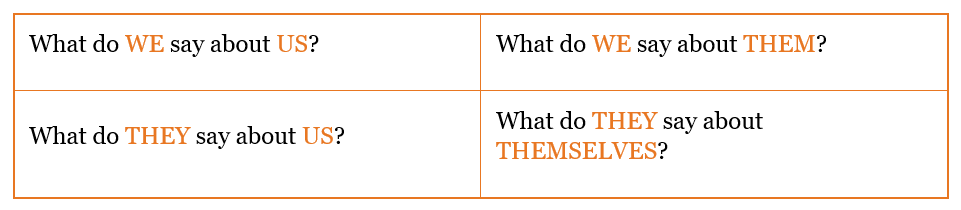
The message box is a great group activity to lay out all the dialogue surrounding an issue and to carve out your message from all that information. Identify the audience you’re trying to influence and fill out each section of the box with multiple answers. Then, comb through what you’ve come up with to help focus and refine your messaging.
Cool tools
Throughout the training, The Campaign Workshop shared online tools and resources. Some of my favorite cool tools are:
- Canva – good for custom graphics for those without designer experience
- Grammarly – described as grammar on steroids
- Hemingway Editor – described as readability on steroids
- MentionMapp – tracking tool for Twitter
- Word Swag – good for adding text onto photos
I’ll be sharing a few more lessons learned during the advocacy training around media relations and storytelling in later posts. Communicating clearly and concisely about our work is an ongoing challenge, but I know communities across the Cradle to Career Network are having wins in this area. I’d love to hear about yours in the comment space below!
The post 7 ways to improve your campaign message and more lessons, tools from The Campaign Workshop appeared first on StriveTogether.
]]>