The post The power of one: Three reasons an elementary principal says real change starts small appeared first on StriveTogether.
]]>The data is stark: Our schools are not preparing every student to succeed in life. Seeking change, educators try programs and initiatives to improve outcomes for kids. These reform efforts often treat students the same, using widespread, one-size-fits-all approaches. But each student is unique and a few solutions are finally adopting a new approach: Start small to go big.
In Spartanburg, South Carolina, leaders are shifting to this approach. They are harnessing the power of one — focusing improvement on one student, one day, with one learning objective — with the support of a community partnership called Spartanburg Academic Movement (SAM). Business and industry have led improvement efforts this way since the 1950s, with health care eventually following suit. Now, education and social systems are also starting small to go big.
Dr. Russell Booker, StriveTogether board member and superintendent; Amanda Justice, continuous improvement coach; and Thomas Webster, principal, share the difference this approach is making in their community.
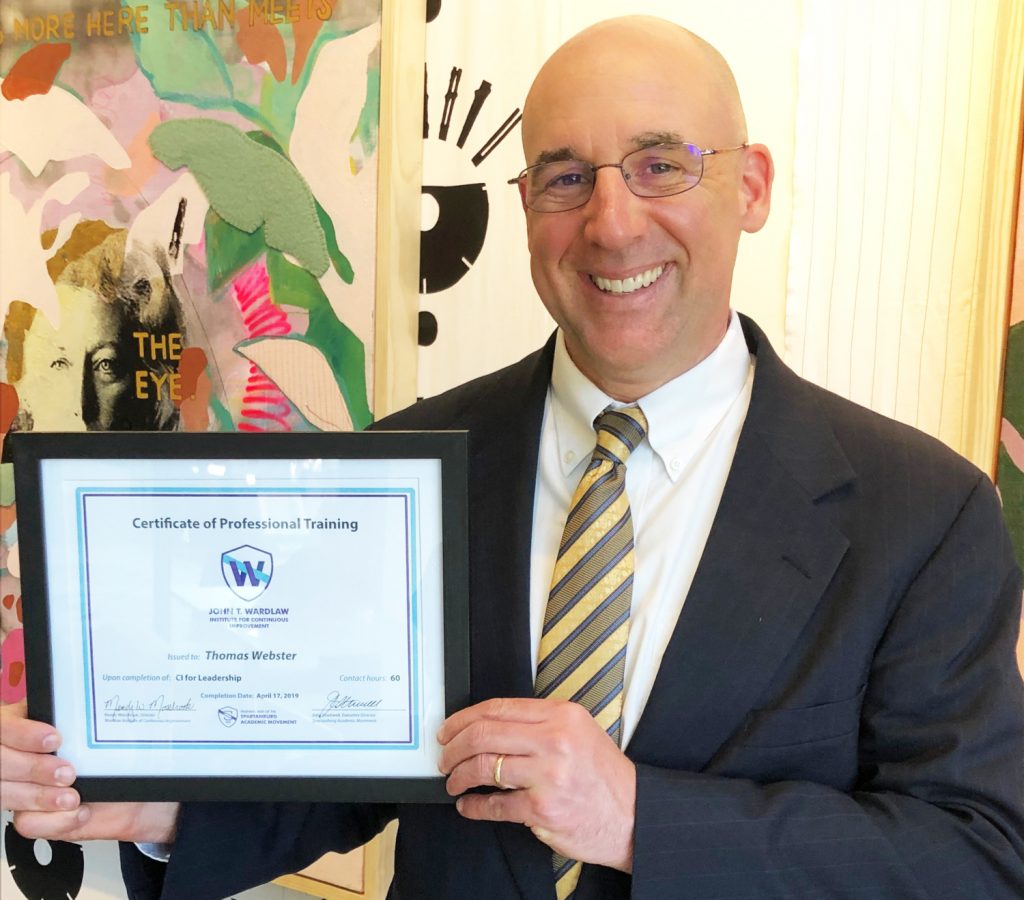
SAM recently launched a training hub, the Wardlaw Institute for Continuous Improvement, to accelerate data-centered improvement efforts countywide. The inaugural cohort of leaders participating in the Institute’s training includes district administrators, principals, instructional coaches and leaders from organizations supporting families and children. Participant Thomas Webster, principal at Drayton Mills Elementary, admits he came into the course hopeful but skeptical.
As in so many other high-poverty, high-minority schools around the country, the stakes at Drayton Mills Elementary are high. During his career, Webster has seen programs with promise come and go. At SAM’s Institute training, however, he wasn’t learning just another packaged curriculum, but rather tools that could be applied to anything. “They don’t answer the question of what we should be doing, but how we should be doing it,” Webster explains. “I liked that because oftentimes, ‘best practice’ curriculums and initiatives ignore the fact that context matters.”
During the training, Webster and his team of teachers worked to improve reading performance for students in one class in one grade level, kindergarten. But why would a principal with the weight of an entire school sitting on his shoulders start so small? Three reasons:
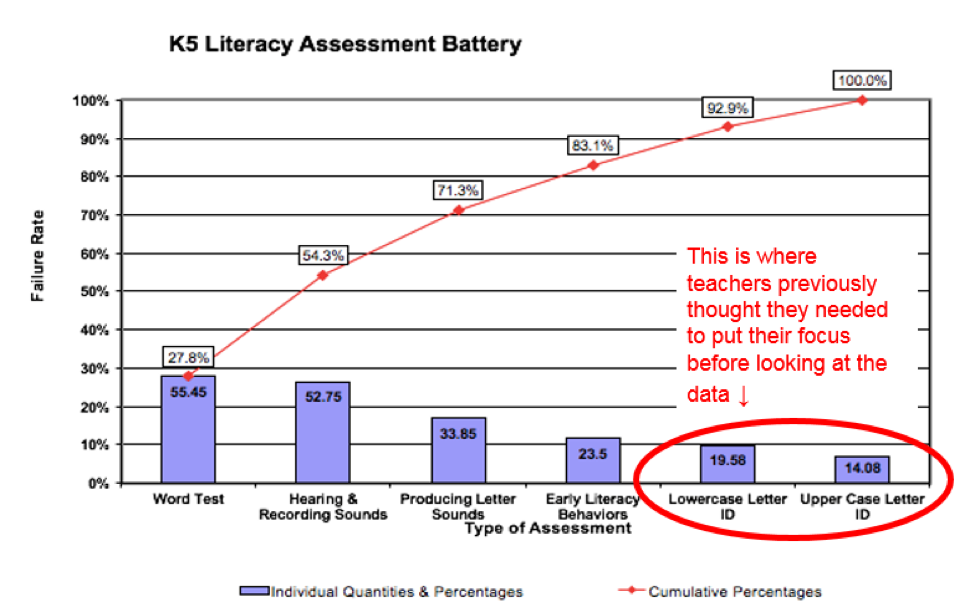
- You have to know (like, really know) the root cause of challenges. Webster’s team had to figure out why kindergarten students were struggling so much. The team had long believed that kindergarten students struggled most with upper- and lowercase letter identification, so activities largely centered around developing these skills. However, analyzing the root cause showed that kindergarten students actually needed more help with hearing and naming letter sounds. Armed with new information, teachers shifted instructional plans.
- People have to feel safe in order to change. For people to improve, they must feel safe, valued and heard. At Drayton Mills Elementary, Webster led by example. He acknowledged that as an administrator, he was too far removed from instruction to know what teachers should try. This encouraged one teacher to say to her peers, “I think that I may need some help with different strategies so that I can better meet my students’ needs in the classroom.” Webster applauded her commitment to her students and connected her with teachers she could learn from,. “The vulnerability and courage of this teacher cannot be overstated,” he said. “By asking for help, she opened the door, and we were able to quickly get her the support she needed.”
 Every kid is different. Everyone knows this to be true, but school solutions are often developed on a large scale. At Drayton Mills, the team is doing the opposite. For the kindergarten literacy project, they started with the one teacher and three students in her class. Rapid-cycle testing allowed the teacher to see results in real time to and make adjustments. Within two weeks, those three students grew by two reading levels, a jump that typically takes twice as long.
As seen at Drayton Mills and throughout Spartanburg County, starting small doesn’t mean smaller impact. Starting small allows educators and partners to learn quicker, adapt better, expand practices and ultimately accelerate more equitable outcomes for students. Continuous improvement is empowering Spartanburg’s educators to meet each student where they are and provide what they need to reach their goals. And all of this started with one community partnership, Spartanburg Academic Movement, offering continuous improvement training to one cohort of leaders that are now, collectively, beginning to solve one complex problem school by school, teacher by teacher and student by student.
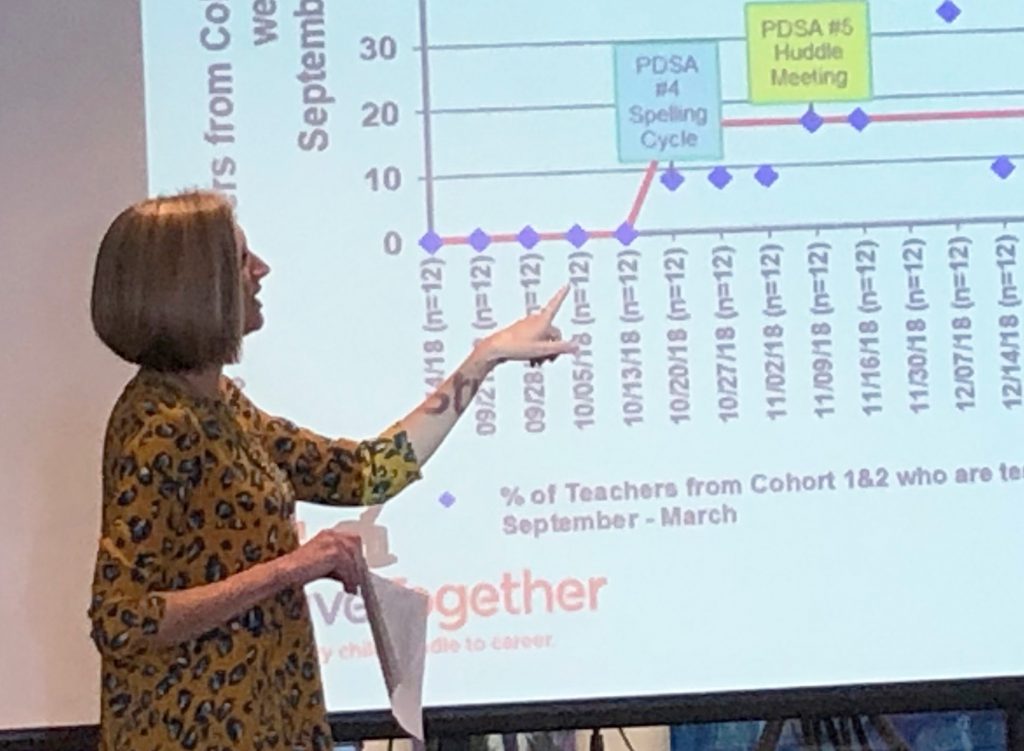 Cheryl Broadnax, StriveTogether’s senior director of district improvement, is leading the initial training efforts in Spartanburg. She brings her past experience as the assistant superintendent of Cincinnati Public Schools, where she initiated efforts to help educators use continuous improvement practices. In Spartanburg, the end goal is to give SAM the knowledge, structure and confidence to sustain this work. “SAM has a clear vision and understands how critical it is to engage and support districts. You can see, hear and feel the energy in the community around this work,” Broadnax says. “I’m excited to share my learnings and to support Spartanburg in their own continuous improvement journey.”
Melissa McCoy is a district improvement consultant for StriveTogether and founder of Effect Change Consulting, based in the Cincinnati area.
The post The power of one: Three reasons an elementary principal says real change starts small appeared first on StriveTogether.
]]>The post Strengthening improvement work by identifying and addressing adaptive challenges appeared first on StriveTogether.
]]>Through improvement science, that vision can be reality. I’m not saying that using continuous improvement tools and techniques is easy. Over past four years, I’ve worked with communities across the country to apply StriveTogether’s collaborative improvement approach — our unique take on continuous improvement. I’ve come to realize that to succeed and sustain improvement in education systems, you must look beyond the simple or (dare I say) easy fixes.
Instead, you must understand the adaptive — or, as I think of it, human — elements of the challenges. These challenges necessitate that people change what they do or how they work to solve them.
This week, I presented with StriveTogether team member Davida Casey at the Carnegie Foundation Summit on Improvement in Education, where we shared strategies for uncovering adaptive challenges and how to make sure they don’t get in the way of your work to get more equitable results for kids and families.
Taking a moment to consider what adaptive challenges are impacting your work can yield significant results. I recently saw this firsthand through one of my improvement teams in a community working to improve home visitation programs for children ages zero to 3. These programs offer a range of services to young children and their families from a trained service provider in a home environment.
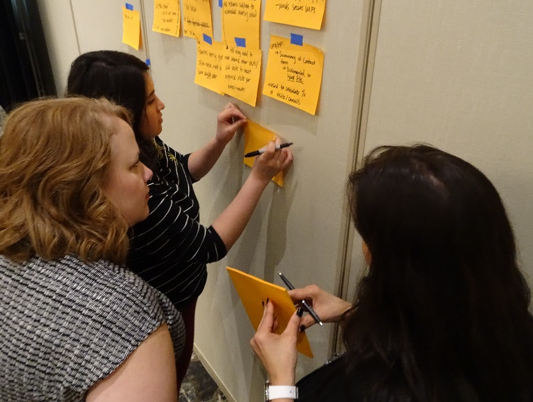 To better understand what was working and what needed to work better, the team outlined the steps for families to enroll in a program and to complete their first home visit. After mapping the process, they identified the challenges at each step preventing families from moving forward. Early on, the team identified form completion as a challenge. Editing a form sounds like an easy correction to make. But instead of creating a quick solution to ensure parents completed the forms, the team dug deeper. They considered what adaptive challenges parents might face that would keep them from finishing the forms. Simply put, they asked, “Why aren’t parents completing the forms?”
The answers they uncovered pointed to a lack of trust — trust for outside providers and the program itself. Many parents also felt conflicted — they wanted to best for their children but believed that they knew how to best support their son or daughter. With this information, the team created a very different set of strategies around how to talk with and engage parents in the early phases of home visiting. The team focused on building trust and working through the internal conflict parents were feeling. As a result, these parents not only completed the forms, they were much more engaged and more easily supported by service providers.
Applying an adaptive lens to improvement work requires considering what changes or losses might be experienced by the population you’re working to support. This perspective allows you to understand the deepest causes behind the challenge (like trust, loss of expertise or loss of funding) and to identify the adaptive elements that need to be addressed. By developing strategies for adaptive challenges, improvement teams and communities can see more change that lasts, leading to better outcomes for every child, from cradle to career.
The post Strengthening improvement work by identifying and addressing adaptive challenges appeared first on StriveTogether.
]]>The post 6 principles for working toward collaborative improvement appeared first on StriveTogether.
]]>The story started two years ago when too many students were missing too many days of class, and United Way of Salt Lake asked StriveTogether to convene an impact and improvement network to tackle the issue. Using collaborative improvement — StriveTogether’s unique approach to continuous improvement — the network’s efforts led to some remarkable results, including a 14% drop in absence rates for chronically absent first-graders at one elementary school.
From this experience, Tyler and I have several lessons about working toward improvement across a community. Here are our top six insights:
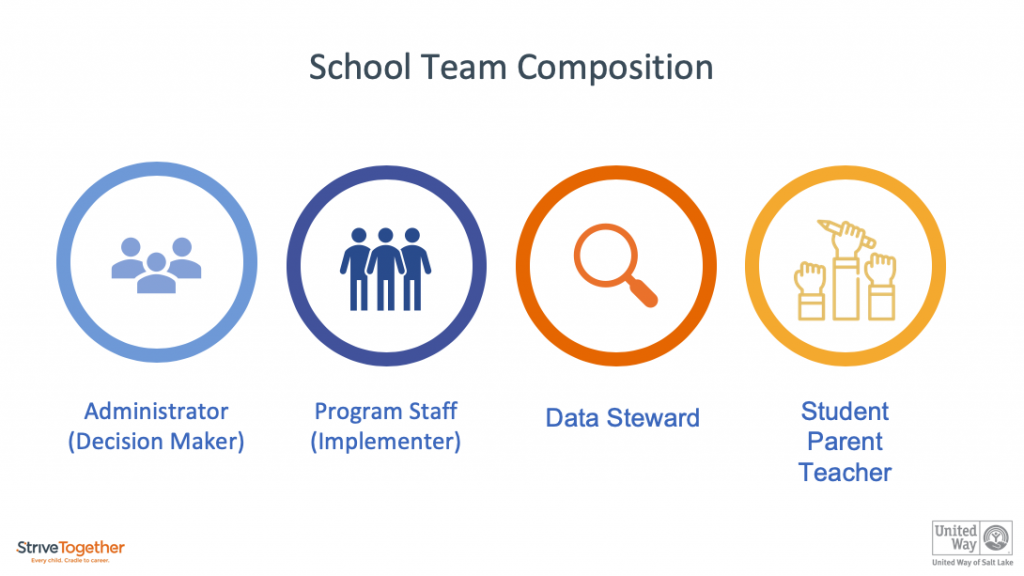 Make sure the right people are on board. The composition of your team and network will determine if you can reach your target students and scale successful strategies. Take time to think deeply about who needs to be engaged and what they will contribute. And, to truly understand the community’s challenges and possible solutions, include students and parents of the population you are trying to support.
- Walk the talk. Leading improvement work means that you must model effective improvement strategies in your own work. The quicker you and your organization start using continuous improvement tools and methods, the quicker others around you will take on the same approach.
- Get support for the work at all levels. Collaborative improvement requires people to shift their priorities. Be willing to try new processes and ways of working. Organization leaders also must use their authority to ensure staff members have time and space to do this work. Others will join your efforts as they see success.
- Be patient — change is hard. Improvement work often requires people to change how they act every day. Give team members time to adjust and find ways to support them as they take on new habits. Building a culture of continuous improvement doesn’t happen overnight. Celebrating early wins and providing coaching can be the keys to success.
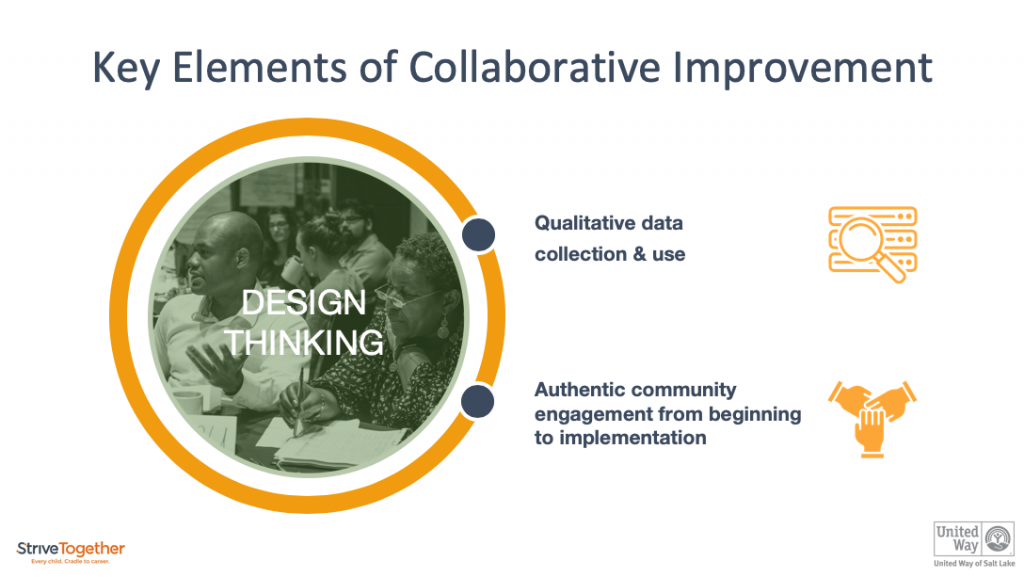 Kids are more than just numbers. Using quantitative data is essential throughout the continuous improvement process, but it does not tell you the full story. Integrating qualitative data allows you to uncover the why behind the numbers, providing a stronger understanding of community challenges and a clearer direction for the work.
- To solve systemic challenges, go beyond technical tools and solutions. Continuous improvement work involves a lot of tools and templates, but obstacles can’t be overcome by just filling out a worksheet. In reality, before you begin to create solutions, you must dig below the surface to understand root causes of problems — often a result of the systemic inequities that must be addressed. The Salt Lake City team uses collaborative improvement to share strategies, track data and build connections so that every kid in Salt Lake City has every chance to succeed.
In addition to improving attendance, United Way of Salt Lake City used StriveTogether’s collaborative improvement strategies across the community, including improving access to a local food pantry and increasing mental health screenings at a free clinic. The organizations’ partnership was one of six examples chosen as a 2018 Carnegie Foundation Spotlight on Quality in Continuous Improvement. Learn more about this recognition.
The post 6 principles for working toward collaborative improvement appeared first on StriveTogether.
]]>The post From distraction to connection: Engaging with families about technology appeared first on StriveTogether.
]]>It all started with a question that we heard over and over from service providers across Albuquerque: How do we talk with families about technology?
Parents are busy, distracted and often checking their devices. Phone alerts and notifications can interrupt simple moments between parents and children. A family member may nonchalantly hand a tablet to a bored toddler in a restaurant or grocery store. Talking about technology is more important now than ever before, but we didn’t have resources readily available to help service providers have this important conversation.
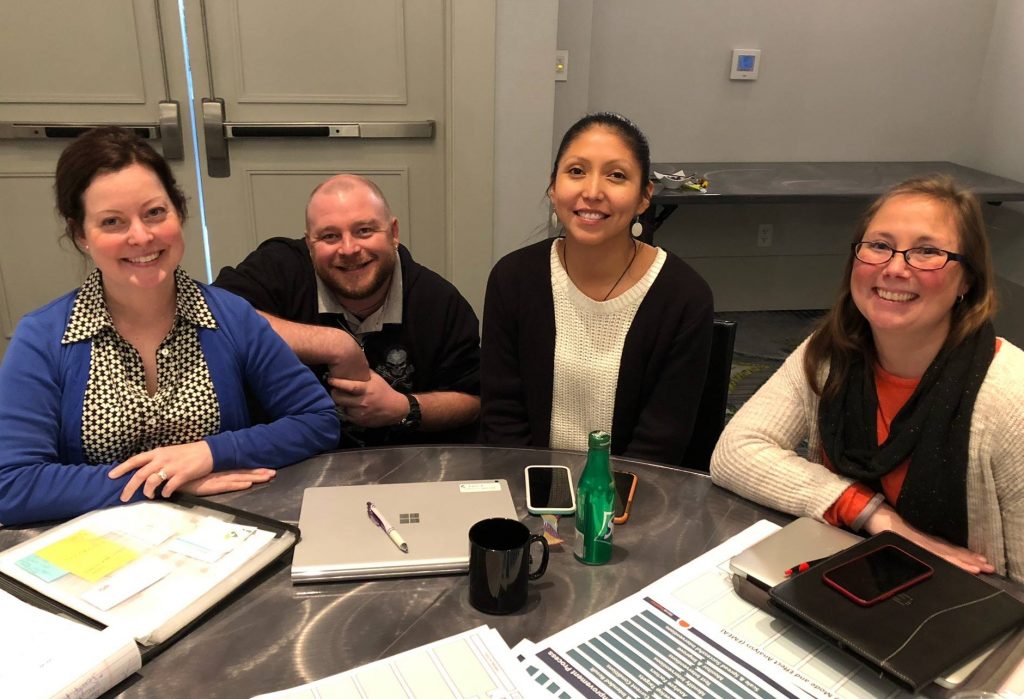 That’s why we decided to start a new initiative to develop effective messaging for families about healthy technology use. Through the Prenatal to Age 3 Impact and Improvement Network, a team from Albuquerque joined five other communities from across the country to build strategies to improve our work. Supported by StriveTogether and the National Institute for Children’s Health Quality, the team is focused on getting better results for families and children ages 0 to 3. This initiative builds on the work of Mission: Graduate’s early childhood network, the Early Childhood Accountability Partnership (ECAP). In 2017, ECAP launched the “Making Moments Matter” campaign to share tips and resources that encourage families to think differently about how children learn through play.
To focus on technology use, we partnered with the Tribal Home Visiting program of Native American Professional Parent Resources, Inc. and the Early Head Start program at Youth Development, Inc.
From the outset, we knew that we wanted to engage families and direct service providers regularly and meaningfully. We made a few specific commitments at the beginning of the project:
- Staff and families are co-creators. Front-line staff and families had a role in designing the plan and reviewing materials.
- Families are key decision makers. Both organizations we partnered with have parent advisory groups. These amazing parent volunteers provided oversight and advice, and ultimately approved our plan, survey and materials before we got started.
- The data belongs to the organizations and participants. We made a commitment to regularly share the data we analyze with the providers who are collecting it. This keeps staff informed and engaged in the process and has helped us to reflect on what is working and what might need to be changed.
With these commitments in mind, the team conducted a pre-survey with families about their use of technology. We also researched best practices, resources and messaging.
 Our research showed that babies and toddlers don’t learn from digital media as well as they do through playing with caregivers. At this age, they don’t know how to connect what they see on a screen to the world around them. Overuse of media for young children can lead to health concerns, including sleep disruptions; obesity; and cognitive, language and social-emotional delays. And what parents do matters, too — parental media use is a strong predictor of child media use.
Once we had gathered research and data, we developed materials and supported direct service providers to deliver the messages. Using small tests of change to figure out what’s working well and what’s not, we have been collaborating to improve materials for families, both in English and in Spanish. Here’s what we learned from the Impact and Improvement Network process:
- Continuous communication is where the magic happens. We quickly realized that ECAP staff, program leads and direct service providers need to share information regularly to make our improvements effective.
- Communication takes many forms. Sometimes, it comes from the program leads, and sometimes it comes from Mission: Graduate staff. It is best to create a continuous communication plan from the start, but be prepared to be responsive to staff needs, too. Provider focus groups have clarified needs and prompted us to develop new materials and offer more resources.
- Expect and welcome change. After the first round of approvals, we still had work to do to refine our materials. After our very first staff workshop, we changed the survey when we learned that the title “PDSA Survey” isn’t exactly appealing to families. Who knew? Providers!
- Incentives make a difference. Offering gift card raffles helps families stay engaged month after month. We plan to reconnect with families at the end of the project to thank them and learn more about their experiences.
We came into the StriveTogether Prenatal to Age 3 Impact and Improvement Network expecting to work with our partners to refine messaging and resources for families and providers. We did not anticipate how this opportunity would allow ECAP and Mission: Graduate to grow our capacity to meaningfully engage and co-create with service providers and families. Building on the family engagement models of our partner organizations and having the chance to “fail forward” in a supportive network of other communities has offered unexpected benefits. We are developing relationships and growing leadership throughout the community, and we look forward to continuing that growth in the years to come.
 Tracy McDaniel coordinates the Early Childhood Accountability Partnership at Cradle to Career Network member Mission: Graduate. Mission: Graduate is one of six Cradle to Career Network members participating in the StriveTogether Prenatal to Age 3 Impact and Improvement Network, done in partnership with the National Institute for Children’s Health Quality.
The post From distraction to connection: Engaging with families about technology appeared first on StriveTogether.
]]>The post From starting small to building community: Working effectively for kids and families appeared first on StriveTogether.
]]>2012 in Spartanburg, S.C.:
Too many children were entering kindergarten not ready to learn.
Access to developmental screening for young children was non-existent.
Only a few educators and advocates kept early childhood issues front and center.
The Children’s Service Alliance, a nonprofit focusing on children aged 0-5, sponsored a new program to provide access to developmental screening for all children under the age of 5. The goal was to identify children with developmental delays to connect them to early intervention services. A pilot group of over 30 organizations received training, and in the program’s first three years, more than 2,500 children were screened.
Sounds like success…but it wasn’t. Why? The goal wasn’t volume — the goal was connecting children to needed early intervention services. Because of privacy laws and lack of parent feedback, the program leaders were unable to determine effectiveness.
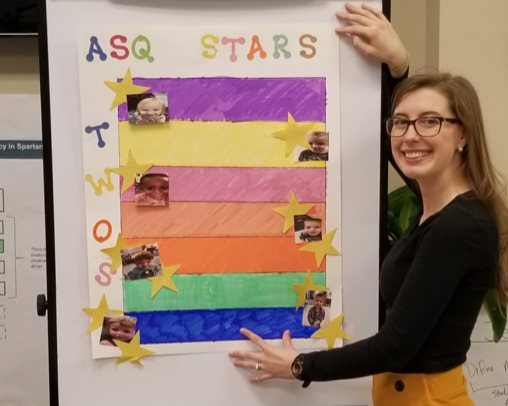 With this story in mind, the Spartanburg Academic Movement team took an opportunity beginning last year to focus on effectiveness. Through the Prenatal to Age 3 Impact and Improvement Network, Spartanburg County and five other communities from across the country got connected to develop quality continuous improvement practices. Supported by StriveTogether and the National Institute for Children’s Health Quality (NICH-Q), we’re deepening our work to get better results for families and children ages 0 to 3. As a result of this support and with the diligent work of the Spartanburg team, things are turning around.
Here are three insights we’ve gained so far to help our work progress:
- Break the work into parts, or “start small.” To begin our process, we worked with three child care centers to develop the process they would use to move from small-scale screening to 100 percent completion. Three is now six, and six will soon be 12. Starting small has become a natural way for us to begin developing ideas, allowing us to build on successes to expand them across the community.
- Allow partners to determine their own protocol. We began to truly understand the unique challenges our pilot child care centers faced and how — just maybe — our prescriptive process had been counterproductive. We learned that our job is to support each center to develop its own process based on its unique culture. For example, one center that needed support decided to make regular screenings a requirement for enrollment. Now, we catch ourselves collectively and individually letting go of control in many other areas of our work. Enabling partners to create processes based on the cultures of their organizations is vital to success, no matter what the end goal.
- Build a sense of community. The Spartanburg team came from very different organizations — a university, a national organization, a foundation and a StriveTogether Cradle to Career Network member — all gathered around a common goal. As we moved through the steps of the continuous improvement process, bonds between the members strengthened. In turn, each organization was strengthened. This sense of community has grown through the intensive concentration on our end goal, a focus that developed during the learning sessions provided away from home. We were able to share this strong sense of community with leaders from the screening organizations. They are emerging as mentors, supporting their peers as the project is expanded across the community. In addition, the team has extended this sense of community to the greater community we interact with every day. We are often called upon to work on early childhood issues, and we use the strengths we have gained to work toward better outcomes for every child in Spartanburg County!
Guest blog post by Ida Thompson, director of national network and program affairs at Spartanburg Academic Movement. Spartanburg Academic Movement is one of six Cradle to Career Network members participating in the StriveTogether Prenatal to Age 3 Impact and Improvement Network, done in partnership with the National Institute for Children’s Health Quality.
The post From starting small to building community: Working effectively for kids and families appeared first on StriveTogether.
]]>The post Creating ripple effects: Building a culture of continuous quality improvement in Arizona appeared first on StriveTogether.
]]>In Pima County, Arizona, the number of 3- and 4-year-olds enrolled in high-quality early education rose from 16.4 percent to 21.5 percent over two years. But nearly 15,000 kids still don’t have access to these programs.
We need community leaders to act today before another generation of children enters school without the tools to succeed. Research shows that high-quality preschool levels the playing field and ensures children living in poverty enter school ready to learn.
That’s why Cradle to Career Partnership is part of the StriveTogether Prenatal to Age 3 Impact and Improvement Network. Through this initiative, six communities from across the country are connected and supported to develop quality continuous improvement practices to get better results for families and children ages 0 to 3. Our team from Tucson (Pima County, Arizona) relishes the intense learning opportunities and support provided by StriveTogether and NICHQ, with funding from the Pritzker Children’s Initiative.
Our goal is to increase the number of completed home visits with families served by two partner organizations, Casa de los Niños and Child & Family Resources. Through home visits, these organizations begin working with families early — sometimes even before a child is born. This early intervention supports child development and builds relationships, ensuring that children are well-positioned to start school and that families understand the resources available to them.
Strategies to increase home visits include more training for home visitors, regular assessment of relationships between home visitors and families, better messaging and stronger engagement with fathers. We aim to increase visits by 10 percent by June 2019.
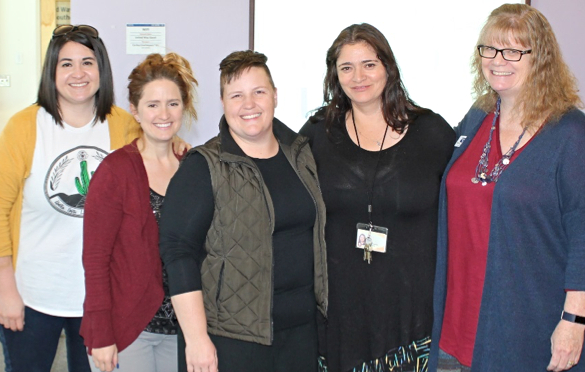
The focus of our work through the Prenatal to Age 3 Impact and Improvement Network is to explore the connection between cancellations of home visits and family retention. Families that are more engaged and present at visits feel more connected and see the long-term benefits of preparing their child for school, leading to higher retention within home visiting programs. Our first strategy to explore the impact and causes of visit cancellations is to test a short feedback survey at the end of home visits.
We are currently in the middle of participating in the impact and improvement network, an 18-month “boot camp” for continuous improvement, StriveTogether’s unique brand of collaborative learning. We have finished several rapid-cycle improvement tests to see which strategies are most effective, and we’ll do several more tests before taking what we learn to staff at our partner organizations.
In addition to collaborative improvement tools and practices, we’ve learned other lessons, including those described below.
- Rather than create a brand-new activity, weave new practices and interventions into existing processes. For example, instead of creating new obligations for parents, we explored whether interviews could be conducted during already planned quality assurance calls to parents.
- Connect to what you already know. When we began to incorporate empathic interviewing into our work, we realized this process contains elements of motivational interviewing — something Healthy Families staff already use. We could capitalize on those strengths and previous training rather than integrating completely new processes.
- Narrow your focus so you’re not trying to tackle everything. Starting small, maybe even with only one home visitor and a few families, is key to getting started. “Not letting perfection be the enemy of the good” is a useful principle to keep in mind.
- Help participants understand the purpose of their involvement to engrain the practice of data-driven decision making. For example, be sure staff and families understand the importance of their feedback so that they can see their role in outcomes.
Cradle to Career Partnership team members and partner agencies jumped at the chance to be part of this impact and improvement network. We’ve found the in-person and virtual learning sessions with the other five community teams to be invaluable. Additional monthly coaching from StriveTogether and NICHQ have provided space to deepen, extend and test our learning.
We continue to be enthusiastic and committed to the growth mindset and value the “fail forward” and other lessons from team-implemented rapid-cycle improvement opportunities.
What are your questions about introducing and implementing a culture of collaborative improvement?
Guest blog post by Cradle to Career Partnership, one of six Cradle to Career Network members participating in the StriveTogether Prenatal to Age 3 Impact and Improvement Network, done in partnership with the National Institute for Children’s Health Quality. The team from Tucson includes family support and home visitation staff from Casa de los Niños’ Parents as Teachers and Child & Family Resources’ Healthy Families programs, as well as United Way of Tucson and Southern Arizona backbone staff from the Cradle to Career Partnership.
The post Creating ripple effects: Building a culture of continuous quality improvement in Arizona appeared first on StriveTogether.
]]>The post StriveTogether’s next national Impact and Improvement Network will focus on prenatal to age 3 milestones appeared first on StriveTogether.
]]>
Thanks to generous funding from the Pritzker Children’s Initiative, StriveTogether has partnered with the National Institute for Children’s Health Quality (NICHQ) to support the work of Cradle to Career Network members to improve kindergarten readiness by focusing on child development from prenatal to age 3. NICHQ uses a similar continuous improvement approach in its work and will provide much-needed data expertise in the prenatal to age 3 space from past and current work in this area.
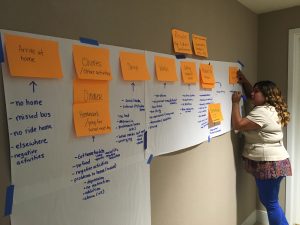
The Prenatal (PN) to Age 3 Impact and Improvement Network offers StriveTogether network members the opportunity to focus on and improve the number of children meeting key prenatal to age 3 milestones in their community. PN – 3 Impact and Improvement teams will build on their current work and accelerate progress using Results Count techniques, disaggregated data, peer-to-peer learning, coaching and training in continuous improvement (using data to inform decisions and improve strategies) and design thinking (using empathy and engagement strategies to involve people impacted by the problem in creating the solution). Over the course of 16 months, partnership teams will identify essential milestones and the key factors impacting them, as well as implement strategies to improve those milestones.
To be eligible for the PN – 3 Impact and Improvement Network, a partnership must:
- Be a StriveTogether Cradle to Career Network member operating in the Sustaining Gateway or higher.
- Have a Collaborative Action Network and/or have convened partners to focus on the
prenatal to age 3 milestones. - Have a relationship with at least one partner working directly with parents of and/or prenatal to age 3 children who is willing to participate and provide data regarding prenatal to age 3 milestones (e.g. home visitation, well-child visits, development evaluation, early intervention work).
- Have a memorandum of understanding or other formal data-sharing agreement with at least one provider working directly with parents of and/or prenatal to age 3 children that allows the partnership to regularly collect disaggregated data at the parent/child level.
- Able to regularly collect/access and analyze disaggregated prenatal to age 3 data that can be used in a rapid cycle continuous improvement process.
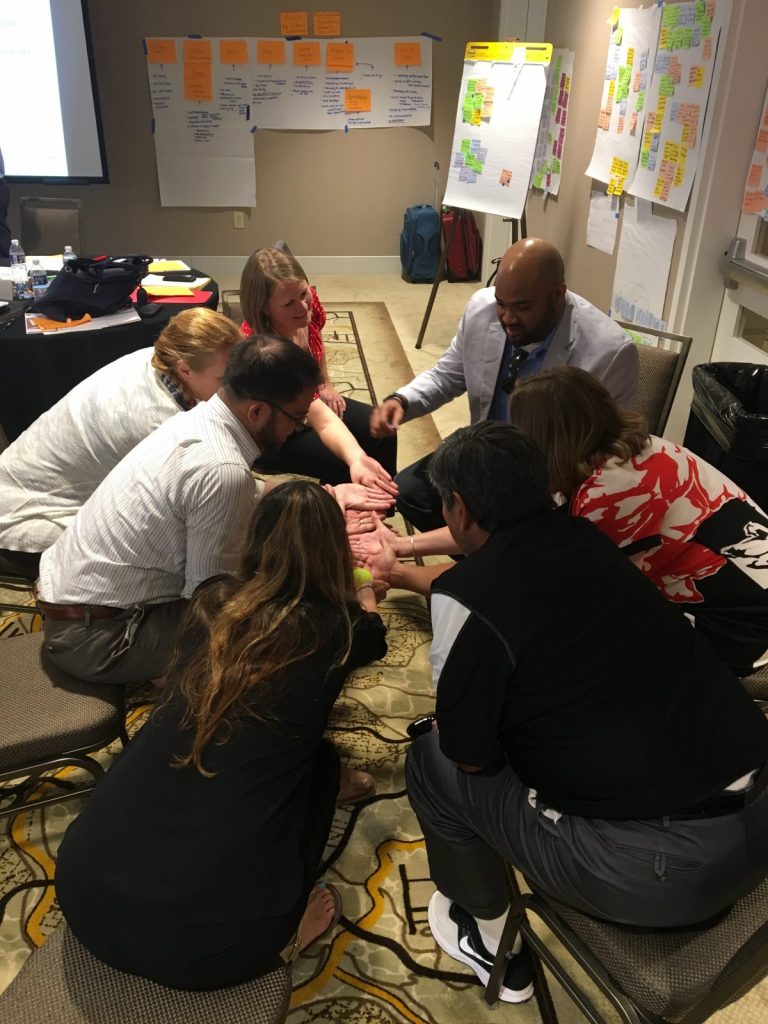
Interested in learning more? Join the PN-3 Impact and Improvement Network Interest webinar on Tuesday, December 5, 2017, from 2 – 3 p.m. ET. During the webinar, StriveTogether staff will provide an overview of the PN – 3 Impact and Improvement Network, share recommendations and insights on completing the application and answer questions. Register for the webinar here.
Interested in applying? Download the PN – 3 Impact and Improvement Network application. Application deadline is Friday, January 12, 2018.
This work is part of a partnership among five national organizations to improve kindergarten readiness for children from prenatal to age 3.
The post StriveTogether’s next national Impact and Improvement Network will focus on prenatal to age 3 milestones appeared first on StriveTogether.
]]>The post Building a culture of continuous improvement in the classroom appeared first on StriveTogether.
]]>Data is a tool that should be used as a flashlight, not a hammer. This is one of the many lessons Higher Expectations for Racine County has learned from the StriveTogether Cradle to Career Network.
Racine is home to several global manufacturing companies, like SC Johnson, that have been using continuous improvement for decades. Although the concept of “continuous improvement” — using data to identify challenges, make a plan and monitor progress — is not new to our business partners, it is relatively new to the education and social sectors both in Racine and throughout the county.
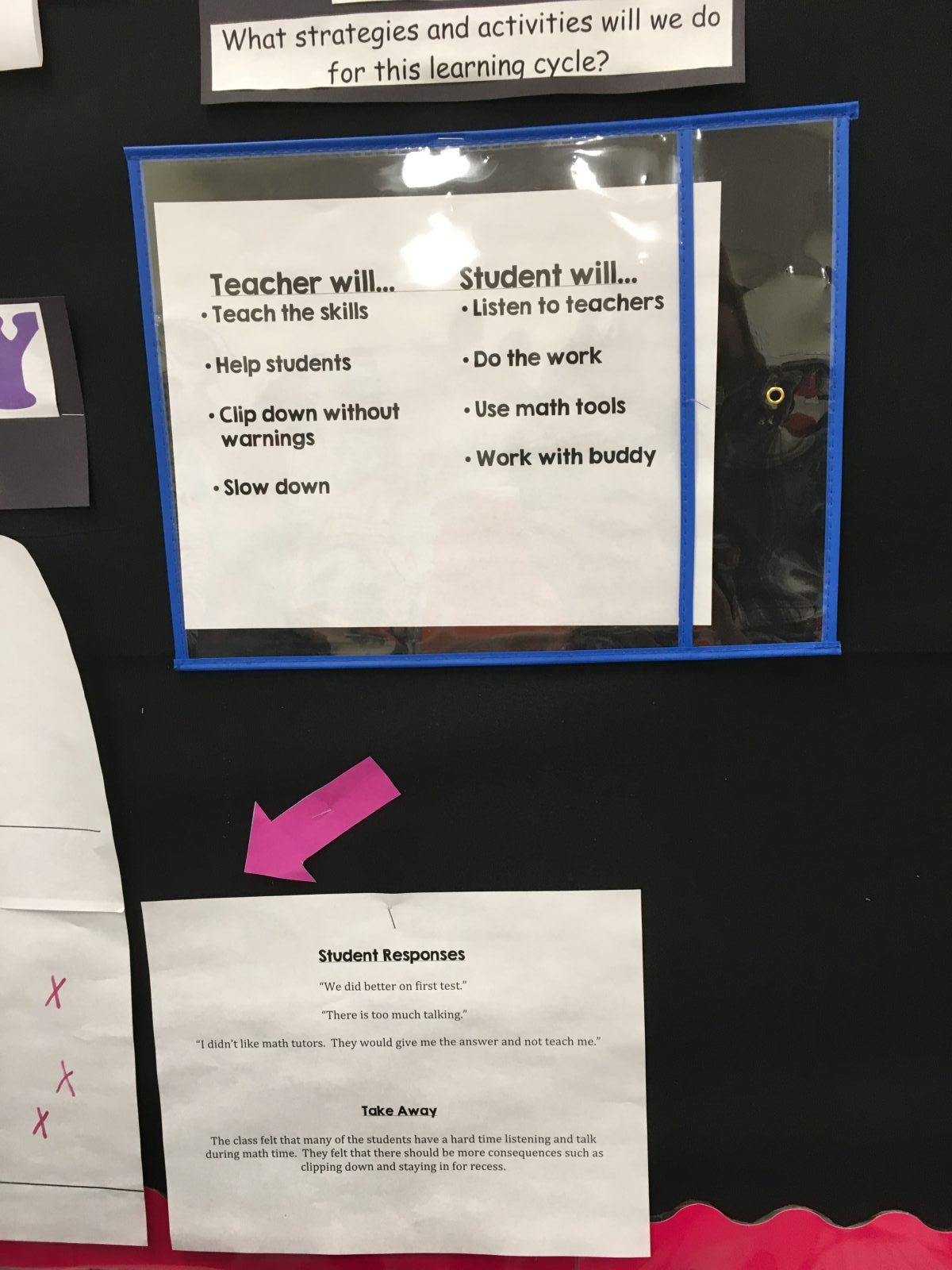
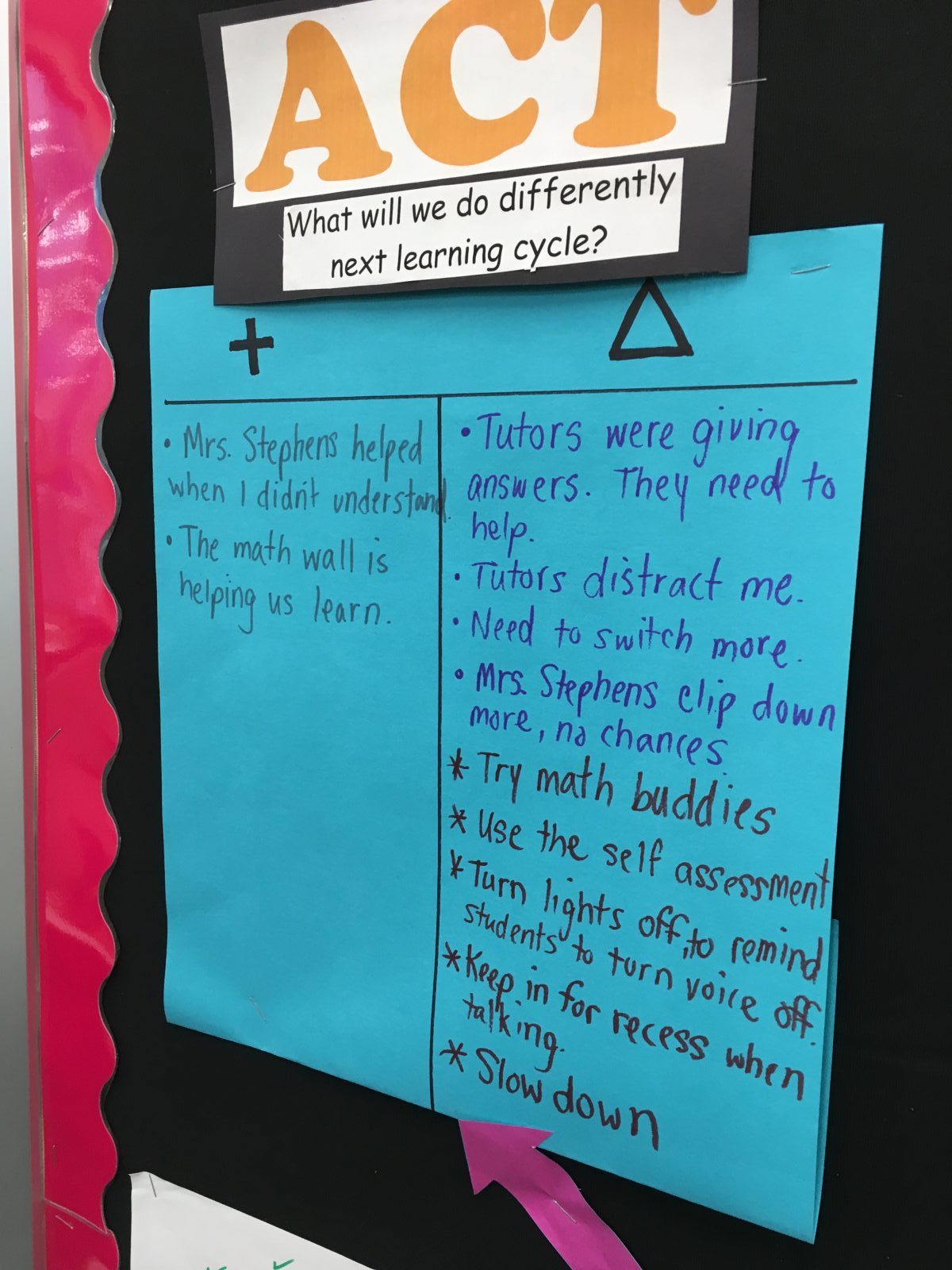
Higher Expectations and Racine Unified School District (RUSD) are committed to building a culture of continuous improvement within our schools, and across the community, to improve outcomes for all students. In addition to rigorously using data to monitor programs, we are learning from the School District of Menomonee Falls (SDMF), where the use of continuous improvement processes has resulted in dramatic changes inside classrooms and across the district.
In April 2017, after sending several RUSD teachers to SDMF’s Symposium on Continuous Improvement, Higher Expectations and RUSD hosted a Professional Learning Community event for teachers interested in applying continuous improvement practices in their own classrooms. For an entire day, 17 teachers reflected on what they learned during the symposium, how they are already using data in their own classrooms and how they might continue to learn from one another as they apply new practices, like plan, do, study, act (PDSA) cycles, to drive student achievement.
Throughout the day, several key themes emerged as teachers discussed continuous improvement in the classroom:
- Continuous improvement is NOT another initiative. For decades, school districts — like many organizations — have added new initiatives, curricula and/or programs all aimed at improving student outcomes. Continuous improvement is not a new program to add to the already full plate educators face each day. Instead, it is a framework for monitoring the good work that is already happening and using data to make improvements over time.
- Continuous improvement keeps students at the center. In the classroom, continuous improvement means enabling students to use their own data to better understand what’s helping them learn and improve, and what’s not. When teachers regularly track data, like test scores, and help students understand their own progress, kids begin to take ownership of their own learning and can set goals for themselves. In classrooms with a culture of continuous improvement, feedback is a two-way street: teachers help students understand how they can master class material, and students provide feedback to teachers about the type of instruction that is most effective.
- Continuous improvement is an adaptive challenge. There is not a single tool or resource that will help teachers master continuous improvement. Instead, developing and applying these practices is a process that will be strengthened over time.
- The Professional Learning Community gives teachers the opportunity to learn and lead. Through the structure of a professional learning community, teachers are motivated by the support and participation from administrators, receive reinforcement by the similar work of their peers and are given time to collaborate and build common planning of continuous improvement practices.
During the 2017-2018 academic year, Higher Expectations and RUSD will scale up training efforts to help teachers across the district begin to apply continuous improvement practices in the classroom. By using data as a flashlight in our classrooms, we believe that we will begin to uncover the practices that are working and improve outcomes for all students in RUSD.

Kirstin Yeado is the community impact manager at Higher Expectations for Racine County, which engages community partners, aligns efforts and maximizes resources to promote excellence and equity in education and employment outcomes in Racine County.
The post Building a culture of continuous improvement in the classroom appeared first on StriveTogether.
]]>The post Building a culture of continuous improvement takes collaboration, knowledge and tools appeared first on StriveTogether.
]]>But building a culture of continuous improvement across multiple organizations and throughout a community is much easier said than done. Fortunately for us, failing forward is something we’ve embraced over the years and has allowed us not only to learn a lot about what works, but helped us develop a continuous improvement methodology that is getting results for community partnerships.
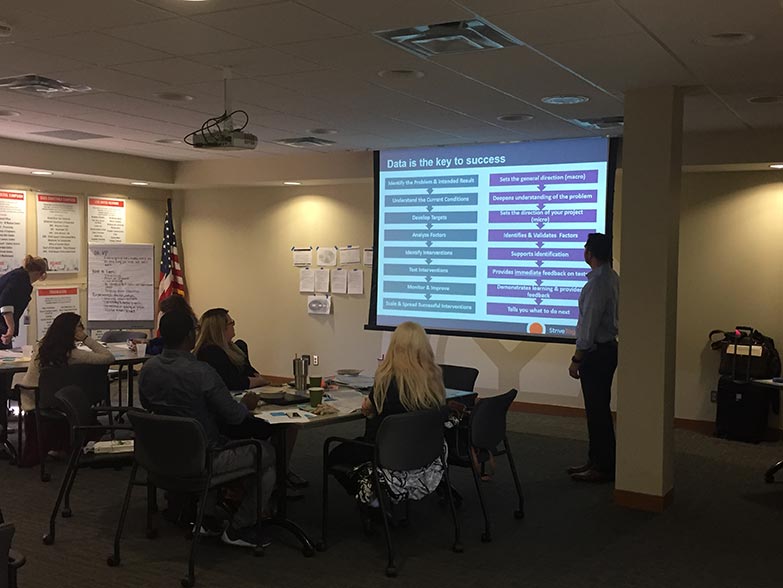
In our early days, we were lucky enough to receive support from Six Sigma Black Belts. These Black Belts took time away from their private sector work to help us apply Six Sigma’s DMAIC (define, measure, analyze, improve and control) process in education with the hope of seeing systems-level changes. This process worked well sometimes but often hit barriers that significantly slowed or stopped the work before any improvements could be made. Over time, themes began to emerge about challenges our network communities were experiencing:
- Data: Communities struggled to collect data and disaggregate it. There were often long lags in getting data that was often only released on a yearly basis. On top of those challenges, many people believed that children were more than just numbers and that qualitative data needed to be included in the work to best understand root causes.
- Accountability: Working collaboratively and across multiple organizations can be extremely challenging. This is especially true when no formal authority exists, but people are expected to share and contribute to the work equally. Often deadlines were missed and people did not follow through on what they said they would do.
- Trust: It’s extremely difficult to build trust in the education sector when different organizations are constantly being compared, assessed and evaluated. To do the work our local partnerships are asking people in their communities to do, it was essential to build enough trust amongst partners to have improvement-focused conversations.
- Community engagement: Six Sigma is based on the voice of the customer. We knew that engaging the children, families, caregivers and direct service providers was necessary, but many of our partners struggled with how to engage these groups and how to collect and use the information they provided.
- Rigid processes: DMAIC and other improvement processes were meant to be run within one organization, within a very controlled and data-rich environment very different from what our partnerships were working in. Data and accountability challenges only made using these processes more challenging or stopped any progress, because groups could not move from one step to the next. Too much was missing or the work wasn’t getting done.
In 2014, two significant opportunities allowed us to make significant shifts in our work and directly impacted our continuous improvement work. First, Cincinnati Children’s Hospital Medical Center allowed several of our staff members to attend their continuous improvement training programs, which was based off of the work of the Institute for Healthcare Improvement (IHI) and focused mainly on the use of plan-do-study-act (PDSA) cycles. Second, The Annie E. Casey Foundation partnered with us to build our staff’s and our partnerships’ competency in results-based leadership (RBL).
Both opportunities were game changing. Combining a simpler continuous improvement process with customized leadership skills to manage the challenges of collaborative, systems-change work led to the development of the StriveTogether collaborative continuous improvement methodology.
StriveTogether’s collaborative continuous improvement methodology integrates tools and techniques from continuous improvement, results-based leadership and design thinking, while also supporting people to identify, target and eliminate local disparities. This unique combination removes common barriers and arms cradle-to-career communities with knowledge and tools that get results and allow them to improve outcomes for every child.
- PDSA-centered continuous improvement: The simplicity and effectiveness of Plan-Do-Study-Act cycles gives our partners the flexibility they need when working collaboratively and across systems in a community. PDSA cycles have also been a proven and effective tool for educators.
- Addressing adaptive challenges using RBL: Results-based leadership has accelerated the progress in many communities by providing the language, tools and techniques to improve accountability, trust and all the other challenges that come into play when you are trying to achieve systems-level change.
- Human-centered design: Design thinking concepts have enriched our continuous improvement process by providing our partners with thoughtful and mutually beneficial ways to directly engage with the children and families they are trying to better support. It also has helped us better integrate qualitative data into our process and ensure that we see the full picture ¬¬ the root causes hiding behind the numbers.
- Intentional efforts to address disparities: Eliminating local disparities is a cornerstone of our work at StriveTogether. Threaded throughout our continuous improvement methodology is an intentional effort to identify, target and eliminate educational disparities.
It’s not easy to build a culture of continuous improvement across a community. At StriveTogether, we believe that our new approach to collaborative continuous improvement will help support communities in our Cradle to Career Network as they work to improve outcomes for every child, cradle to career.
The post Building a culture of continuous improvement takes collaboration, knowledge and tools appeared first on StriveTogether.
]]>The post Key lessons for applying continuous improvement tools to improve educational outcomes at scale appeared first on StriveTogether.
]]>In order to show the true power of collective impact, we are investing in a core group of communities to become demonstration sites or “Proof Points.” One of our key insights thus far from this work is that communities need to create a culture and build the capability to use data not just to prove what works, but to improve how they support children each and every day. There is an entire field built around this practice known as continuous improvement. Most of the lessons and insight are based on all that has been learned from its application in the private sector. Fortunately, the health sector has been working over the last 20 years to help use the science in hospitals, giving us key insights into how continuous improvement can apply in the social sector in general.
We are currently on the cutting edge of understanding how this work can best work in the education sector and across community partners, and we want to capture these lessons and share them rapidly to help raise the bar on quality from the start and avoid the propagation of yet another buzzword in our sector. Back in 2008 when the flagship cradle-to-career partnership was launched in Cincinnati and Northern Kentucky, we worked with GE Aviation to apply one continuous improvement method — Six Sigma — to help partners use data to improve outcomes at scale. We had some significant failing forward experiences that inform our work now with the Network and can inform the field as a whole. These form a baseline of knowledge we have been building on significantly as communities including Dallas, Memphis and Spartanburg continue to test new ways of applying improvement in the field.
A few key lessons have emerged to inform the field as a whole. These include:
- Continuous improvement is not a technical tool but an adaptive process. In the work to apply Six Sigma in Cincinnati and Northern Kentucky, we became overly focused on the process and related tools. We provided traditional classroom lectures and over 100 pages of technical documents. This masked the true challenge of improvement: dealing with the changes in behavior those engaged in the process must consider as they learn more about what does and does not work for those they serve. So using a more simplified process — like the Plan, Do, Study, Act cycle — and applying it in real time to a real-world project is a much more effective way to learn.
- The team doing improvement work matters … a lot! We were often happy just to get participants from different systems to show up at meetings. We did not care who it was or how often they came. We just wanted the institutions represented. It is impossible to make progress with an ever-changing cast of characters. Instead, it is critical to map out exactly who needs to be involved and to make sure they stay consistently engaged based on the role they play. Leaders need to be visible champions and practitioners need to be working to interpret data at least every other week. Without this level of clarity, the significant time invested won’t lead to any significant change.
- New roles and capability are needed to embed and sustain the work in communities. Given the complexity of managing the change process and engaging the right people in the right roles, it is critical to invest in having new roles and building partner skills and capability. Having continuous improvement coaches work arm-in-arm with practitioners to help them gather, analyze and (most importantly) apply learning to their everyday work is simply critical. Simultaneously investing in training to build the capability of partners to model improvement in their organizations, is fundamentally critical to embedding the work in the community long term.
This is only scratching the surface of the lessons StriveTogether is learning to make sure communities not only realize the potential of collective impact, but bring the rigor required to the practice of continuous improvement right from the start. If we focus on quality, we can achieve better results for children and communities — and embed a critical body of work in our everyday practice to improve outcomes for kids … not just create another buzzword.
The post Key lessons for applying continuous improvement tools to improve educational outcomes at scale appeared first on StriveTogether.
]]>