The post Moving racial equity work from talk to action appeared first on StriveTogether.
]]>More than 30 people from across the StriveTogether Cradle to Career Network gathered in Chicago last month to develop strategies to improve outcomes in school and in life for children and youth of color. During the Racial Equity and Inclusion Convening: Moving From Talk to Action, teams of partnership staff and their local partners looked at data — broken down by race — to identify racial disparities. Then, they worked to uncover root causes for those disparities.
Over two days, they drafted action plans to close these gaps and increase opportunities in their communities. Next, they’ll share the plans with parents, children and community members to build on them together.
Below are some key insights for moving racial equity work from talk to action:
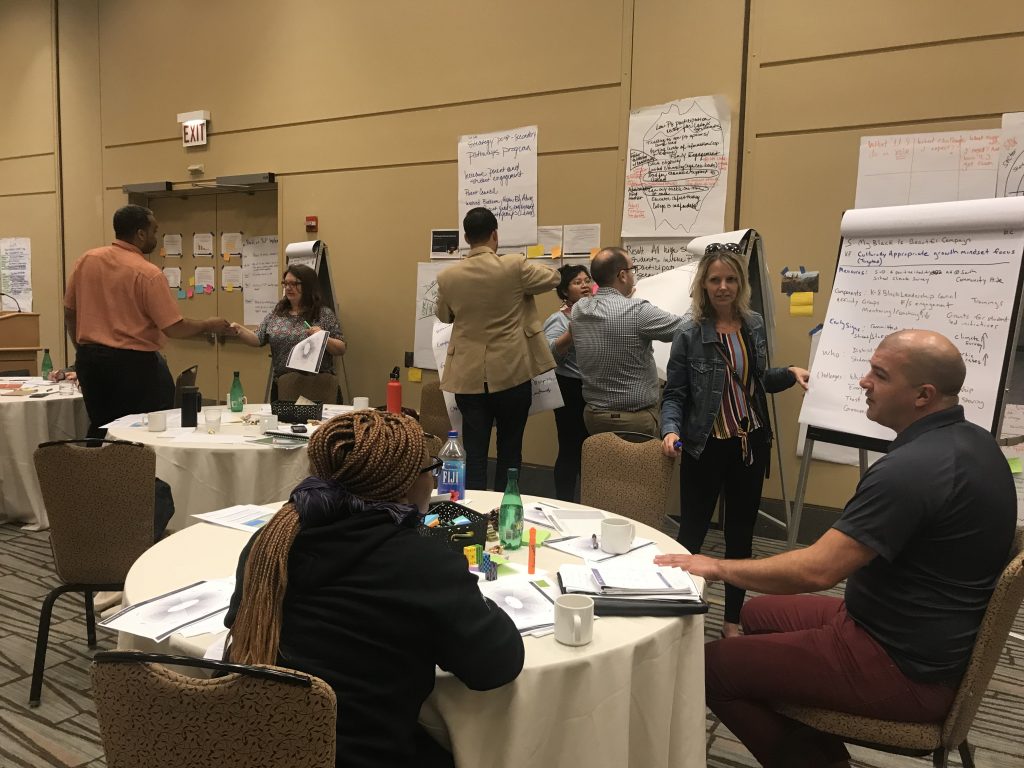 Create safe and brave spaces to do racial equity work.
Setting personal intentions and collective agreements promotes open and respectful dialogues for racial equity work. At the Racial Equity and Inclusion Convening, participants began by naming what they would give themselves permission to do, think, feel and say in the room. They also identified what might get in the way and how to overcome those obstacles.
The group then set agreements to create the kind of space they’d work in during the convening. Examples include being conscious of the impact that words and actions may have on others, regardless of intent, and using “I” statements when recounting lived experiences. Participants noted that questioning these experiences can invalidate or de-value what’s being shared. Agreements should be posted and easily visible in the room and revisited throughout the work to hold everyone accountable to the agreed-upon norms.
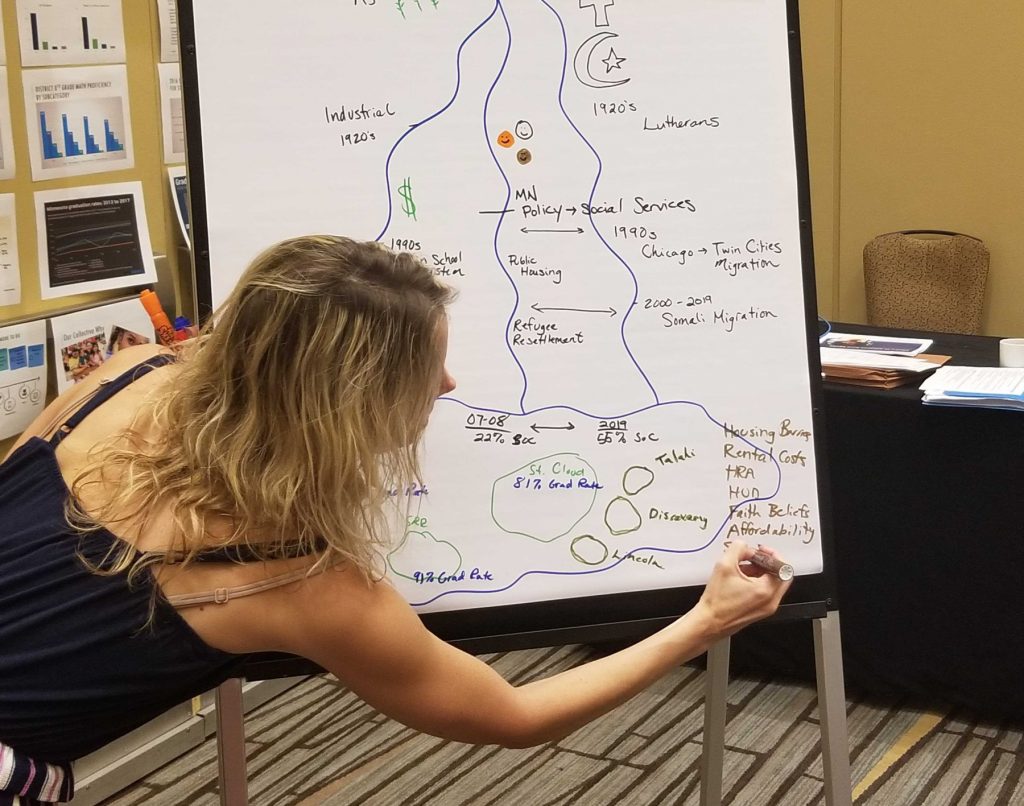
Map a community’s journey to uncover systemic and structural inequities.
Creating a community journey map, or visualization of how your community developed, is a powerful way of assessing the strengths and deficits of the place where you live or work. To prepare for this activity, teams gathered context about the local events, systems and structures that have contributed to racial inequities, including policies like redlining or immigration, settlement, forced migration or displacement patterns. As participants mapped out the journeys of their communities, they analyzed these realities as social, cultural or physical factors that enhance or minimize opportunities. This activity helped participants understand inequities as a result of how systems and structures are set up, instead of as a result of how individuals behave.
Foster collective action through affinity groups.
An affinity group forms around a common trait or goal and plays a vital role in creating an inclusive environment where every member is valued and heard. Affinity groups based on race, background, lived experience or another identity provide a safe space that encourages risk and authenticity. Affinity groups for people of color allows members to heal and be heard and strengthens their collective voice and power. For white people, an affinity group can be used to examine white privilege, systems of white supremacy and ways to cede power to those most impacted by inequitable systems. Participants from the seven teams at the convening spent time in affinity groups to reflect on and share experiences, fostering connections and developing their knowledge and skills as racial equity leaders.
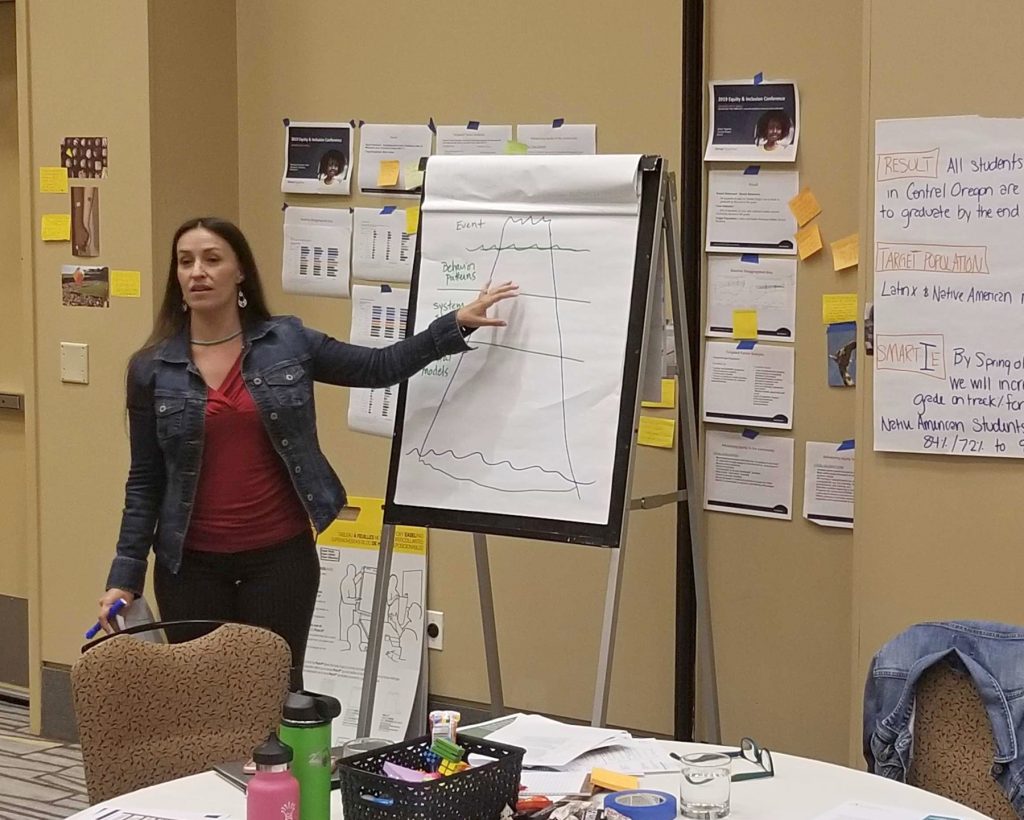 Move racial equity work from talk to action.
Training our way to racial equity is not possible. The Racial Equity and Inclusion Convening enabled teams to build community and learn alongside one another as they drafted action plans to later share with parents, children and community members. Teams defined SMARTIE goals — goals that are strategic, measurable, ambitious, realistic, time-bound, inclusive and equitable — to help them reach the results they want to see in their communities. Through this process, they named a target population most burdened by a local system, deepened their understanding of the root causes of inequitable systems, and proposed innovative strategies that could advance better outcomes in their communities.
Over the next three months, participants will engage with community members and local leaders to learn more about root causes and co-design strategies to address inequities and align their efforts. Teams will move their plans forward using tools like the Racial Equity Impact Assessment, which examines how different racial and ethnic groups will likely be affected by a proposed action or decision. The purpose is to minimize unanticipated adverse consequences, prevent institutional racism and identify new options to eliminate inequities.
The seven teams will reconvene in September to share learning from putting their action plans in place and figure out next steps to move their racial equity work forward.
Participating partnerships include Austin Aspires, Better Together Central Oregon, E3 Alliance, Milwaukee Succeeds, Partner for Student Success, Promise Partnership of Salt Lake and Raise DC, all of which are members of the StriveTogether Cradle to Career Network.
The post Moving racial equity work from talk to action appeared first on StriveTogether.
]]>The post ‘Facing ugly history’: Eve Ewing’s insights from Chicago school closures appeared first on StriveTogether.
]]>Last week, sociologist of education Eve L. Ewing shared insights from this event with Cradle to Career Network members gathered to deepen their work at StriveTogether’s Racial Equity and Inclusion Convening: Moving from Talk to Action. Highlighting lessons from her book “Ghosts in the Schoolyard,” Eve explored the cause of the school closures and their disproportionate effect on black communities.
“I don’t see this as a story about one city or about school closures in particular,” Eve said. Rather, she said, she looks to the event to learn “how we can be more honest about our history in order to make more equitable choices as teachers, school leaders, community members and policy makers.”
Here are three key insights from her talk:
The systems that shape opportunities for kids and families intersect and problems compound each other, so solutions must take a cross-sector view. The story of the school closings, Eve shared, shows the interdependence of housing, education and other sectors that affect families.
Chicago’s African American population grew rapidly during the Great Migration that followed World War I. The city’s new black residents settled in a restricted geographic area, prevented from moving elsewhere by real estate laws and violence. As more families and children arrived in the neighborhood, called Bronzeville, a housing shortage quickly appeared.
Faced with violent resistance to integrating housing throughout Chicago, the city filled Bronzeville with highly concentrated, high-rise public housing. As population density increased, schools in Bronzeville became more and more crowded. Over the next few decades, segregation and the community’s lack of resources worsened.
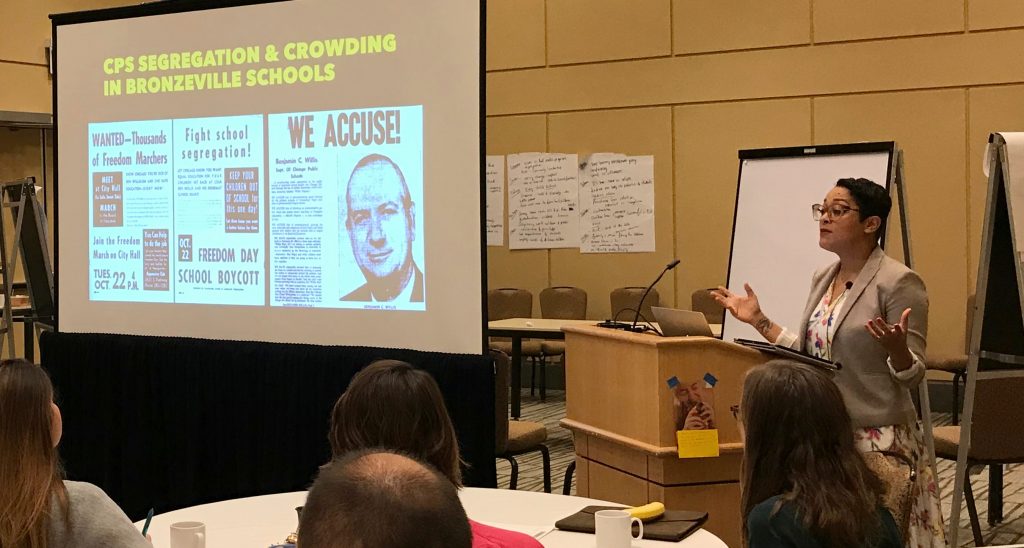
In 1999, responding to the declining perception of public housing, Mayor Richard M. Daley announced a plan to demolish all of Chicago’s high-rise public housing. With this sharp decline in the neighborhood’s population, the schools that had once been overcrowded were now emptying, leading to what school officials called underutilization.
“The history of segregation, even when it seems very distant, actually does a lot to shape our present moment and our present reality.” — Eve L. Ewing |
Our history continues to shape our present, and this context must be addressed in making policy decisions that best support every child, regardless of race, zip code or circumstance.
While underutilization was the most widely cited reason for the 2013 school closings, Eve said, this reasoning was conspicuously missing discussions of the roles of segregation, history or housing.
“The history of segregation, even when it seems very distant, actually does a lot to shape our present moment and our present reality,” she said.
Eve shared that she’s often asked a seemingly obvious question: “Are school closings always bad?” No, she answers, we need to adapt to new circumstances to best serve students. But history and context matter. And in the case of the 2013 Chicago school closures, a 2018 study by the University of Chicago Consortium on School Research revealed that the decision failed to help students.
This story doesn’t end in Chicago or in 2013, Eve said.
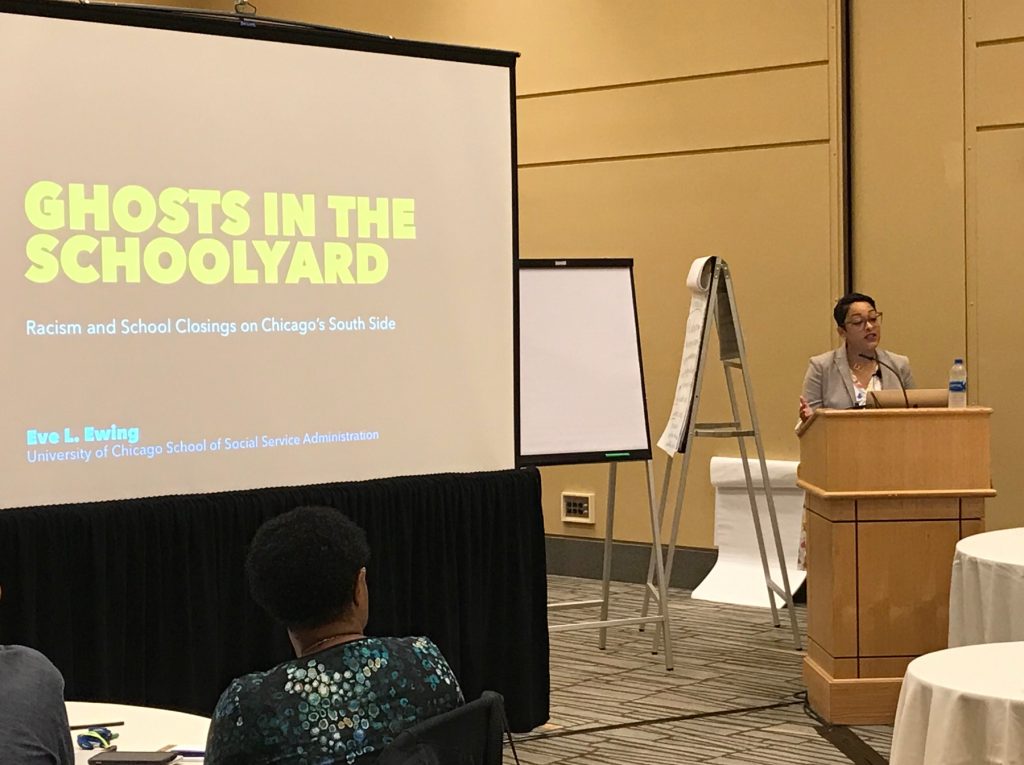 “We have to look forward to the recurrence of not only this policy question — should we close schools? — but any policy question, whether it’s at the classroom level or at the district level or at the state level, that runs the risk of disproportionately harming communities that have already been disrespected, disregarded and marginalized,” she said.
Changing adult behavior changes systems. To avoid repeating harms, communities need to think critically about such decisions and frame them in historical and social settings, “even when that means facing some very ugly history,” Eve said. Despite the discouraging patterns of the past, she sees reason to have hope for the future.
“Human people made these decisions through human polices, and what that means is that human people can unmake them,” she said.
To learn more about Eve’s work, connect with her on Twitter and visit her website.
The post ‘Facing ugly history’: Eve Ewing’s insights from Chicago school closures appeared first on StriveTogether.
]]>The post Moving from diversity to equity in the community of Oak Park appeared first on StriveTogether.
]]>Oak Park, Ill., is an aspirational community, touted by residents as a diverse and progressive place where all people can live and thrive together. But despite efforts to promote Oak Park’s legacy of integration, ongoing discrepancies in student achievement tell another story: Our community has overlooked, even ignored, the importance of equity.
Students across Oak Park occupy the same streets and schools, but they don’t all have access to the same opportunities. These challenges reflect a failing of our systems and adults, not our children. If we are to be a community that is inclusive of differences in race, ethnicity, gender, beliefs, income, culture, sexual orientation, ability and family structure, then our systems — which were not developed to accommodate these differences — must change. And change is hard.
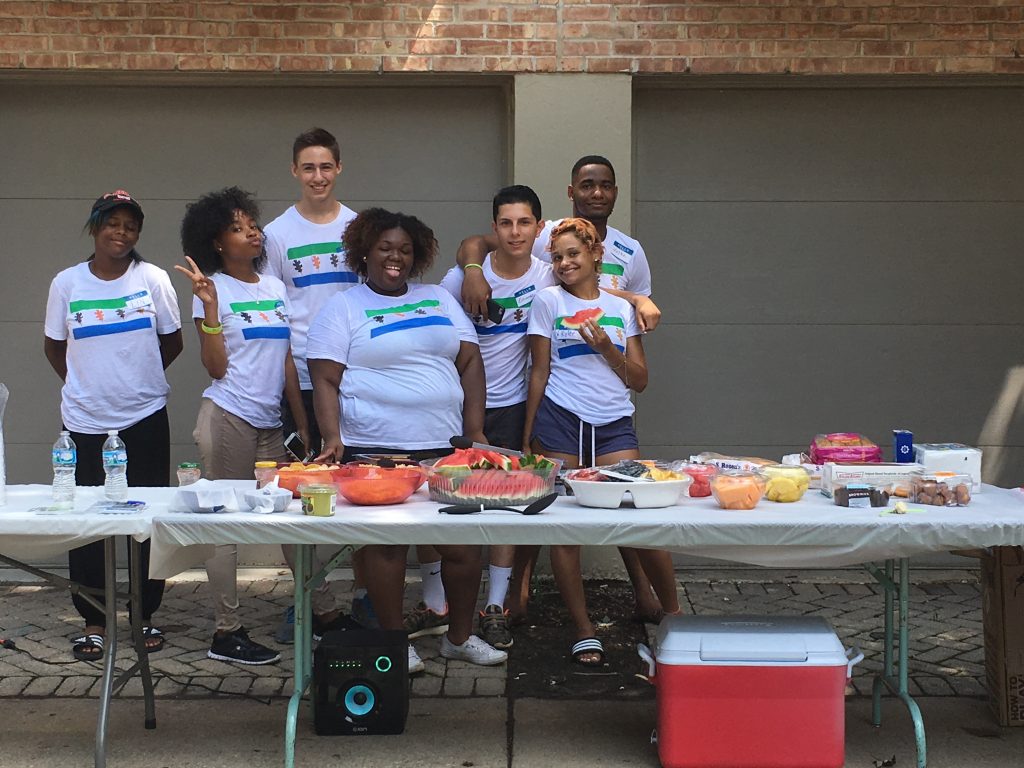
In response to research and our own data, Success of All Youth is tackling the systemic racism and biases that have long kept so many black and brown students from reaching their full potential. Here are some examples of what we’ve learned in our journey to become a community in which every kid thrives:
- Set out specific policies, procedures and leadership focused on equity, and keep equity at the forefront. We found that simply putting goals in strategic plans was not cutting it. Instead, we set a stronger stance for equity across the community. District boards of education approved formal equity policies, like those adopted by District 97 and District 200, and hired equity directors, like District 97’s Carrie Kamm and District 200’s LeVar J. Ammons. Equity will be a focus in all school decisions, from capital improvements to curriculum. Accountability and monitoring practices are being put in place in school districts, and efforts are underway to do the same in village government.
- Lift up youth and parent voice. It’s crucial to develop solutions with those closest to the challenges. We strengthened youth voice through affinity groups, social justice groups and participation in decision-making committees. The community has also supported the development of a student-created and -led racial equity course, developed by Students Advocating for Equity (SAFE). To hear from and work with parents, we gathered affinity and advocacy groups and include parent participation in making decisions.
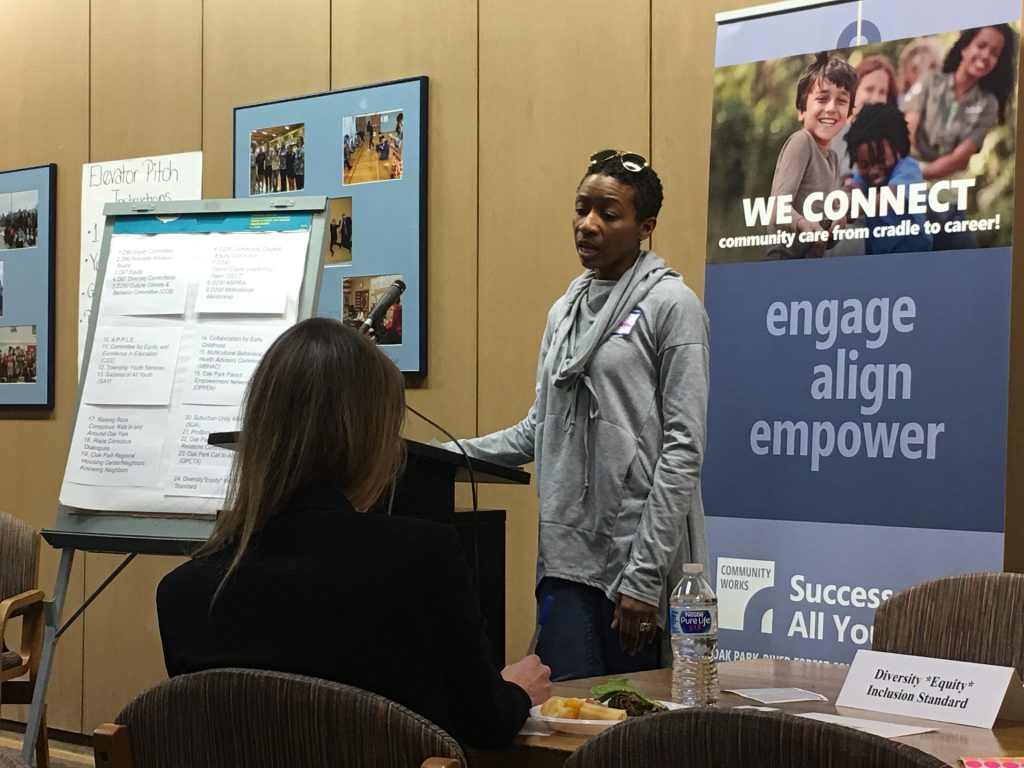
- Start a practice of consistent communication. Because change is not always met with open arms, ongoing communication is important in working to include the whole community. Clear communication can address misunderstandings and fear. Success of All Youth uses strategies like creating community committees, conducting surveys, hosting forums, partnering with the local paper and using social media.
- Provide training to help the community tackle this work. We’ve established ongoing training for our staff, teachers, students, police officers and community members. Opportunities include offerings from Courageous ConversationTM and Umoja, along with other professional development focused on race and trauma-informed practices, in addition to training and reflection for the community.
This work is a marathon, not a sprint, and it has come with numerous stops, starts and bumps along the way. The right leadership is crucial. We’ve also learned that to make systemic change that can withstand the challenges to come, we have to take an approach that outlives the current administrations, boards and even community members.
Supporting every child to reach their potential is not just about teaching and learning within the walls of schools. Academic achievement depends on a holistic community approach that addresses the social, emotional and health needs of children and youth and works to address the failings of systems and adults. Success of All Youth is proud to support this work in Oak Park and River Forest as we work toward our vision of a community where every kid has opportunities to thrive.
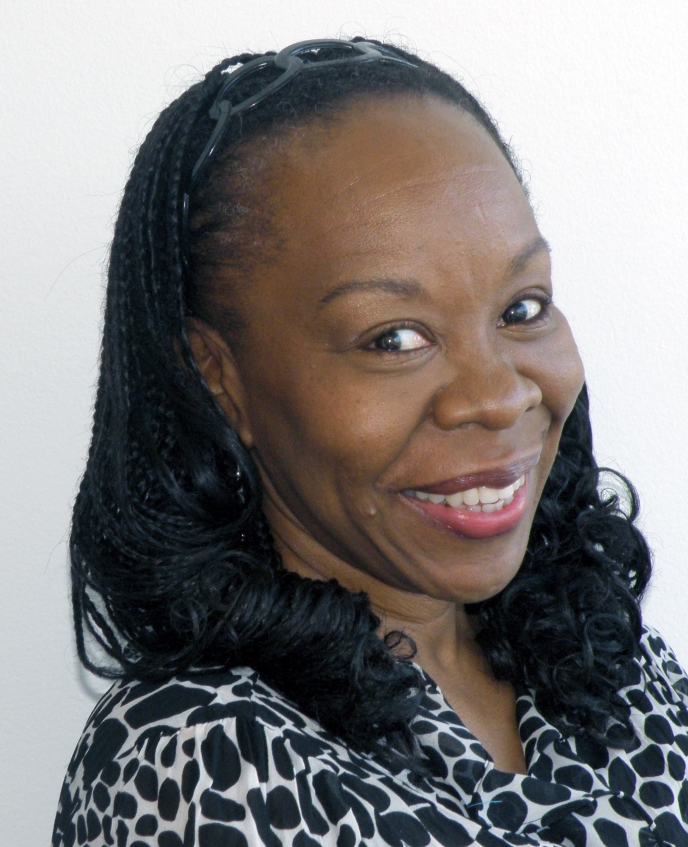
Linda T. Francis is the director of Success of All Youth, community partners working together to ensure every child in Oak Park and River Forest, Ill., is empowered to reach their full potential. Success of All Youth is a member of the StriveTogether Cradle to Career Network.
The post Moving from diversity to equity in the community of Oak Park appeared first on StriveTogether.
]]>The post Men of color change classrooms: New initiative delivers results in Milwaukee appeared first on StriveTogether.
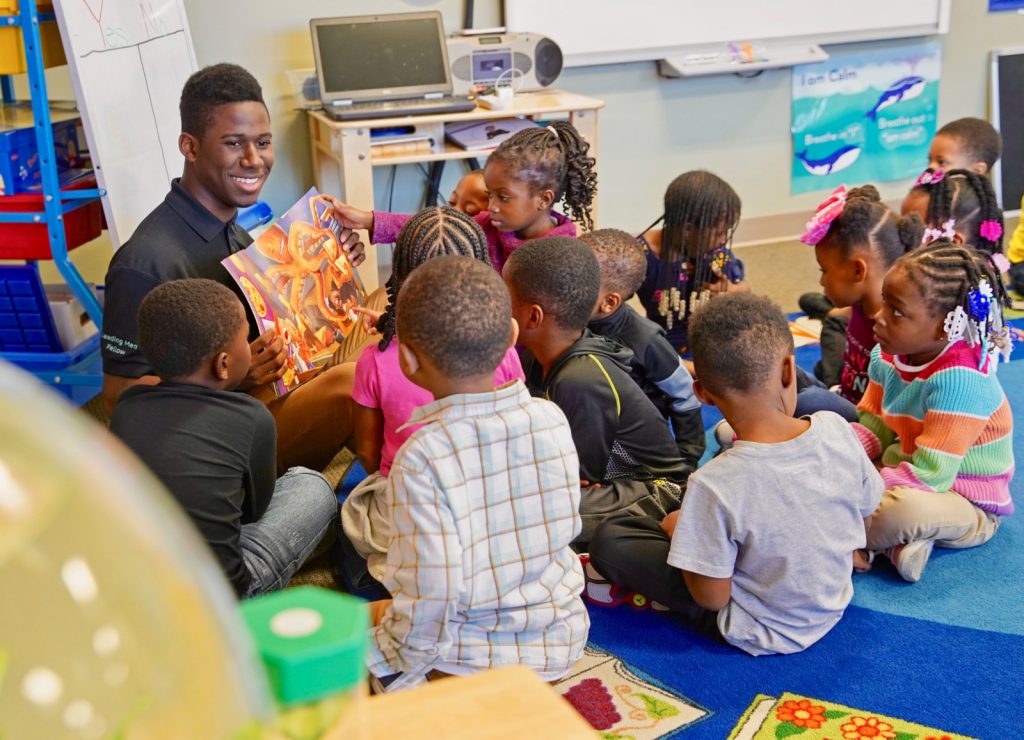
]]> Ten fellows — ages 18 to 24 — make up the Leading Men. They commit to working in a pre-K classroom alongside a veteran teacher for the entire school year for 25 to 30 hours a week and earn a living wage of $15 an hour. Once they complete the program, they receive a $2,500 education award to help them matriculate into a postsecondary program.
Boys of color are more likely to perform better on standardized tests, attend school more regularly, be suspended less frequently, drop out far less and seek a college degree when at least one of their teachers is of color during elementary school, according to research. As the program manager of the Leading Men Fellowship in Milwaukee, Calvin Lewis knows these statistics well and is leading fellows in the region with support from StriveTogether Cradle to Career Network member Milwaukee Succeeds. The Leading Men Fellowship began in Milwaukee in August 2018 and is already making an impact by preparing more men of color to teach young children.
“In the beginning of the school year, 89 percent of our 4- to 5-year-old students in the Milwaukee region had a composite score that was far below the target measured by the Preschool Early Literacy Assessment. Now students have begun to improve in all assessment areas and 41 percent have achieved kindergarten readiness in alphabet knowledge and 34 percent in comprehension,” Lewis said.
 Lewis, a Ph.D. student at the University of Milwaukee, is studying the recruitment and retention of African-American males in public education. He believes that the fellowship is an excellent platform that will help change the adverse narratives that exist about young men of color. Instead of being seen as “the problem,” young men of color will now be seen as part of the solution. Although many of the fellows were initially attracted to the program by the wage offered, it’s their desire to help children learn and be successful that keeps them engaged. Lewis said, “As they do the work, the money becomes secondary. They talk about the relationships they are building with their students and the changes they are seeing in their classrooms.”
Six of the fellows will pursue careers in education. Two are already in enrolled in college and studying early childhood education. Milwaukee Area Technical College serves as the program’s official postsecondary partner and provides the young men with college-level credits for their classroom experience. Five of the fellows plan to continue gaining professional experience as assistant teachers upon successful completion of the fellowship with Next Door Foundation. Others, while not called to become teachers, are exploring other college options. Almost all are first-generation college students.
Minority students often perform better on standardized tests, have improved attendance and are suspended less frequently (which may suggest either different degrees of behavior or different treatment, or both) when they have at least one same-race teacher.
The importance of a diverse teaching force, David Figlio, November 16, 2017, Brookings Institution
The post Men of color change classrooms: New initiative delivers results in Milwaukee appeared first on StriveTogether.
]]>The post Sorry, Howard Schultz: If you don’t see color, you can’t be a leader for racial equity appeared first on StriveTogether.
]]>Over my 18-year career — and especially over the last year and a half — I’ve been asked to launch a lot of meetings and planning efforts. (I should add metaphorical ribbon-cutting to my resume!) But the kickoff to last week’s StriveTogether Racial Equity Planning Team is long overdue and comes at a critical time for the Network and the country.
Something else happened last week on the same day our Racial Equity Planning Team first met. During a town hall meeting on CNN, Howard Schultz, former CEO of Starbucks and possible 2020 presidential candidate, responded to a question about racism at Starbucks, saying that he “grew up in the projects and doesn’t see color.” Wait, what? I did a double-take wondering if he seriously just said that. But he did.
This is one of the most cringeworthy things that well-meaning white people say. And I get it. I do. My guess is that like me (and perhaps like many of you), Howard Schultz was taught to see racism only as individual acts of hatred — and not as the systems and structures that result in white dominance and privilege. And so if we’re “colorblind,” then we can’t be racist, right? Wrong.
Comments like this underscore how much more needs to be done to achieve StriveTogether’s vision of “every child, cradle to career.” Equity is at the center of our work as a Cradle to Career Network — I often say that equity is the work. With racial equity as a priority in our new five-year strategic plan, we are actively working to build the capability of cradle-to-career partnerships to close disparity gaps and create more equitable systems that lead to economic mobility for black and brown families.
The data makes it crystal clear that this is where we need to focus as an organization and network. Our recent assessment of communities across the Cradle to Career Network shows that the 67 partnerships in the Network impact 13.7 million students, 8.6 million (or 62 percent) of whom are students of color. When you take a closer look at this data, it is evident that systems are perpetually failing students of color. We shouldn’t be surprised by this. We know that systems and structures in our communities are designed to perpetuate these results. For this reason, the Network is doubling down on our efforts to transform systems so that race and income no longer dictate a child’s ability to thrive.
This is no small task and requires courageous leadership at all levels and across all sectors. I am grateful to be able to work with the diverse group of individuals who comprise the Racial Equity Planning Team as we unpack the key barriers facing communities. Together we will prioritize policies and practices needed to address those barriers.
In addition to this Planning Team work, StriveTogether continues to build our racial equity competency. Our organization recently has started holding racial affinity groups for staff. Once a month, I participate in a white anti-racist affinity group along with some of my colleagues. I can admit I was skeptical at first. I wasn’t sure how putting a group of white people together in a room could be productive — isn’t that just the recipe that has led to the outcomes we see today? And, if I’m honest, I can admit that my own white fragility had me a little freaked out about saying or doing the wrong thing, especially in my role. But as I’ve written about before, going on this journey to become a white leader for racial equity won’t be comfortable and will require learning in public, so that’s what I’m doing. And I’m learning and evolving and finding my voice. And anyone who knows me well knows that, once I find that voice, I usually don’t stay quiet.
Rather, I have started using my white privilege as a megaphone to help educate other white people, especially white leaders. And there are a lot of us. White people, especially white men, still dominate leadership roles in every sector. And it is not a surprise that, when reviewing the StriveTogether assessment data, we see that most cradle-to-career partnerships in the Network are led by white people.
Fellow white leaders in this work: This is very important and something I want to emphasize. Disregard what Howard Schultz said. You absolutely do see color. And you have to. Please, I’m begging you. Because if not, if you hide behind this idea of “colorblindness,” then you continue to whitewash history and the systemic oppression and injustice suffered by entire groups of people. I know that it makes you uncomfortable and maybe a little stressed. But don’t you think we should be made to feel uncomfortable and a little stressed? After all, the color of our skin privileges and protects us — we can probably handle a little stress and discomfort.
Because if we cannot see color, then we don’t end up naming race in this work. And if we can’t name race, then we won’t be able to challenge the systems and structures that perpetuate inequitable results. And if we can’t transform the systems, then we won’t be able to embrace or enable the future we strive for — a future in which every child has every opportunity to succeed and thrive from cradle to career.
I believe we can do all of this. We can see color; we can celebrate the beauty and opportunity in diversity. We can transform systems to achieve more equitable outcomes. We can be white leaders for racial equity.
The post Sorry, Howard Schultz: If you don’t see color, you can’t be a leader for racial equity appeared first on StriveTogether.
]]>The post The elephant and the rider: Supporting change to connect health and education appeared first on StriveTogether.
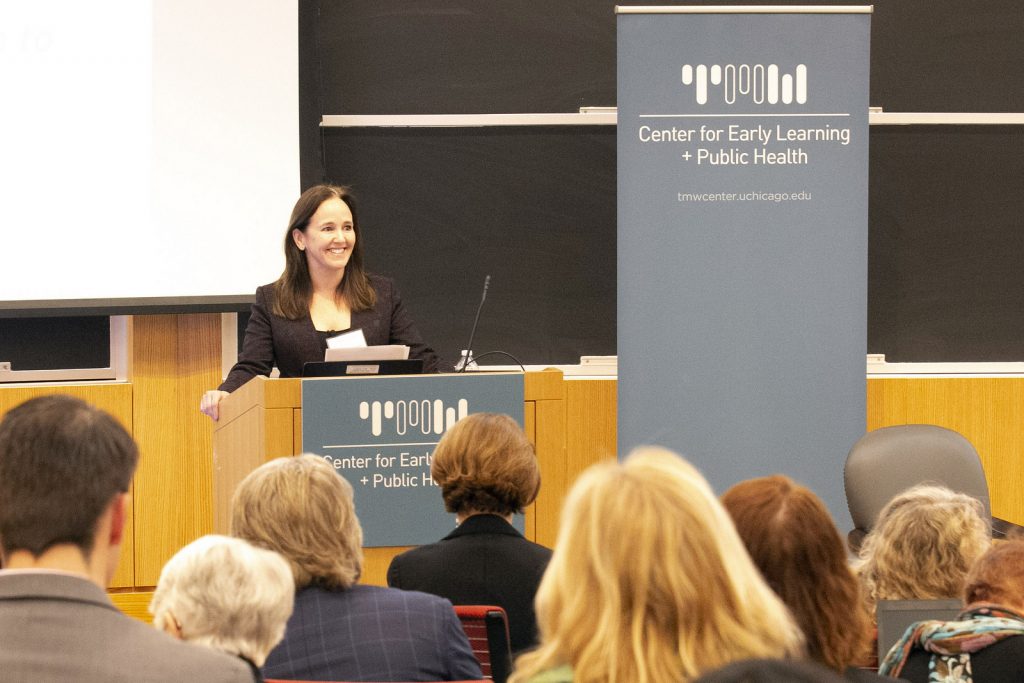
]]>The 2018 Rohit and Harvanit Kumar Conference on the Economics of Early Childhood Education focused on the health care system’s role in impacting educational disparities. Throughout the event, economists, health care practitioners and researchers made it very clear that early investment in high quality learning has significant power to close gaps, particularly for children living in poverty. When those gaps close, benefits include lower rates of poverty, higher graduation and employment rates and better health outcomes. And the health sector is well-positioned to support early learning, as most families start interacting with the health care system before they interact with any other institutions.
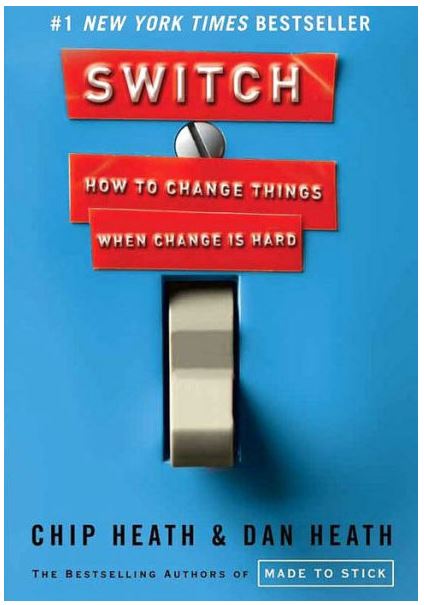 Despite the clear benefits of an interdisciplinary approach to health and education, change is difficult. The difficulty inherent in change brought to my mind the ideas I recently encountered in “Switch: How to Change Things When Change Is Hard.”
In this book, authors Chip and Dan Heath use the simple metaphor of an elephant and rider to explain the complex nature of institutional and behavioral change. Leaders can make lasting change when they weigh the emotions — the elephant — and the rational side — the rider — of individuals and groups, while simultaneously adjusting the environment to make change manageable.
Many advocates, researchers and practitioners at the conference were doing just that — directing the rider, motivating the elephant and shaping the path for the health care sector to improve childhood outcomes.
Directing the rider
Often in institutional change efforts, directing the rider, or the rational side of individuals, is not an easy task. Despite best intentions, individuals and institutions often fall prey to the comfortable feelings of old practices, leading to inconsistent implementation and disconnected work. At the conference, Dr. Allison Metz from the National Implementation Research Network highlighted that while many programs use research and evidence best practices, these practices are often not implemented with the consistency needed to sustain and spread them. In our metaphor, this challenge is a classic disagreement between elephant and rider, with the elephant making it difficult for the rider to follow the correct path.
To manage large-scale change efforts, Dr. Metz encouraged participants to follow what the Heath brothers call “script[ing] the critical moves,” or planning the necessary steps. For example, HealthySteps, an evidence-based primary care program, uses this kind of script to set up successful collaboration with other organizations. When a health institution is interested in working with HealthySteps, it’s given a readiness assessment that outlines small behavioral changes needed to successfully use HealthySteps’ programming.
Scripting these critical moves through the assessment helps organizations diagnosis current challenges and determine how to put new practices into place. It also helps organizations think in terms of specific behavioral changes. Who do we need to involve in determining if this programming is a good fit? What behavioral shifts do we need to make to ensure the program enhances current work rather than diminishing it?
 Motivating the elephant
Although planning is crucial, the Heath brothers share, “In highly successful change efforts, people find ways to help others see the problems or solutions in ways that influence emotions, not just thought.” And that is exactly what advocates from Reach Out and Read did at the conference when they shared a video of a family making a routine pediatric visit for their 11-month-old baby. While the father and siblings took turns reading to the youngest, the room — filled with researchers, economists and health care professionals — could not restrain their “Oohs” and “How cute” comments. In other words, “Find the feeling.” Making sure people know something, like the benefits of integrating health and early literacy, isn’t enough to cause change. People must also feel something.
Directing the path
Scaling and sustaining consistent behavior changes requires what the Heath brothers call “rallying the herd” and “tweaking the environment.” In that same spirit, advocates from Reach Out and Read stressed the importance of having a medical champion. Behavior is contagious, and the more a medical partner “rallied the herd” or championed the benefits of the Reach Out and Read program, the more others took up the mantle. Instead of viewing talking to parents about reading aloud to their children as just another item to cover in an already tightly scheduled visit, pediatricians began to see it as an integral part of their work.
Not only does directing the path to results require a champion, it also requires an implementation leader or team — an individual or group that can see what small shifts in the environment could best support the change effort. This team might ask: What are the biggest challenges to consistency? What shifts in the environment need to be made to build practitioner buy-in? What processes and communications are needed to sustain change?
Every child deserves to grow up in a language- and literacy-rich environment. The long-term benefits for children in poverty are immense. To close disparity gaps and reach every child, our individual and institutional change efforts must engage the heads and hearts of those working with families and children ages 0 to 5 and develop a path to achieve that ambitious goal.
The post The elephant and the rider: Supporting change to connect health and education appeared first on StriveTogether.
]]>The post Moving from talk to action: Internalizing equity in organizations appeared first on StriveTogether.
]]>In real life, those of us dedicated to equity work know that recognition of the racial injustice in our world doesn’t automatically lead to its elimination. Neither does education alone: We can read countless books and article, watch documentary after documentary, and share blogs and posts on social media. To be woke, we must be aware and active, with the clear understanding there are no gold medals as a reward — and there shouldn’t be any.
Yet our personal equity journey doesn’t amount to enough if our organizations, systems and structures don’t model the equity principles we hold as individuals. Earlier this week, I spent the day with 15-plus organizations at the Kresge Foundation’s North Star Convening: Lifting Up Racial Equity in Human Services meeting. Our charge was mighty: Identify strategies and practices to advance racial equity in our organizations internally, not just in the programmatic support we provide.
The Kresge Foundation takes racial equity seriously in its grantmaking. Recognizing that it still has a long way to go, the foundation noted three critical components of operationalizing equity:
- Embrace risk taking. Many of us, especially my fellow white folks in this sector, talk a big racial equity game. But when it comes to actually taking action, we shy away from policies or practices that might make people uncomfortable. We must take risks on behalf of the people we care about — those people in our communities we work to serve AND the very people we work with each and every day.
- Get comfortable being uncomfortable. If it was easy, everyone would do it. Distilling racial equity in your organization is damn hard work — and invaluable. In a country where deep poverty rates have increased for people of color by 15 percent over the last few decades, there’s no excuse to not start moving people into productive disequilibrium.
- Identify allies. Racial equity is not a solo mission. As you work to create more equitable internal processes and structures, find your coalition of the willing. Some of those people will look like you and some of them won’t. Identify your champions from across the organization and move with them into action.
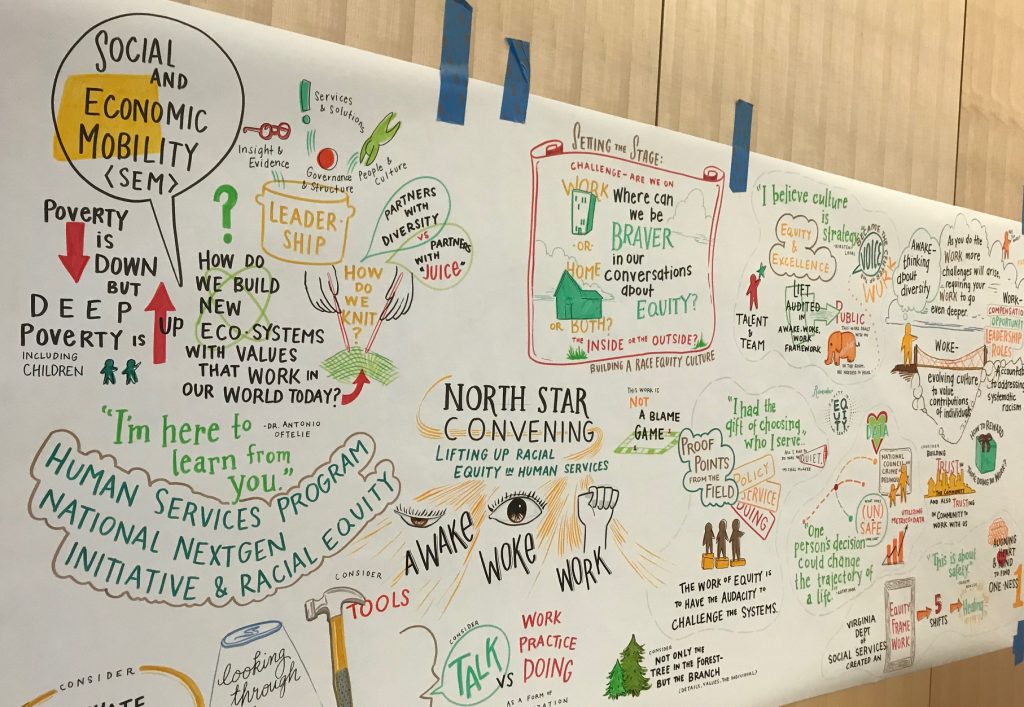 At StriveTogether, we recognize that we, too, have so much more to do to create a more racially equitable organization. We’ve looked at our data, listened to our team and have started to mobilize on an action plan. Over the past year, we have engaged with the Interaction Institute for Social Change to help us uncover the biases and systems in our organization that perpetuate a white dominant culture. Our team members have started to discuss anti-racism and healing through affinity groups, creating safe spaces to share and learn together. Every other month, you’ll find the StriveTogether team participating in equity lunch and learns, where we discuss racial equity and racism through history, pop culture and academia. We are awake and continue to build a race equity culture that’s truly inclusive.
But this is just a start. We’ve still got miles to go before we achieve racial equity — before race no longer predicts social outcomes like how much education you get, what kind of job you hold and how much money you make. What else do our organizations need to do to truly operationalize equity?
- Create porous boundaries with constituents. Organizations in the social sector are frequently plagued by the “thanks for your feedback” mentality. Although keen to elicit feedback from those we want to serve, more often than not, we take it from there. Only when community and constituents come together to co-develop solutions — and own those solutions from ideation to execution — are we shifting systems.
- Equity is doing the work, not just talking about it. I know a cadre of brilliant and smart people who can discuss the hell out of an equity frame and create masterful slides using all the popular theories. But this work is about so much more than talking — remember, there’s no medal for that. Racial equity is only possible when we act. Frames and theories, while helpful in unpacking a problem, can also be work avoidance. We need to step up and act, while recognizing that sometimes we need to get out of the way and rally around others that can lead, inspire and get stuff done.
- Don’t let perfect be the enemy of good. A sure sign of white dominant culture is perfectionism. Like the perfectionism I sought as I wrote, rewrote and twisted myself inside out coming up with the beginning of this blog. In this work, we can’t wait for the perfect solution or the perfect frame. You have to be willing to learn in public. A friend, mentor and coach to StriveTogether — Marian Urquilla — reminds us often that you can start somewhere as long as you’re willing to go anywhere. What can we do now that will enable us to do so much more later?
At the Kresge event, it was powerful to be “in community” (thank you, Christian Paige, for introducing me to that empowering term) with organizations that are grappling with strategies to embrace and further racial equity. We don’t need to win gold medals when we come together, share learnings and commit to doing better. We win something far greater — the humanity that racism takes away.
The post Moving from talk to action: Internalizing equity in organizations appeared first on StriveTogether.
]]>The post Training kicks off Equity Action Plan in Dayton, Ohio appeared first on StriveTogether.
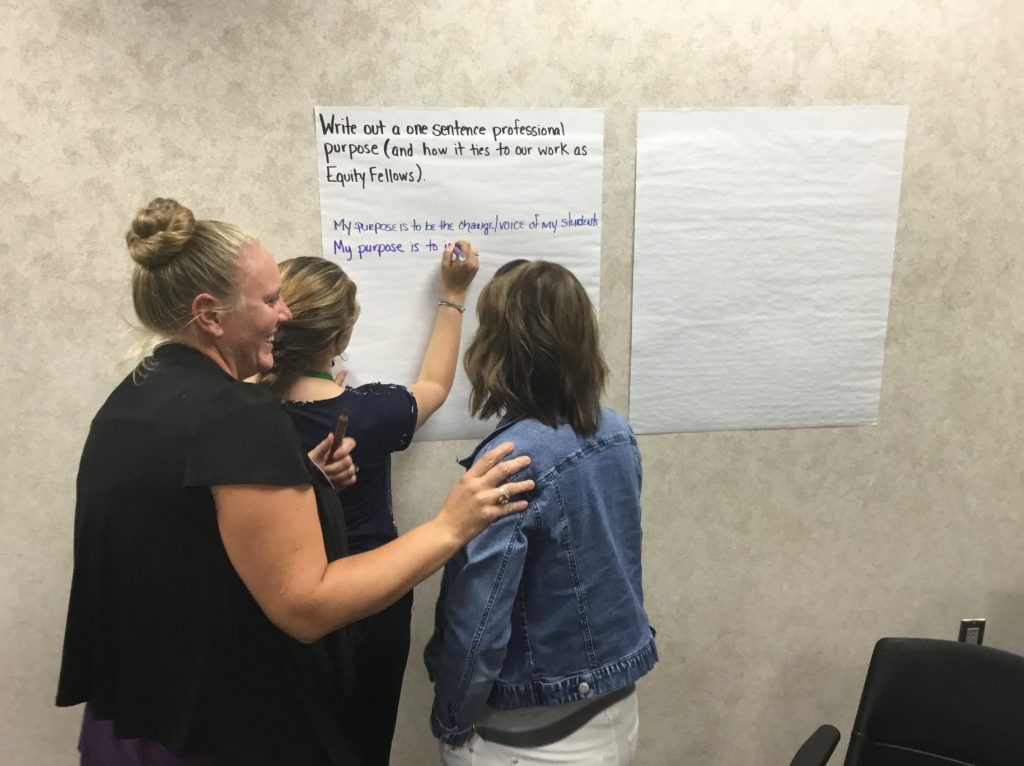
]]>Thanks to support from StriveTogether’s Cradle to Career Community Challenge and the Lumina Foundation, nearly 150 Dayton-area educators and community leaders recently participated in a two-day training on equity by the National Equity Project.
Learn to Earn Dayton is a member of the StriveTogether Cradle to Career Network at its highest designation of proof point and was designated a Talent Hub by the Lumina Foundation. The organization is leading the work in Dayton to create a communitywide Equity Action Plan and place specially trained Equity Fellows in selected schools. Equity Fellows will consist of teachers, administrators and community advocates.
On day two of the July training, Learn to Earn Day staff and participants reflected on the previous day’s presentations and discussions. Leaders from one high school said they welcomed the chance to talk about equity and discuss strategies to eliminate gaps in student success. Presentations, led by the National Equity Project, provided a time for all the Equity Fellows to think more deeply about the challenges and joys associated with teaching diverse student populations.
“Once you hit that building (at the start of the school year), there’s no time,” one person said.
 Equity Fellows are getting steeped in data around the achievement and opportunity gaps in their buildings. For instance, they’re reviewing proficiency test data disaggregated by race and gender, as well as disaggregated chronic absenteeism and suspension data. The goal is to identify policies and practices that may be negatively affecting student sub-populations or that reflect implicit bias.
During the reflection time, some participants said they were struggling with the fact that so many students who have difficulty in school are growing up in poverty, regardless of their race or ethnicity.
Another participant added that she was grappling for the words to explain why race is critical, over and above socioeconomic status. She said she’s learning that poverty “compounds” struggles relating to race, and that many African-American students have “two pots of challenges.”
The facilitator, Brett Bradshaw, suggested that too often in conversations about equity, poverty becomes the explanation for achievement gaps because people “don’t have the muscle to talk about race.” “Talking about poverty is a way to avoid talking about race,” he said.
Using prompts from Zaretta Hammond’s Culturally Responsive Teaching and the Brain, participants had provocative discussions about culture’s impact on creating trusting relationships with students and families.
After participants shared how cultural differences — the tendency not to make eye contact, for instance — can be misinterpreted, the facilitator suggested everyone ask, “What might you do differently tomorrow?”
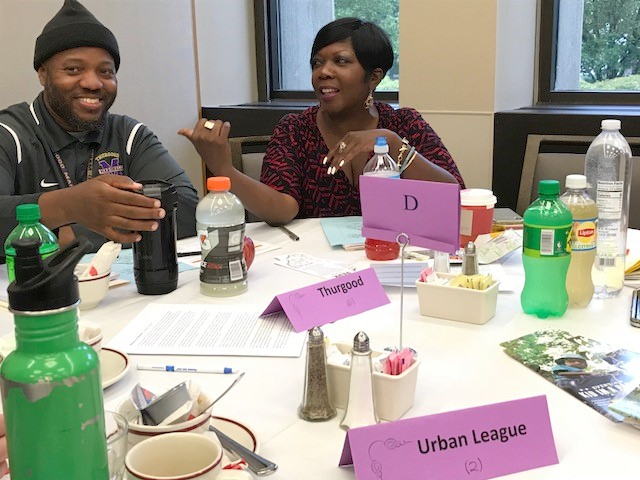
 This inaugural training session included representatives from a local hospital, Dayton-area colleges, the Dayton Urban League and three businesses. In addition to Dayton Public Schools, three other Dayton-area school districts sent staff to the event.
Building on the work of the training, the first group of Equity Fellows will be embedded in Dayton Public Schools, area preschools and a local college. Fellows are charged with understanding their school’s achievement data, disaggregated by race and gender; helping staff and families know that data; and leading collaborative efforts to close achievement gaps. In addition, they’ll be leading work around school goals on reducing chronic absenteeism and suspensions and promoting culturally responsive teaching practices.
Equity Fellows will not be working alone. They will be supported by their principals, some of whom also came to the recent training, and community stakeholders. The Fellows receive a $3,000 annual stipend. Funding for the Equity Fellows initiative is provided through both StriveTogether and the Mathile Family Foundation, which jump-started the work earlier this year.
The Fellows initiative is modeled after a successful STEM Fellows program created by the Dayton Regional STEM Center and the Montgomery County Educational Service Center.
Over the Dayton community’s three-year equity initiative, the number of participating school districts and the number of Equity Fellows is slated to grow significantly.
The equity gap cannot be closed or eliminated in one year. The goals of this initiative are to promote ownership of data, mindset changes and adoption of best practices that impact equity and collaboration between teams in school buildings, school districts, local colleges and preschools.
Ellen Belcher is communications director at Learn to Earn Dayton, a member of the StriveTogether Cradle to Career Network in Dayton and Montgomery County, Ohio. With support from the Cradle to Career Community Challenge, Learn to Earn Dayton is leading communitywide efforts to implement an Equity Action Plan and place Equity Fellows in schools, especially those serving many underrepresented students.
The post Training kicks off Equity Action Plan in Dayton, Ohio appeared first on StriveTogether.
]]>The post Learning in public: Defining my role as a white leader for racial equity appeared first on StriveTogether.
]]>There is much work to be done to achieve StriveTogether’s vision of “every child, cradle to career.” It is not enough for us to say that our work is about equity. Rather, we have to become an organization that believes in and practices equity at its core. We must make the implicit, explicit. We have to talk about race, power, privilege — subjects that can be somewhat unsettling to discuss — especially for white people like myself who get uncomfortable thinking about our unearned privilege and power.
Recently, I read an article on white supremacy culture that was like a punch in the gut to me. When I think of white supremacy, I think of the evils of the KKK, hate crimes, burning crosses, neo-Nazi groups, the horrors of the Charlottesville rally last year. But that’s overt white supremacy. In this article, I read words such as perfectionism, sense of urgency, quantity over quality, worship of the written word. These characteristics aren’t just familiar and relatable — they are what I have held as standards for work. I haven’t known anything else. As a leader of an organization, I have perpetuated attitudes and behaviors that are grounded in white supremacy.
These days, I find myself questioning so much that I thought I knew. It’s been an eye-opening journey. More recently, I started listening to the Seeing White podcast, which explores what it means to be white and America’s deep history of white supremacy. I personally believe that this podcast should be required listening for all Americans and certainly for anyone trying to do the type of work we’re doing at StriveTogether.
As I listened to the podcast, I had to ask myself: How on earth did I get to be 40 years old without understanding the origins of race and racism? I’ve often equated racism with bigotry, but in fact, racism is so much more. Racism is power plus prejudice. White people are the only racial group to have ever established and retained power in the United States. The systems and structures in place keeping children from getting the outcomes we want to see in communities, keeping those disparity gaps wide, exist on purpose. This I’ve known, but I have never been forced to confront what I may be doing or not doing to keep these systems and structures in place.
Fortunately, I’ve been able to do some learning in private — reading articles on planes, listening to podcasts while I run. Several times in the past year, however, I’ve found myself in “learn in public” situations in which I’ve said the wrong thing, become defensive or reacted when someone just wanted to be heard. Through each of these situations, I’ve had the best of intentions, but intentions don’t always match the impact. I’ve made mistakes — some little, some not so little. It has been rough, and it has been beautiful. I have been very uncomfortable, and I have most definitely grown. I have been blessed with friends, colleagues and advisers who have both challenged and supported me on the journey thus far.
I have a long way to go, but after more than a decade of supposedly “doing” equity work, without explicitly confronting my own privilege and implicit biases, I feel much more prepared to take on this work than I was a year ago. I am ready to continue on this journey, no matter how uncomfortable and unsettling it becomes. Because no matter how hard it is for me, I know that it is nowhere near as painful, frustrating and emotionally exhausting as it is for people of color to engage in these types of discussions with white people like me. If they’re willing to do it, I need to deal with my discomfort and keep learning and growing.
At StriveTogether, we have been having “lunch and learn” discussions where we come together as a team to informally — in a safe space — talk about issues of race equity and inclusion. During a recent lunch and learn, I made what I thought at the time was an innocent comment, but upon reflection was likely more of a microaggression. The next day, I sent a quick note of apology to the colleague with whom I was speaking, letting her know I had given what I said more thought and that I wanted to clarify my intention. She later replied that she understood and appreciated that I had followed up to check in. And then she said something that has stuck with me: “Privilege is often a little black dress that many white women have in their closet and can access anytime, can take it for granted, and often don’t recognize its power.”
This colleague went on to say that by taking the time to reflect and check in on the impact of what I had said, I am “making it my business to ensure that equity is at the forefront of the work when I don’t have to.” But, I absolutely believe I HAVE to. That’s what being a white leader for racial equity means to me — learning in public, making mistakes, getting uncomfortable, growing and doing better. It is my responsibility to make sure that I pull the “little black dress” of privilege off the closet shelf and use it for every child, from cradle to career.
The post Learning in public: Defining my role as a white leader for racial equity appeared first on StriveTogether.
]]>The post Three key insights from Racial Equity Summit by Grantmakers for Education appeared first on StriveTogether.
]]>Such was the parable shared by Deborah Santiago of Excelencia of Education as she recounted a conversation with a friend about how to frame inequity as systemic. Instead of simply treating the symptoms of inequity, we need to change the structural forces that perpetuate it.
Santiago was one of many expert speakers at a regional summit on racial equity held last month by Grantmakers for Education in Washington, D.C. The summit was filled with people from many of our country’s top grant-making institutions. And despite the racial diversity at the summit — a scenario that would not have been possible in previous decades — more work needs to be done to reach grassroots organizations that might not have access to a room like that. Diversity alone doesn’t get to power issues without equity and inclusion.
At StriveTogether, we believe improving education and upward mobility in the U.S. requires closing gaps and transforming the multitude of systems that shape opportunity for every child. In other words, we are working to find out who’s throwing babies in the water. Those of us working to make measurable differences in the lives of students and families — to ultimately create a better, more equitable world — also need to agree on a common vision of what that looks like. To Michelle Molitor of The Equity Lab, the summit’s moderator, equity is about all lives having value and therefore investing in everyone.
With that goal in mind, here are three other key takeaways from the summit:
- Understand the difference between equality and equity. Equity is about ensuring fairness in a world where not everyone has the same privileges. We need to stop using the term equity if we are not willing to give oppressed people more money and resources. Equity is also about listening and learning, and not always valuing academic knowledge over lived experience. In the same room, a person of color and a white person can say the same thing, but only one voice is heard. Equity in this country means absolutely including Native American and Native Alaskan people.
- Don’t just engage the community — empower the community. How do we give marginalized groups more control over their own destiny? Most foundations and nonprofits are run by white male leaders. Those with power and privilege must hold space for other voices and ideas to be heard. For people of color, education is crucial to exercising their freedom, said Dr. Howard Fuller of Marquette University. If we truly believe in the freedom of people of color, at what point does the transfer of power take place?
- Acknowledge there are contradictions in our work. Policies supported by community leaders and philanthropists may enable them to do good but also may cause harm. For instance, organizations often try to figure out ways to pay fewer taxes, and fewer taxes means fewer resources for society. Another example: We also need to empower the people who already live and work in the communities we are trying to help. Otherwise, we are perpetuating inequities if we divert funds from communities of color because local groups lack “capacity.”
The stakes are high, but so are the opportunities. Across the StriveTogether Cradle to Career Network, we can look at how school districts and organizations are using resources to address inequities in their community. We also can investigate whether communities are spending more annually per student in affluent neighborhoods and, if so, what we can do to bridge that gap.
I’ll end this blog post with four questions posed during the summit:
- Why are you doing this work?
- How does it serve you and your personal growth?
- How does it serve the needs of others?
- In what ways do you interact with the people you are trying to serve and what can you do to have more authentic connections?
An effective plan for real change begins with an understanding of the current landscape. Give some thought about where you are today, so you can map out where you should go tomorrow. Feel free to leave comments below.
The post Three key insights from Racial Equity Summit by Grantmakers for Education appeared first on StriveTogether.
]]>