The post StoryCorps: Danae Davis and Parvathi Santhosh-Kumar appeared first on StriveTogether.
]]>The post StoryCorps: Danae Davis and Parvathi Santhosh-Kumar appeared first on StriveTogether.
]]>The post Get the soil right for social change to prosper appeared first on StriveTogether.
]]>StriveTogether joined the American Public Human Services Association (APHSA) and MDC at the Kresge offices to generate ideas and share learning on helping people, especially children and families of color, move out of poverty. As we exchanged thoughts about our approaches to centering racial equity, engaging those most impacted by decisions and getting to outcomes that really matter, one thing became clear: You have to get the soil right before you plant the seeds. Organizations and initiatives across the country are quickly adopting visions to tackle social and economic mobility, but this is no small feat. Systems have perpetuated negative outcomes for hundreds of years — can they really turn around in a single grant cycle?
The answer, of course, is no. Economic mobility is rooted in systems, and systems are built by people with mental models that exist far below the visible surface. Changing these systems requires groundwork and cultivation. This is a marathon, not a sprint. But the exciting part is that it’s possible — and we’re on a path to get there. We lifted up a few key themes that can serve as mile markers along the marathon that is systems change.
Communicate what we do effectively. The idea of radical social change can feel riveting, but when you start peeling back the layers of how to get there, it can seem exhaustingly complex. Part of what inhibits our ability to mobilize effectively around change is that we can’t clearly articulate who we are, what we do or how we know if we’re making progress. It’s imperative to reach people where they are by speaking to their heads and hearts.
Encourage urgency — with patience. In my mind, I have no doubt about the importance of supporting more equitable outcomes in communities. Philanthropy and investors provide invaluable resources to help good organizations fulfill that mission. But sometimes — and this comes as no surprise to any grantee — philanthropy has an unrealistic view of the timeline needed to realize systems-level impact. This is because philanthropy may not always be as close to the work happening on the ground. Innovative funders can help their peers embrace the mindset that activities on the path to change are critical (and it’s OK to hold folks accountable to those) and that population-level change takes time.
Incentivize innovation. Have you ever asked yourself “is the risk worth the reward?” When we perceive resources to be finite or limited, we naturally feel more risk averse. To achieve our results, system leaders need to find strategies to incentivize innovation. I’ll be honest — we didn’t crack the nut on how to do that in a four-hour learning session, but we identified that this must be a priority if we seek to sustain the behavior change needed for systems change.
Stop assuming we know other people’s goals. One of my biggest insights from the day was realizing how paternalistic our systems and organizations can be, even when we don’t intend to act that way. We often easily assume we know what a child or family wants or needs. Our frameworks or logic models create molds that we stick communities in. But how often do we ask (and really listen to) what community members values or what goals they set for themselves? Definitions of success are individual — they may vary by cultural background or neighborhood. There is no “one-size-fits-all” in keeping people at the center of this work, and that’s OK.
So, back to that houseplant. I really wanted that plant to thrive. But I only addressed its needs once it started to look a little rough around the edges. I tried watering it more, only to find out that it needed water only about once a week (after I basically drowned it!). And this is how we often do systems change in the nonprofit sector. We know the end goal but don’t pay enough attention to the groundwork and cultivation it takes to create an environment that will accelerate better results. We can only plant the seeds when we get the soil right.
The post Get the soil right for social change to prosper appeared first on StriveTogether.
]]>The post Leading with compassion: Succession planning for team growth appeared first on StriveTogether.
]]>My succession planning story starts almost 10 years ago. I transferred to a new role under the vice president of human resources. At the time, I was just becoming a specialist in the field of employee relations and I felt intimidated reporting directly to our top executive.
Before our university had a formal succession planning program, I remember my leader doing something very intentional — she asked me to reflect on my career aspirations. After deliberating, I told her that I wanted to one day become a vice president myself. She could have taken this as a threat. Instead, she immediately set me on a path that demonstrated what it would take to achieve my goals.
The approach of leading from a person-centric (vs. task) mindset was surprisingly refreshing. Many leaders who I had previously worked with didn’t spend time on my development as an individual. They only cared about what I was able to produce, and if they did discuss my career aspirations, it was simply a forced conversation during an annual performance conversation.
This leader was different. She created an inclusive space for me while I was an early-career professional and was instrumental in my growth into an executive. During this process, she also transformed my idea of what leadership looks like in practice.
Here are three key insights about succession planning I learned by working with this leader.
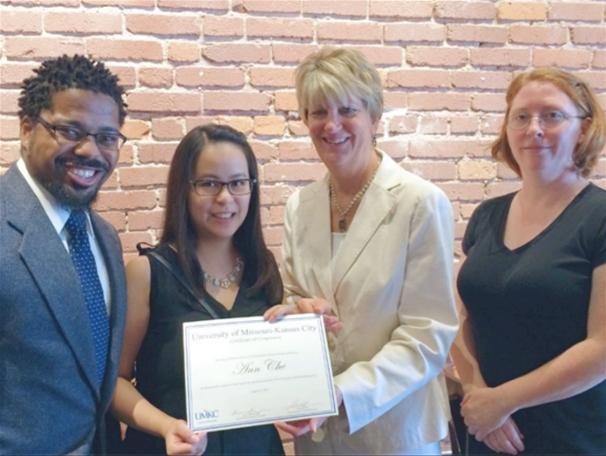 You don’t need an official succession planning process to get started.
I began to view my direct supervisor as a true leader early on in our relationship, and through weekly meetings, she got to know me very well, including details about my passions, work preferences and specific growth needs. Our 1:1 interactions consisted of typical updates but also included conversations about what I thought about projects she was working on. What I realized later is that she was not stumped or dumbfounded by the obstacles she encountered — she was slowly introducing me to the unique challenges I would face in her role and also taking the time to understand my point of view.
As opportunities arose related to professional development, I was always excited to attend conferences, trainings and other events. My leader also guided me to resources that would help me reach my career aspirations.
Succession planning takes a leader with vision, long-term orientation and patience.
When succession planning officially rolled out in the company, my annual performance review transformed into an activity focused specifically on me attaining my ultimate goal. Many of my leader’s responsibilities were delegated to me for the purposes of furthering my skills and, later on, my executive presence.
Eventually, my team of direct reports grew to around 11 employees, and I become an executive in a department of 30 employees. My personal experiences with succession planning and employee development were made significantly better by a leader who demonstrated true leadership — and exceeded what the organization initially required — by proactively supporting my growth into an executive.
Succession planning is not something reserved for top-level positions.
Succession planning, done both on a formal and informal basis, was transformational for me early in my career in talent management. Being mentored, coached and developed through many different projects and opportunities not only provided me with the ability to grow on the job, it showed to me the value of a humanistic approach to leadership and how leading with compassion can result in an inclusive work environment. It’s an approach I carry forward in my position as vice president of people, values and culture at StriveTogether.
The post Leading with compassion: Succession planning for team growth appeared first on StriveTogether.
]]>The post Test, learn, improve and repeat! appeared first on StriveTogether.
]]>As I’ve learned in my work with communities across the country applying StriveTogether’s collaborative improvement approach, one of the most underused steps in any improvement process is learning from what happened — good, bad or otherwise. In part, that’s because of our sector’s misplaced urgency to jump from symptoms to solutions instead of prioritizing time to reflect, analyze and dig into the root causes. It’s also in part because of the deeply entrenched elements of white supremacy culture that dominate our workplaces — patterns of perfectionism, defensiveness and either/or thinking. These behaviors are keeping the status quo in place.
Only if we give ourselves permission to be vulnerable with one another — to be truth tellers — will we be able to truly create a culture of learning that drives equity and results. The practice of emergent learning (or making thinking visible) can be a powerful way to create a learning culture on your team.
I was at the #GEOLearn conference to speak on a panel and share how StriveTogether has worked to embed principles of emergent learning in our work with cradle-to-career partnerships. This approach is meant to help combat human tendencies of leaping to solutionitis and instead test, learn, improve and repeat.
Emergent learning begins with asking powerful questions. Borrowing from the world of human-centered design, we start with broad, forward-focused “How might we …?” questions to unleash our full creativity in problem solving. In crafting a question, avoid fuzzy language — shorthand, overgeneralized words and phrases (e.g., effective leadership — What does effective mean? What about leadership?).
| Fuzzy Language | Clear Language |
| Community engagement | Students and parents have decision-making power to define and prioritize strategies and allocates resources |
| Bias/racism | Implicit bias of educators that leads to disproportionate rates of suspensions and extensions for African-American boys |
| Data use | Practitioners use student-level data on a daily/weekly basis to target support and improve how they work |
Fuzzy language can lead to weaker inquiry, overly global solutions and a false sense of alignment in partners. For example, people generally agree “community engagement” is a good thing, but you may not really have buy-in about sharing and ceding decision-making power to young people unless you are explicit about the goal. “De-fuzzify” your language so that your “How might we…?” question drives targeted inquiry, insight and action.
After hearing lessons and takeaways from my co-panelists — a consulting group (Ross Strategic Group) and a grantmaker (the Ewing Marion Kauffman Foundation) — I began to reflect on the evolving role that StriveTogether has played over the last decade.
When we work with communities in the early stage of this work, we operate somewhat like a consulting group, sharing the wisdom and expertise of communities that have built the civic infrastructure to get better results for children and youth at scale. When we work with Cradle to Career Network members that are more advanced in this work, we serve as a connector and a coach. And with the Accelerator Fund and other funds in the Cradle to Career Community Challenge, we have added the role of grantmaker.
As an organization, we are learning and continuously improving. Progress is one of our core values: We aspire to share learning and progress in real time, view professional development as personal growth and fix problems through continuous improvement. Because as Hanh Cao Yu said, “It’s not about beating the odds. It’s about changing the odds.”
If we are to collectively make progress on transforming systems to change the odds for every child across our country, we need to intentionally build a culture of equity and results — with a powerful learning engine.
So take time to reflect. Be brave enough to share your learning — particularly when your views diverge from the norm — and turn those insights into action with others. When we make thinking visible, we increase our ability to get things done.
The post Test, learn, improve and repeat! appeared first on StriveTogether.
]]>The post Why investors should ‘bet big’ on StriveTogether appeared first on StriveTogether.
]]>Jim Shelton, the former head of Chan Zuckerberg Initiative’s education division and former deputy secretary of the U.S. Department of Education, encourages investors to place “big bets” on “population-level” change. He cites the work of economists Raj Chetty, Emanuel Saez and others whose data show that despite significant investment “the place where someone grows up and the color of one’s skin” affect economic mobility. He argues that place-based progress demands systemic and comprehensive solutions. He then points to StriveTogether for “providing the infrastructure” to learn and scale practices.
I hope investors will heed Shelton’s advice and place big bets on population-level changes that have the biggest potential impact for every child and community member.
In the same issue, Tara Dawson McGuinness and Anne-Marie Slaughter write about public problem solving. McGuinness is a senior fellow at New America and teaches public problem solving at Georgetown University’s McCourt School of Public Policy. Slaughter is the CEO of New America and the former dean of Princeton University’s Woodrow Wilson School of Public and International Affairs.
McGuinness and Slaughter focus on the need to eliminate social and economic challenges, rather than just managing symptoms of these problems. They lift up different approaches that have four common elements:
- People-centered
- Experimental
- Data-enabled
- Designed to scale
While these concepts aren’t new, the authors share how these four elements are being combined by innovators to change how problems are identified and solved. This work “reflects a bigger movement” involving public, civic and philanthropic problem solvers. McGuinness and Slaughter go on to describe social entrepreneurs and different pathways to spreading successful strategies. They write, “StriveTogether, a network that builds communities’ capacity to tackle outcomes for children from cradle to career, has demonstrated real impact.”
It’s great to see our work highlighted so positively by nationally renowned thought leaders. This recognition reaffirms that we are on the right track in creating real change that will ensure every child has every chance to succeed.
I encourage you to share these stories with your networks and supporters. By partnering with StriveTogether’s Cradle to Career Network, investors are placing a big bet on problem solvers showing real impact.
The post Why investors should ‘bet big’ on StriveTogether appeared first on StriveTogether.
]]>The post Seeking wisdom from the Rev. King to drive us out of the darkness and into the light appeared first on StriveTogether.
]]>On the day in which we celebrate the life, achievements and influence of the Rev. Martin Luther King Jr., I find myself searching his writings for some hope and inspiration in a time that feels especially dark.
Over the past weekend, I was consumed with the appalling story that made international news. In videos shared across social media, a group of young men from Covington Catholic High School in northern Kentucky appeared to surround and mock Omaha elder Nathan Phillips as he played a peaceful song on a drum. This story and the images of young people on a school trip in Washington, D.C., laughing and taunting Native Americans during the Indigenous People’s March while wearing “Make America Great Again” hats, affected many people. These images really hit home for me because Covington Catholic High School is a short 10 miles away from my home. I have friends who graduated from there and at one time it was on a short list of high schools to which we may have considered sending our son.
In watching those videos, I’ve experienced a range of emotions — anger, sadness, shock and shame. As a parent, it made my heart hurt to see teens, on a school trip, engaging in what I viewed as racist and disrespectful behavior on the steps of the Lincoln Memorial, of all places. During the opening plenary of the 2018 StriveTogether Cradle to Career Network Convening, I spoke of the hope and inspiration I feel when I see young people uniting and tapping into their collective power to spark change and improve lives. After seeing the videos over the past weekend, my hope and faith are admittedly shaken, and I am searching for answers of what I can do.
In my personal life, I have used the videos to open up a dialogue with my own children. We have talked about white privilege; respect for other cultures, traditions and elders; and how to intervene when friends engage in behavior that is disrespectful. In my community, I have been speaking out against those who defend the actions of the young men, even if it means engaging in tough conversations with friends and family members. I’ve lost a few Facebook friends as a result, and that’s OK. And in my work, I have been searching for what we can do to prevent this type of behavior and address it when it happens, particularly as a white leader for racial equity.
Last year, my StriveTogether colleague Robert Harris wrote a blog about “The collective impact work of MLK” in which he posits that as a network, “we are keepers of the dream and the work of the Rev. Martin Luther King, Jr. is our work.” On this day, I believe this with all my heart. In “Where do we go from here: Chaos or Community?” the Rev. King wrote of hope and his belief that all Americans must unite to fight poverty and create an equality of opportunity. This book was written more than 50 years ago, and yet the key themes still resonate in 2019. He wrote that “something is wrong with the economic system of our nation” and he called for a coalition of African Americans and whites to come together to make both major political parties truly responsive to the needs of the poor.
Those of us doing this work in communities know that systemic and structural racism continues to drive the disparities we see in our schools and the inequitable distribution of wealth across this country. And we cannot stand for this. Fifty years after Rev. King wrote about these issues with such urgency, how much progress has been made? Are we slipping backward? After this past weekend, I worry that without vigilance and unity we very well might.
I also have viewed the videos that came out after the initial story about the teens — videos that show a group of Black Hebrew Israelites, who were involved in a protest, insulting the teens. I am deeply troubled by what I saw in those videos as well, but it does not change my perspective on the behavior of the teens when Mr. Phillips approached to try to peacefully defuse the situation. I’m also saddened by the deep division on this issue that I’ve seen on social media and in the news. Our country continues to experience the tremors of white supremacy and inequity. It’s clear to me that we still have so much work to do to fulfill the Rev. King’s legacy and his dream that this nation will rise up.
I have written about my racial equity journey before. I can admit, with deep shame and remorse, that a few years ago I very likely would have watched the videos, shook my head in disappointment and stayed quiet, sitting comfortable in my white privilege doing nothing, saying nothing. I can’t and I won’t do that anymore.
The Rev. King’s words remain relevant more than 50 years after they were written. In the conclusion of “Chaos or Community,” he writes: “We are now faced with the fact that tomorrow is today. We are confronted with the fierce urgency of now. In this unfolding conundrum of life and history there is such a thing as being too late. Procrastination is still the thief of time. Life often leaves us standing bare, naked and dejected with a lost opportunity … This may well be mankind’s last chance to choose between chaos or community.”
In the work that we do across the StriveTogether Cradle to Career Network, we choose community over chaos and we act with a sense of urgency in our work to build more equitable systems that get more equitable outcomes. Equity IS the work that we do — and, wow, do we have our work cut out for us! But I believe we can get there. And we must engage and tap into the energy and authority of children and youth as we do this work. In nearly 70 communities across the country, we can, and we will achieve the Rev. King’s dream of the “beloved community” — a society based on justice, equal opportunity and love of one’s fellow human beings. We have to. The future of mankind depends on it.
The post Seeking wisdom from the Rev. King to drive us out of the darkness and into the light appeared first on StriveTogether.
]]>The post New Year’s resolve: Equity, economic mobility and the path to 2023 appeared first on StriveTogether.
]]>I am not the type to set New Year’s resolutions, but as a former English major, I often finding myself thinking about nerdy things like word origin. Over the past few days, I’ve been thinking about the origin of the word “resolution,” which, of course, is “resolve.” Resolve is a word that I love because it is all about purpose and determination. So, although I’m not setting a specific resolution this year, I can say that I’m coming into 2019 with great resolve. StriveTogether has big goals to achieve over the next five years and I feel a sense of purpose, determination and urgency as we embark upon our ambitious plan to achieve them.
This is a big year for the Cradle to Career Network. 2019 marks the first year of the strategic plan we built together with our network members. In designing and launching that plan, we set a new bold goal to support 24 cradle-to-career partnerships to achieve systems transformation by 2023. Our goal is to permanently transform how the systems that surround our kids serve them more effectively. From education to housing to public transit to health care, we strive to create sustainable impact by transforming entire systems to improve outcomes and eliminate disparities for every child.
Over the past year we have worked hard to build the foundation to achieve our bold goal, including:
- Revising and launching an updated blueprint, our new Theory of ActionTM, that elevates the importance of shifting policies and power structures and doubles down on the importance of community voice driving and leading this type of sustainable systems change work
- Making strategic investments in more than 30 partnerships through the Cradle to Career Community Challenge with plans to support even more through additional investments, results programs, resources and learning
- Building the capacity and capability of the StriveTogether team and expanding the StriveTogether Board of Directors to better support the Network.
The foundation is in place to take this network of amazing communities to the next level. And I’m excited about what comes next, especially after some of the election night results we saw this past November. I am motivated and encouraged by these wins, from a new governor in California who believes in a cradle-to-career approach to a $600 million-plus education levy passed in Seattle to support preschool expansion and free community college, among other initiatives.
But I will admit that I always get a little anxious at the start of something new — and that includes the start of a new year. There are very few things I know for certain about how this year (or the next five years) will play out, but after a decade of muddling through this complicated world of systems transformation work, here are three things I know for sure: [1] it will be exhausting, [2] it will be frustrating and [3] it will be worth it.
This is long-term work. You’ve heard it before, but I’ll say it again: There are no quick fixes and no silver bullets. Dismantling long-held systems of power, oppression and privilege will not happen overnight. And at times it will feel as if one step forward is followed by two steps back. Take, for example, the U.S. Department of Education’s recent decision to rescind the guidance on disproportionate school discipline. What an incredible blow to civil rights, and yet, there will be more examples like this.
But we cannot allow ourselves to be frustrated. That’s work avoidance. Instead, we must push forward. We must have resolve. It is worth it. Each and every one of the more than 10 million children impacted by the Cradle to Career Network and the more than 14 million children in the United States living in poverty are worth it.
The StriveTogether strategic plan outlines a path for how to get 24 communities to systems transformation by 2023 using seven capacities. After a year of building the foundation for the plan, I feel strongly that those seven capacities are solid and stand as the pillars for what lies ahead.
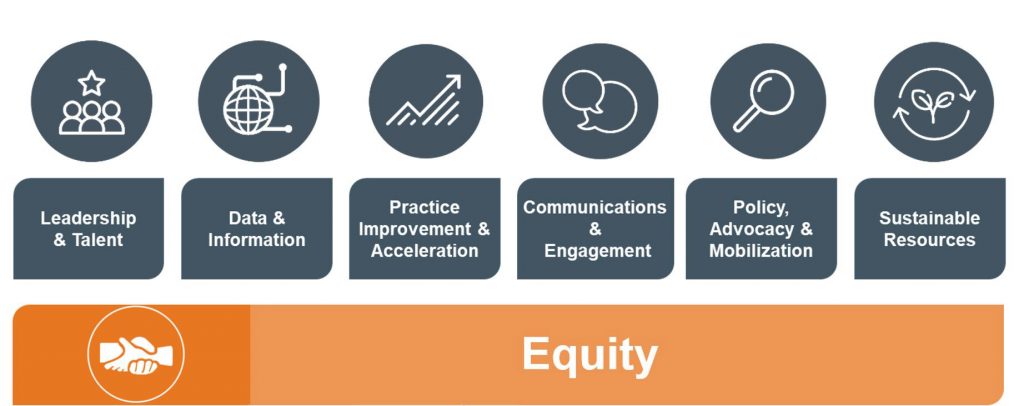
I will share examples of how these capacities are playing out in communities in future blogs. To hold these seven capacities in a community and in a national network of communities requires one more critical element — an extra capacity, if you will. And that is resolve. It is a belief and determination that this is the right work, at the right time, with the right partners. Nothing will stop us — no failed resolutions. We have the resolve. We are united by a shared vision of every child, cradle to career. We are StriveTogether.
The post New Year’s resolve: Equity, economic mobility and the path to 2023 appeared first on StriveTogether.
]]>The post Connection, inclusion and renewal: 5 insights from the Heartland Summit appeared first on StriveTogether.
]]>The idea behind the event was to connect people from the coasts and the center of the country to spark ideas and drive renewal and sustainable development across the country. Beacons of hope are emerging in these places, and innovation at the local and regional levels is a refreshing contrast to the national political and cultural climate in which we live. Here are five takeaways from dialogues, conversations and experiences I had at the summit:
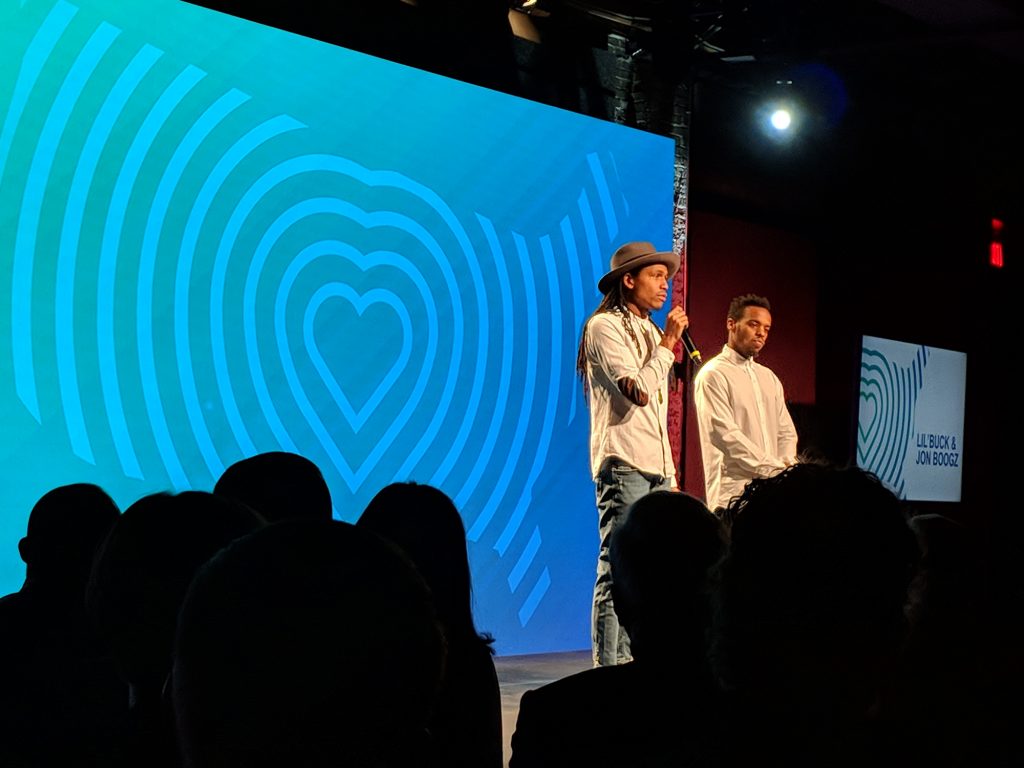 Build networks of change agents to power a shared future. The summit opened with a dance performance by Lil Buck and Jon Boogz on building bridges and healing through love. As people across the country find common ground and work across lines of difference, it’s important to start with the strengths of a community. The notion of asset-based community development — celebrating and starting with what you have, rather than focusing on what’s missing — resonated strongly. Consider ways to bring communities together through arts, culture, fitness and food. Ultimately, this hard work is about finding the humanity in one another and connecting people across cultures so that we don’t feel alone in our struggles.
- Communities need to do more to embrace inclusiveness. At a time when less than 1 percent of venture capital dollars in the U.S. go to African-American entrepreneurs and less than 10 percent support women entrepreneurs, we shouldn’t be surprised that our communities continue to perpetuate white male dominant culture. As leaders working to disrupt the status quo, we must be more intentional about how we rebuild communities — to focus on affordability, opportunity and strategies that get real results. In doing so, we need to pay equal attention to physical infrastructure, like renovated parks, and human infrastructure, like support for minority entrepreneurs.
- Ignite optimism and believe in the power of place. At StriveTogether, this idea feels fundamental — we don’t settle for anything less than the audacious goal of achieving more equitable results for every child in every community from cradle to career. Research reminds us of the connection between geography and inequality, and as leaders we must ignite urgency and action — not navel-gazing and admiring the problem. Our systems and cultural beliefs are human constructs, which means that we collectively have the power to change them. So let’s keep the work going.
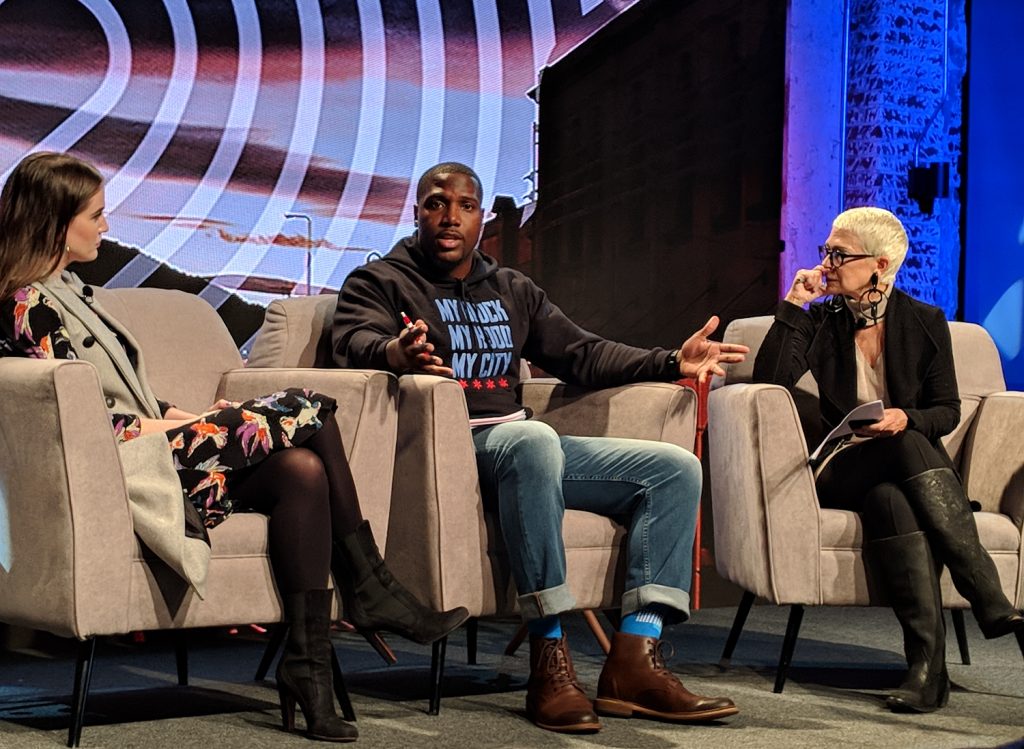 Embrace resilience and renewal. Hand in hand with optimism is the idea of renewal, which Anne Marie Slaughter defined as a new commitment to old ideals, best done with sincerity and humility. In conversations about preparing people for the future of work, developing new skills is reframed as lifelong learning. We ought to unapologetically embrace the emergent and ever-changing nature of our world and celebrate that improving is a way of life. This aligns with StriveTogether’s work to help cross-sector leaders to create and sustain a results-oriented culture so that outcomes improve for children and families. By working together to solve regional challenges, urban and rural communities can make a measurable difference.
- Create opportunities for locals to lead. We must temper our audacious goals with a healthy dose of humility — and turn to community leaders and partners to chart the course. The best ideas and solutions will come from those closest to the lived experience. At the summit, Shamina Singh from the Mastercard Center for Inclusive Growth spoke about income inequality, information inequality and the need to use the power of data for good. Civic institutions have a critical role to play in collecting and connecting data to inform community solutions. That’s why so many cradle-to-career partnerships help local leaders and practitioners interpret data, allowing them to better understand the stories behind the numbers to yield more informed strategies.
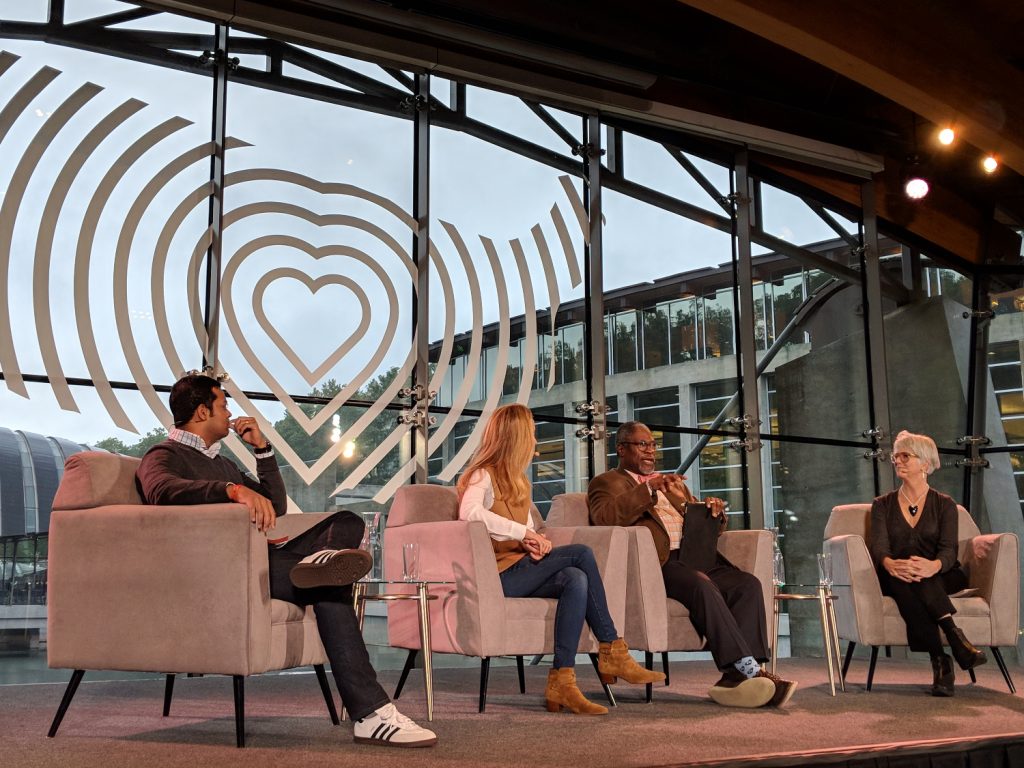 To move our country forward, we must double down on our work to strengthen the heart of America — in both rural regions and in cities. As our 70 Cradle to Career Network members continue their work to improve outcomes for 10.5 million children and youth across America, let’s continue to focus on what we have in common to overcome divisiveness and differences. Rather than seeking compromise, let’s find urgency and ambition in shared, bold goals. And let’s pair that vision with energy and action to get things done.
The post Connection, inclusion and renewal: 5 insights from the Heartland Summit appeared first on StriveTogether.
]]>The post Closing gaps in health outcomes for mothers and children of color appeared first on StriveTogether.
]]> The article came to mind last month while I attended the 2018 CityMatCH Leadership & MCH Epidemiology conference, Partnering with Purpose: Data, Programs and Policies for Healthy Mothers, Children and Families. Health practitioners and researchers presented evidence-based public health programs and innovative strategies to promote and improve the health of women, children and families. They also shared ideas for how to advance racial equity in the health sector at a greater scale.
The problem
During each session at the conference, I found myself inundated and incensed by the same information in Villarosa’s article:
- “The Centers for Disease Control and Prevention (CDC) notes that from 2011 to 2015, the percentage of women who initiated breastfeeding was 64.3 percent for African American, 81.5 percent for whites and 81.9 percent for Hispanics.”
- “Black infants in America are now more than twice as likely to die as white infants —11.3 per 1,000 black babies, compared with 4.9 per 1,000 white babies.”
- “Black women are three to four times as likely to die from pregnancy-related causes as their white counterparts, according to the CDC.”
- “Education and income offer little protection. In fact, a Black woman with an advanced degree is more likely to lose her baby than a white woman with less than an eighth-grade education.”
Such health outcomes are frightening for Black mothers and their children, but the disparities also persist for other minority groups. For example, according to the U.S. Department of Health and Human Services Office of Minority Health, American Indian/Alaska Native mothers are 2.5 times as likely to receive late or no prenatal care as compared to non-Hispanic white mothers, and their babies are twice as likely as non-Hispanic white babies to die from sudden infant death syndrome (SIDS).
Practitioners and researchers at the conference offered a long history of the debates over why such a minority-white divide exists in maternal health, infant birth weight, breastfeeding and mother/child mortality rates. The moral call to act — to engage those who experience the disparate outcome and cross-sector partners, to implement tiered systems-level interventions in the fight to eliminate racial disparities in maternal and infant health — was resounding.
Two key insights emerged for me during the conference:
 Community-engaged partnerships are central to making a difference. Often initiatives to improve Native American maternal and children’s health (MCH) populations have only included the voice of health practitioners and health departments. Renee Lawson, pediatric clinic supervisor at Wind River Family Community Health Care Center, suggests addressing historical injustices and gaps in these populations. Tribes must be integrated into the U.S. public health system through effective partnerships with state health departments, community organizations and tribal-serving agencies. Using an inclusive collaborative model, partnerships among the Wind River Family and Community Health Care Center, Sage West and the Wyoming Department of Health led to changes to improve community infant mortality rates. One shift included client-centered reproductive health discussion in clinics. This approach focused on thinking about pregnancy planning and/or prevention based on client desires; respecting the ambivalence that Native women may experience when in contact with health professionals; and training providers on preconceptions about Native American health and patients as well as culturally respectful contraceptive counseling.
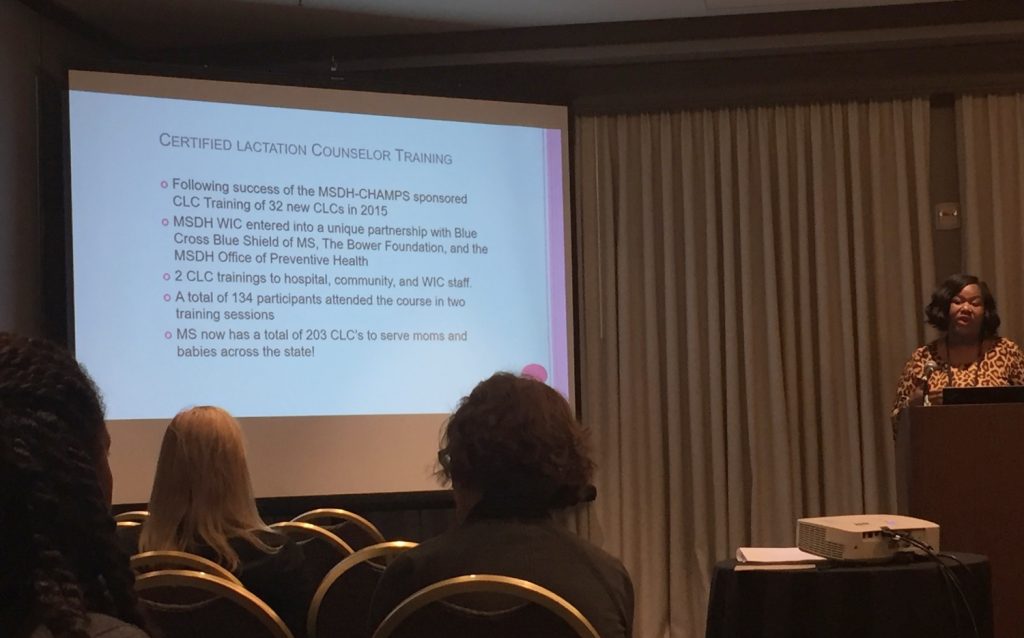
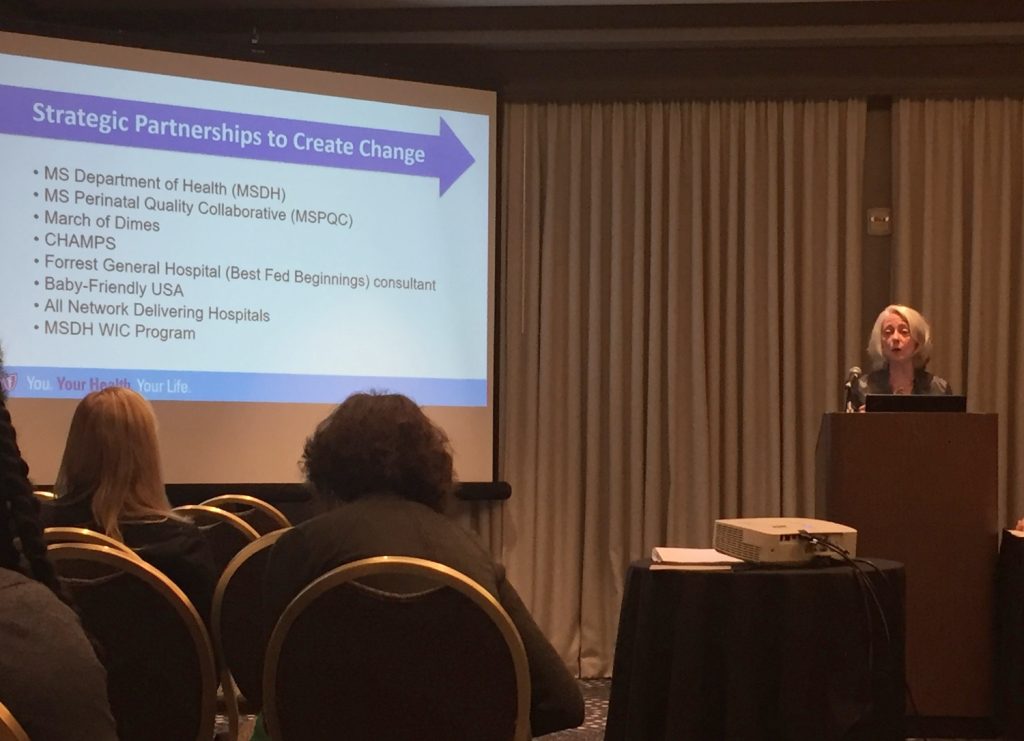
Gaps in health outcomes for mothers and children of color require interventions at various levels of the system. To be effective in this work, panelists at this year’s conference also encouraged every community to carry the right mix of practices, programs and policies at the state and local level to support vulnerable communities. For example, despite the many benefits of breastfeeding in maternal and child health, African-Americans mothers have the lowest rates. Some recommended solutions include increasing the number of hospitals becoming baby friendly with nearly all of the state’s hospitals entering the Baby Friendly Pathway; expanding the Baby Cafe community supporting breastfeeding practices; increasing health insurance coverage of breastfeeding resources; and transforming Women, Infant, and Children Food and Nutrition Services (WIC) programs from not only serving recipients to providing support to every woman through hospital and community partnerships. In Mississippi, connections among a host of different groups — the State Department of Health, the Mississippi Perinatal Quality Collaborative, Blue Cross and Blue Shield of Mississippi, the Baby Cafe USA organization, statewide policymakers and mothers — have all contributed to this unprecedented change in the landscape of breastfeeding.
For any family supporting a woman who is carrying or having a child, it can be a turbulent and joyful journey. For women of color and their families, who face what could appear as insurmountable disparate outcomes in the maternal and child health space, the journey seems even more daunting.
Villarosa wrote in her article, “For Black women in America, an inescapable atmosphere of societal and systemic racism can create a kind of toxic physiological stress, resulting in conditions — including hypertension and pre-eclampsia — that lead directly to higher rates of infant and maternal death. And that societal racism is further expressed in a pervasive, longstanding racial bias in health care — including the dismissal of legitimate concerns and symptoms — that can help explain poor birth outcomes even in the case of Black women with the most advantages.”
Despite those seemingly intractable barriers, as an African-American woman and soon-to-be mother, I left the CityMatCH conference encouraged by the outrage of others in attendance. And in their outrage, they were collectively engaging and working at various levels of state and local health systems to improve outcomes for women who look like me and their children.
The post Closing gaps in health outcomes for mothers and children of color appeared first on StriveTogether.
]]>The post Friends in the work appeared first on StriveTogether.
]]>The StriveTogether national Cradle to Career Network Convening last week was nothing short of amazing. The event was a metaphor for me. I had the privilege of opening and closing the convening with spoken word performances honoring two leaders who have made significant deposits in my life and community. The first piece was a summary of the impact that education nonprofit Degrees of Change and its executive director, Tim Herron, had on myself and my as emerging leaders. The second was a call to action that Pat Thompson, living community legend in White Center, Wash., left us with as we took on the call of becoming pillars in our community.
Here is where the metaphor lives:
Recently, Tim told me it was an honor to have me as a “friend” in the work. I have always looked up to Tim and I have been confused by the shift happening in my life where folks are no longer seeing me as pupil but as peer. I am 25 and, in most circles, would still be considered “youthful.” It seemed like everywhere I turned at the convening, “youth voice” was the topic of conversation. I was watching young people work on equal footing with seasoned community pillars to create change that impacts the most affected people in their cities. I heard about engaging youth in city planning through the Dream Game in Cincinnati’s Roselawn neighborhood, watched the Technology Enabled Girl Ambassadors (TEGAs) gather voice from community members and children who are consistently overlooked, and listened to a young man named Madj Aljada in his collaboration with San Antonio boldly say that his peer group will hold political positions in the near future.
The metaphor was clear: This is the shift that our communities have been waiting for — the idea that seats at the table could be shared with individuals whose lived experience could best inform the work.
 We often use inaccessible language like “adaptive or responsive leadership” to describe this process, but Tim calling me a friend in the work was the type of adaptability and responsiveness that will change our communities. Dominique Ervin of Tacoma (the greatest city on the planet!) told the audience during the opening plenary, “Don’t be afraid to communicate with somebody who doesn’t look like you or sound like you.” I believe he captured the essence of my experience at StriveTogether. What if we just called people who are different from us (in age, gender, race, socioeconomic status, orientation, etc.) our “friends” in the work? What would the table look like then? What could we accomplish? (See definition for inclusion
  ).
).
I saw myself differently after this realization. I wrote a short poem in the Roselawn session that described what I hope young people feel in the work:
“What if you believed it
If your Be – Lied – at the Eve
If you knew you were the solution
Would it change the way you viewed the problem?
Could you be the David standing against your community’s Goliath?
Turning the same small stones in your pocket
Into the resources needed to knock down the wall between community and commerce
Conversation between souls is not a verbal exchange
It’s a commitment to engaging
To standing on ground that is still discovering how to be solid
It’s you
It’s your story
It’s your work
It’s believing that you have always been the solution
Your name is synonymous with strength and it’s time to own your identity
Believe it”
This is the call that I left StriveTogether with. To make sure that the youth I work with believe they are the solution. That the folks who are normally overlooked are centered. That they know the value in their voices. That I see them as my “friends in the work.”
I mentioned earlier that I closed the convening. Walking into the final plenary, I was surprised to see Pat Thompson, the inspiration for my closing piece. I had only mentioned her name once in a planning call, and StriveTogether staff member Paige Umberger made sure that Pat was present for the final performance to create a moment that I will never forget. Paige’s responsiveness is what I hope we can model while doing the work — to listen to our communities with the intention of creating a moment, a movement, a community experience, that they will never forget.
I am honored to have the privilege of calling the StriveTogether Cradle to Career Network my friends in this work and I am grateful for the learning that took place last week.
Christian Paige is an educator, keynote speaker and spoken word poet who uses his artistic expression to create change. A first-generation college student, he is a native of Tacoma, Wash. Follow him on Twitter at @CPaigeSpeaks.
The post Friends in the work appeared first on StriveTogether.
]]>