The post Community commitment leads to impact in Northfield, Minn. appeared first on StriveTogether.
]]> .
.
Here are a few examples of how Northfield Promise is changing systems to support kids and families:
Aligning the community
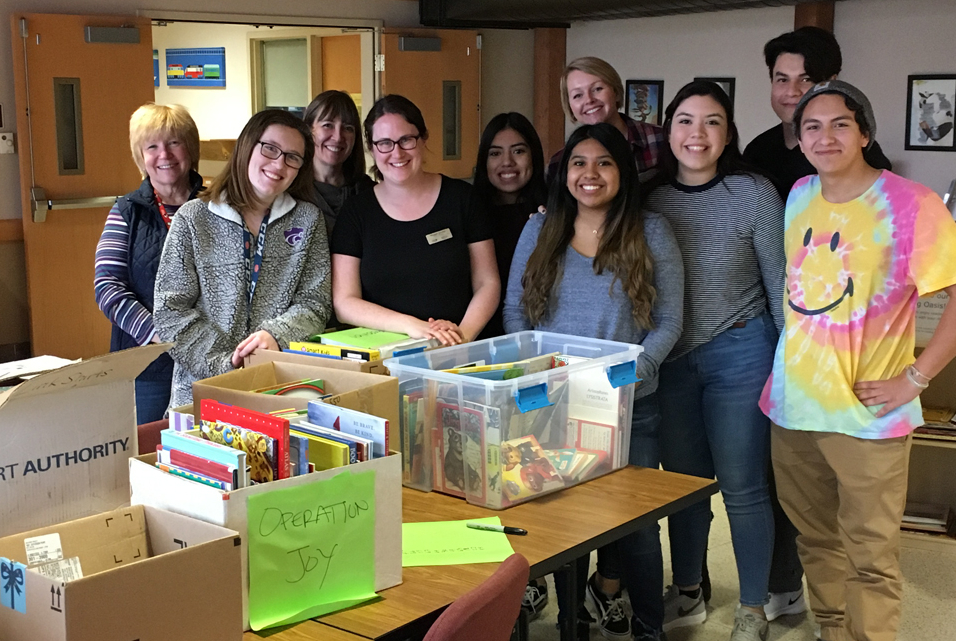
When the partnership was formed, Northfield Promise engaged over 500 community members to choose 10 shared benchmarks to improve for students. Northfield Promise partners aligned their goals, structures and funding to support this work. Three of the largest local funding entities in Northfield — Northfield Area United Way, Northfield Shares and Women in Northfield Giving Support — have aligned their youth and education funding to directly support Northfield Promise. The partnership also has a close relationship with Northfield Public Schools, which provides space within school buildings for staff and key initiatives, shares student data to help partners make better decisions and participates in each Northfield Promise action team.
Collaboration for change has become the way of life in Northfield. “Before Northfield Promise, lots of great things were happening independently, but there was no intentional overlap. The shared community vision coordinates resources and creates intentionality for efforts to move in the same direction,” shared Matt Hillmann, superintendent of Northfield Public Schools.
Using data to inform action
Through its relationship with Northfield Public Schools, Northfield Promise has access to the district’s student information system and data reporting system, allowing partners to make data-driven decisions. To increase data support, Northfield Promise tested a one-year pilot program to increase the district’s director of assessment services role from part-time to full-time. Now, that position is a permanent full-time role funded through the district’s general fund. In addition to serving district staff, the director also provides community partners with data analysis and evaluation to help them test new strategies and work more effectively.
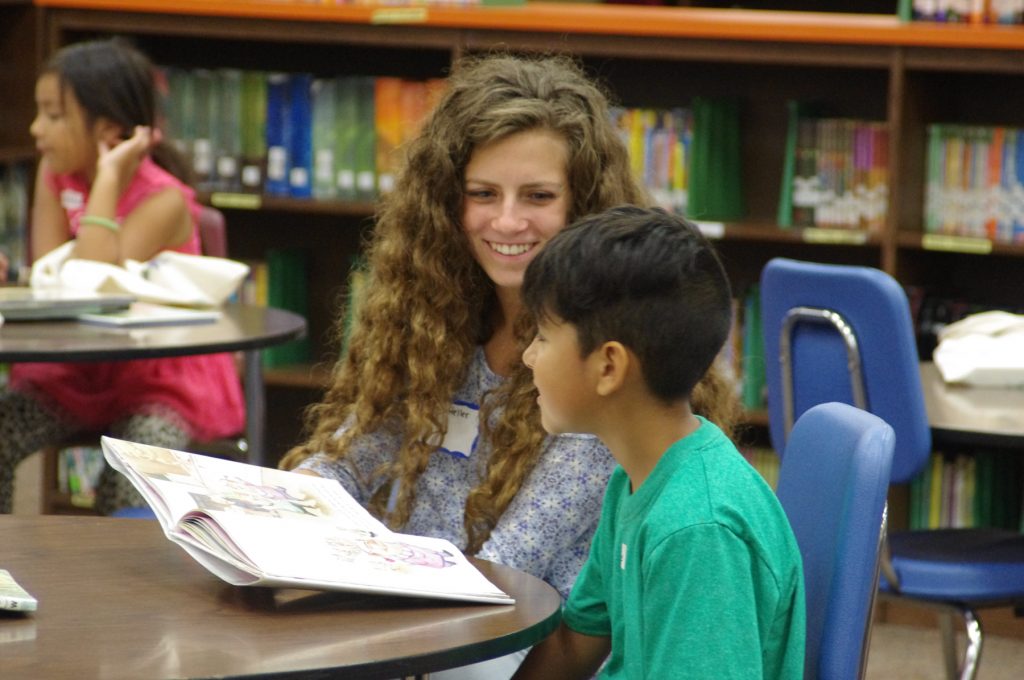 The district and local organizations have created a culture of data use, which can reveal gaps that aren’t immediately apparent. When the Northfield Promise Reading Team looked at schools’ average reading scores, it seemed like students were on track. But after breaking down the data by different demographics, the team learned that low-income students and students of color were reading below proficiency. This realization prompted the school district to adopt a common reading curriculum to support all students in combination with the Move 5 Kids campaign, which focuses targeted reading supports for third-grade students who need them the most.
Empowering youth to make decisions
Local high school students are using their voice and building their leadership capability by serving as active board members through Northfield Promise’s Youth on Boards initiative. More than 85 seats are open on city, school district and nonprofit boards. On these boards, high school students are given an equal voice, votes and decision-making status to positively impact their community.
Youth voice is critical to creating solutions. Students in Northfield Public Schools shared that after-school and before school tutoring or activities were hard to attend, especially for students with responsibilities like caring for younger siblings or working. To address this barrier, the school district adopted a flex period in the middle of the day that provides time for students to meet with teachers, attend clubs and serve on boards.
“Listening to students and what they need for their own well-being allowed us to make changes that have an impact and have shifted the conversation from adults to students,” shares Mark Ensrud, guidance counselor at Northfield High School and co-chair of Northfield Promise’s Career & College Readiness Action Team.
StriveTogether congratulates Northfield Promise for reaching the Proof Point milestone. With strong community commitment and a focus on shared results, the Cradle to Career Network member is ready to meet more goals as it changes systems to better serve kids and families.
The post Community commitment leads to impact in Northfield, Minn. appeared first on StriveTogether.
]]>The post UP Partnership reaches proof point through community collaboration and data use appeared first on StriveTogether.
]]>UP Partnership has been a leader for systems change in San Antonio, and throughout surrounding Bexar County, by supporting partners to use data to make decisions, guiding effective policy changes and facilitating collaborative action across the community. Here are a few examples of UP Partnership’s impact:
Partners have access to meaningful real-time data.
Before the partnership formed, partners were using observational data and making individual assumptions about what was best for children. UP Partnership provides tailored data tools to give partners the data they need to make informed decisions. By joining one of the partnership’s networks, partners commit to breaking down data by race/ethnicity and economic subgroups and discuss interpretation of results.
UP Partnership maintains data-sharing agreements with nine independent school districts and maintains an agency-level dashboard for dozens of institutions. This commitment also played out in Harlandale Independent School District when staff looked at disciplinary and attendance data dashboards to rethink their disciplinary practices. They acknowledged the connection between chronic absenteeism and disciplinary involvement that disproportionately affects male students of color and decided to adopt restorative justice principles. With data to pave the way, multiple campuses are revamping their entire disciplinary systems toward a more inclusive and reparative approach.
Local policies are changing, with equity at the center.
One of the partnership’s networks, My Brother’s Keeper San Antonio, led a campaign to end the city’s youth curfew ordinance. The ordinance stated that youth who were outside unsupervised between 11 p.m. and 6 a.m. were susceptible to a Class C misdemeanor ticket, requiring them to appear in municipal court and pay a fine of up to $500. By using data and bringing together local influencers, My Brother’s Keeper led the decriminalization of the curfew violation. UP Partnership also supported other local leaders — from Goodwill, to Communities In Schools, to the City of San Antonio’s Department of Human Services — to create a youth re-engagement center. The center specializes in supporting disconnected youth by providing the local police department with a case management resource, a new Juvenile Case Management Department of the San Antonio Municipal Court/Truancy Court, for young people in need.
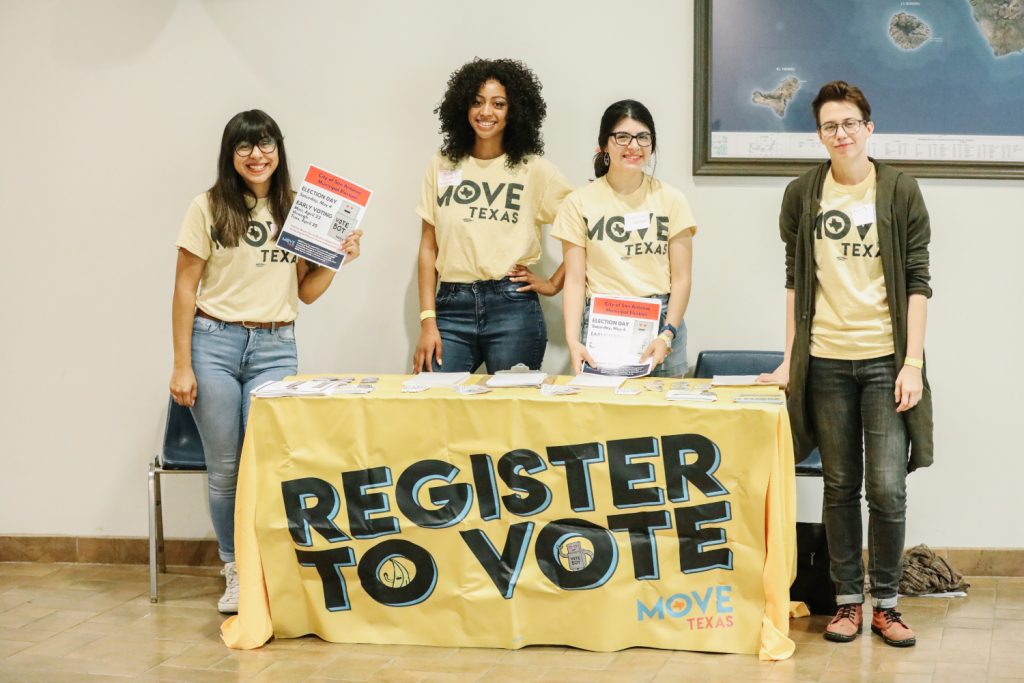
Additionally, partners in San Antonio are increasingly committed to putting youth voice at the center of their efforts, so that systems change is not just happening for young people but with them. This commitment has ranged from forming a youth-led policy agenda, to teaching adults to share power with those they serve, to completing a citywide student voice survey. UP Partnership’s Our Tomorrow network has engaged students by forming a youth-driven steering committee, training young people in policymaking and empowering them to share their voices through an annual summit called “SA Youth Speak Up.” More than 100 youth participated in this year’s summit, sharing their top concerns and offering insights around their policy priorities for the upcoming year. UP Partnership has connected Our Tomorrow with city leaders in a way that has resulted in a level of youth inclusion unparalleled throughout most of the country.
Partners have a shared vision, and it shows.
Founded in 2009, UP Partnership strategically convenes partners around a shared community vision and common metrics to improve outcomes and narrow disparity gaps. Another of their action networks is Excel Beyond the Bell San Antonio, which has adopted a multi-year strategic plan that unites all of the city’s youth-serving nonprofits behind a shared commitment to social and emotional growth. Before the partnership formed, there were separated and duplicative efforts taking place across the city. “It was difficult for partners across San Antonio to see beyond themselves and their individual agendas, to understand what gaps they might best fill as it relates to the larger picture of serving our kids,” shared Kelly Hughes Burton, executive director of City Year San Antonio.
With the support of UP Partnership, partners are now working toward shared goals. What does this type of collective effort look like? It looks like 175 partners developing and contributing to a set of community measures that drive their work as organizations and collectively as a partnership. It looks like postsecondary partnerships that led to San Antonio driving up its FAFSA completion rates, becoming a Promise city where eligible students can go to community college tuition-free and expanding dual-credit offerings aimed at improving outcomes for Latinx students. Ultimately, it looks like big systems changing in ways that work for more students.
UP Partnership is the 13th Cradle to Career Network community to earn StriveTogether’s proof point designation.
The post UP Partnership reaches proof point through community collaboration and data use appeared first on StriveTogether.
]]>The post Partners across Salt Lake City reach goals for kids and families appeared first on StriveTogether.
]]>Here are a few examples of how Promise Partnership is changing systems to support students and families:
The partnership is designed to support change.
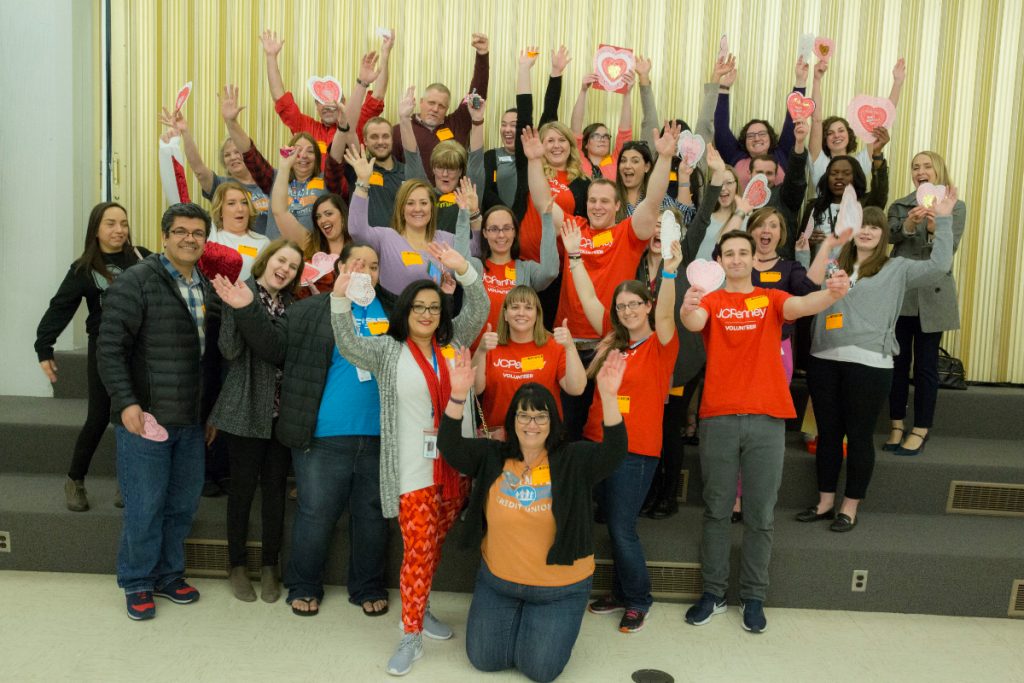 The partnership’s organizational structure allows community members and organizational leaders to communicate and align on goals. Partners work to improve results while communicating with the Promise Partnership Regional Council, a regional-level council of leaders committed to changing systems to support students and families. Each group communicates with one another to test ideas, spread best practices and overcome barriers.
One example of this effective flow of communication was the Elementary Reading Network’s support of community schools to spread a successful practice. Data showed that integrating a 90-minute literacy block into enrichment-focused summer programs helped eliminate summer learning loss for students who attended 20 or more days of programming. After expanding this practice across schools and another district, the Elementary Reading Network shared challenges with the council. To address these obstacles, the council rallied support for public policy wins, like passing SB194 Early Literacy Amendments to address gaps in literacy interventions and align state programs and funding.
The partnership also has prioritized the authentic engagement of community members, building a culture of doing work side-by-side with the community. Jadee Talbot, associate director of Granite School District Community Centers, says community engagement is critical. “Data tells us ‘what’ but not the deep roots of the ‘why,’ ” he said. “As you start to know communities and families, you have a stronger place to start at addressing different issues.”
Promise Partnership works to ensure those who are closest to the result can contribute to solutions. School-based staff help design practices and policies relevant to their classrooms and students, and kindergarten teachers helped design the statewide kindergarten assessment. Through an internship program, Promise Partnership hired college-age students who grew up in the neighborhood and are native speakers of critical languages within the community. Their work allows the partnership to meet community members where they are.

The partnership supports partners to use student-level data to make decisions.
Promise Partnership created a data infrastructure to support partners to use data to improve their practices. This infrastructure includes technology like a customized Early Warning System, which is integrated into the student information management database. A Grassroots Community Cloud provides a shared space for partners to access family data. The partnership also has built partners’ capability to use data through training and ongoing support.
Before this support was available, program providers like Big Brothers Big Sisters relied on students to report their own academic status, which led to sporadic and inaccurate data collection. Now, the after-school mentoring program has access to up-to-date data and uses students’ credit status to determine how time is spent with their mentors. Through the use of data for continuous improvement, graduation rates for non-white 12th graders reached 91 percent for Mentor2.0 students, compared to 84 percent in a control group.
Partners across the region see the value in using data to make decisions. “It is important that we use evidence-based strategies that we know are going to make a difference in kids’ lives,” said Karen Gregory, who is the associate director of literacy for the Granite School District and a member of the Elementary Reading Network.
Policy changes are implemented and sustained to improve outcomes.
The Promise Partnership Regional Council, the partnership’s regional decision-making body, has supported significant statewide policy change. With the help of the council, Utah was the first state in the nation to implement a pay-for-success financing model to fund preschool. And, through the efforts of the council, Utah now has a statewide kindergarten entry and exit assessment.
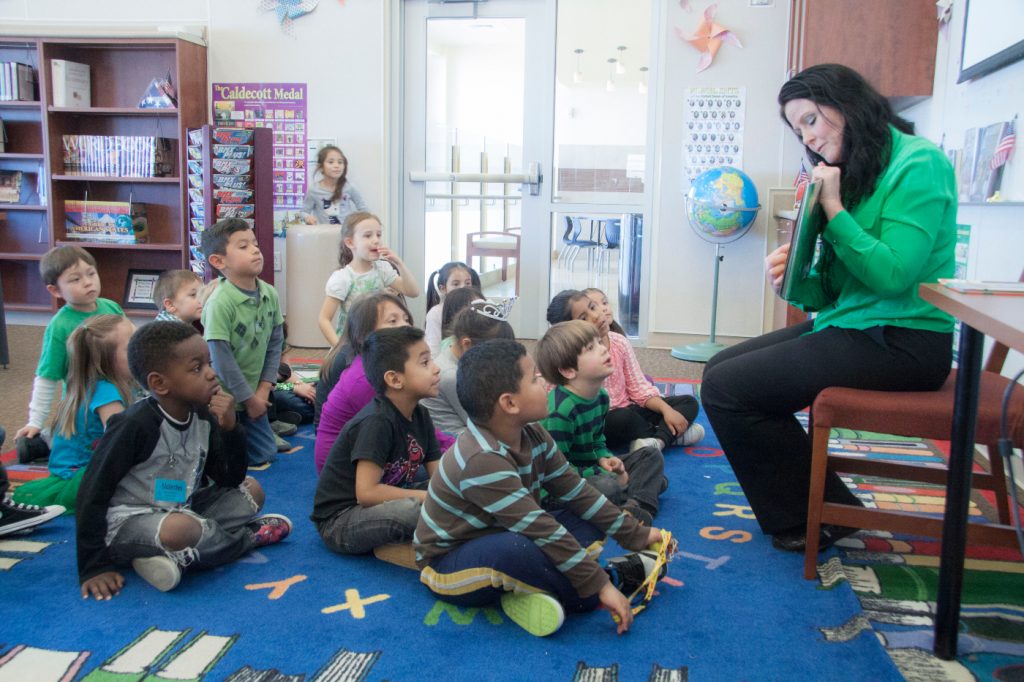 The Promise Partnership Regional Council has played a key role in the partnership’s efforts to change systems. The work of the council has helped partners across the state prioritize and align on key community-level outcomes. Their efforts also have increased awareness about the importance of early learning by mobilizing grassroots advocates and building shared accountability.
Partners have dedicated themselves to the vision of the partnership, focusing on results to support children in the Salt Lake City region. With support from leaders and community members, Promise Partnership of Salt Lake is changing systems, structures and practices to better serve students.
The post Partners across Salt Lake City reach goals for kids and families appeared first on StriveTogether.
]]>The post The Road Map Project reaches proof point with heightened focus on equity, data and community voice appeared first on StriveTogether.
]]>Below are a few examples of how the Road Map Project has changed the education, government and philanthropic sectors that shape opportunity for children and families.
Partners are committed to racial equity
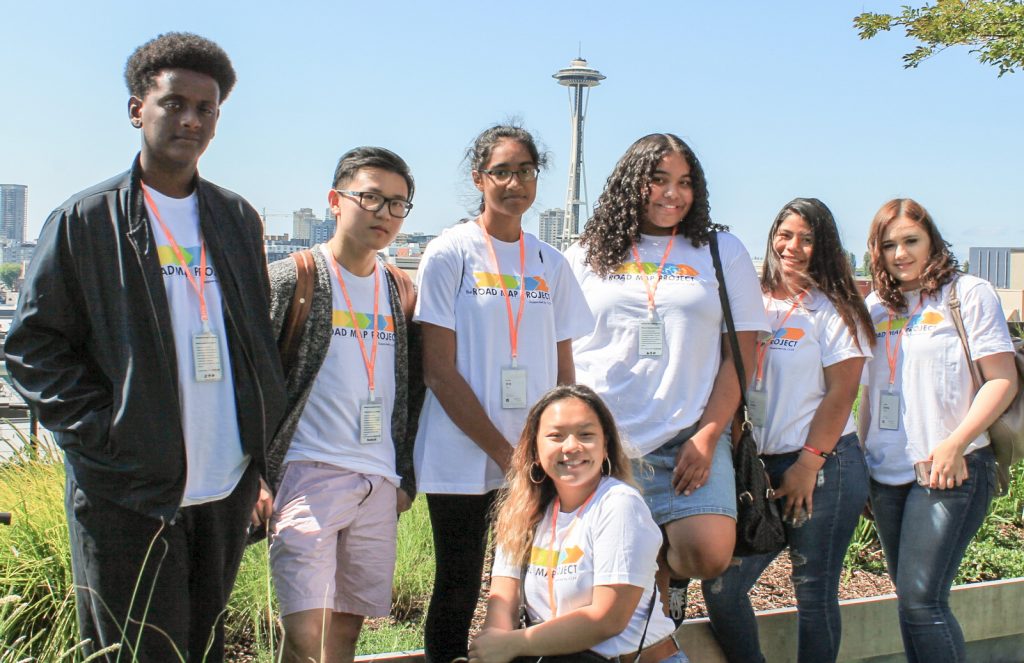
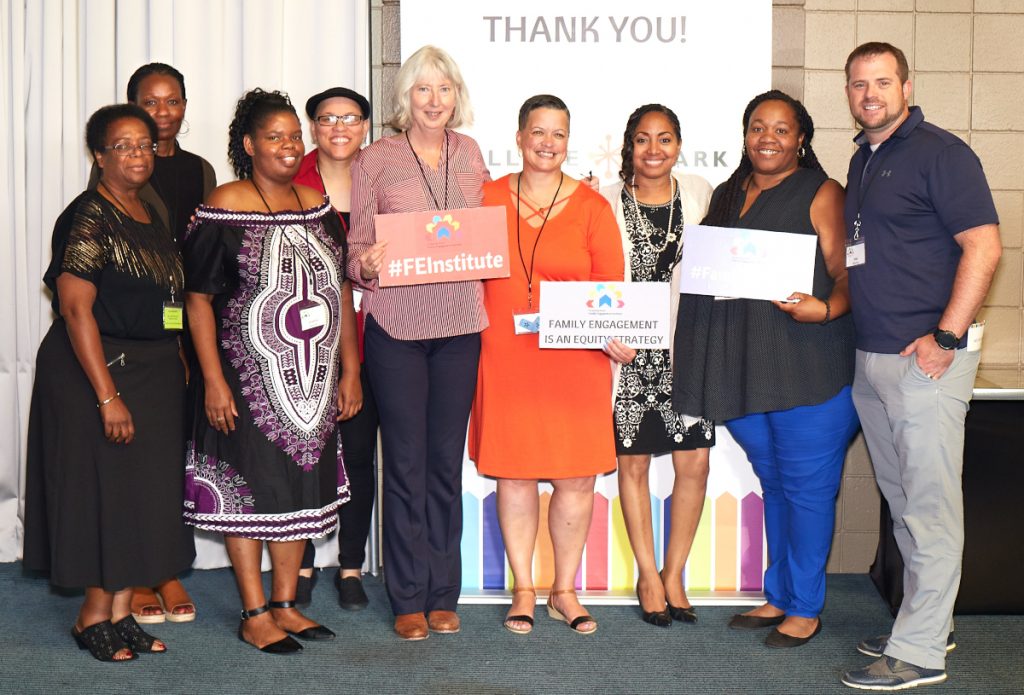 The Road Map Project seeks to close opportunity and achievement gaps between white students and students of color in South King County. At the core of the partnership is the belief that race and income should not determine success.
In 2016, Road Map Project partners established System-Wide Racial Equity Essentials, efforts across the community to help the region advance racial equity and support student success at every milestone, cradle to career. The Equity Essentials are an acknowledgement that current systems were not built to support students of color. To support students of color, the partnership recognizes the need for transformational systems-level changes. The goals of the Equity Essentials are to promote equitable funding and strong civil rights policies; to increase culturally relevant support and climates in schools; to foster strong family engagement practices; and to increase access and dismantle barriers to opportunity.
Partners use data to make decisions
The Road Map Project helps partners use data for continuous improvement, tracking progress and adjusting strategies for success. The partnership has built and maintains a database and a data dashboard where partners can access data, from pre-kindergarten through postsecondary. The Road Map Project helps partners develop the skills and knowledge to use this data, and the partnership uses the data to track outcomes, conduct research and support practice improvement.
The partnership supports a variety of networks to use data to make improvements. The King County Reengagement Provider Network is a group of partners working to reengage youth in work and school. Network members come together monthly to learn and collaborate with peers, share data about regional opportunity youth and discuss strategies developed from the data.
 “Census data about who opportunity youth are in our county showed that we made an incorrect assumption; the data showed that 40 percent were young people with a diploma or GED, but who were not working or in college, and we had no resources for them. We thought they were without high school diplomas,” said Jennifer Hill, youth programs manager for King County. “We shifted funding to a credentialing strategy and funded more postsecondary navigation and programming for apprenticeship programs.”
Parents and youth are engaged
The Road Map Project recognizes the importance of input from community members most impacted by policies and decisions. Over the last several years, the partnership’s community engagement efforts have lifted learner and family voices on topics including college access, family engagement and career exploration opportunities.
As part of the Road Map Project’s strategic update in 2016, the partnership shifted to having a community-led leadership table — historically, the leadership team included superintendents, funders and education advocates. In 2017, the Road Map Project created an ongoing opportunity for community input and leadership through the Community Leadership Team.
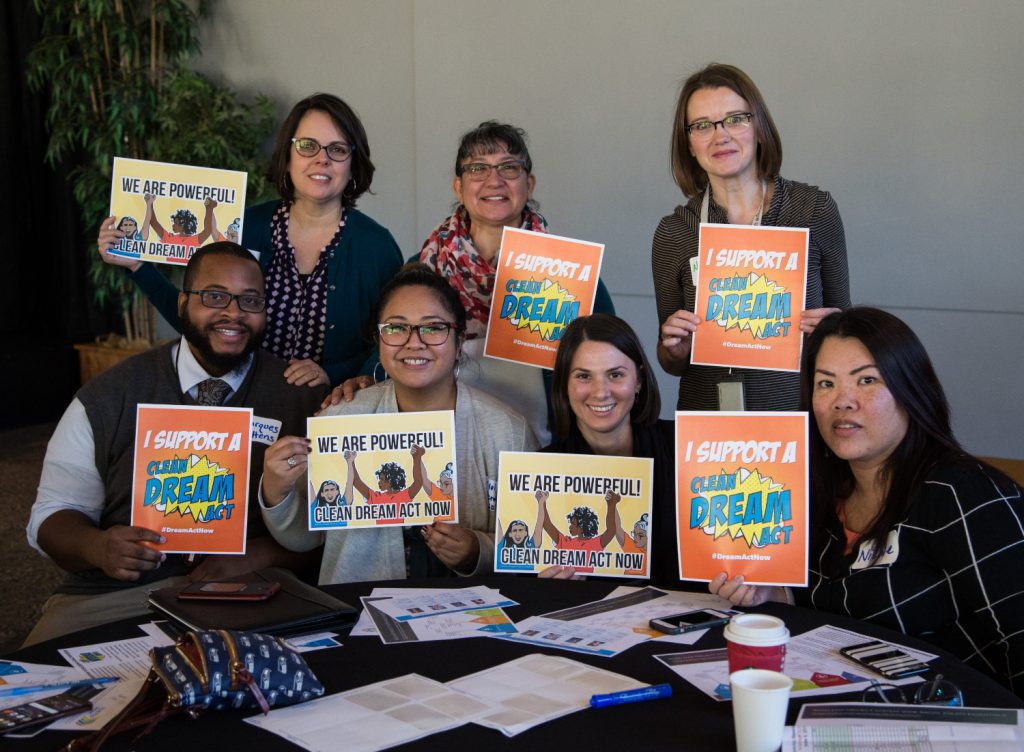
 Another example of community engagement is the English Language Learner Work Group, a policy and advocacy work group with the goal of supporting refugees, immigrants, English language learners and undocumented youth in the Road Map Project region. The work group, comprised of community members, leaders and practitioners, identified an opportunity to advocate for students to receive credit for knowledge of their home language.
Isabel Muñoz-Colón, program officer for the Bill & Melinda Gates Foundation, shared, “The ELL Work Group is evidence of change. The Speak Your Language campaign, supported by OneAmerica, a state-wide immigrant rights organization, to celebrate the power of bilingualism, advocated on behalf of ELL students to be able to receive credit for being proficient in their home language. This had such an impact that the work group was able to obtain funding for statewide implementation of the policy. This would not have happened without the Road Map Project infrastructure.”
The Road Map Project has shifted the work of individuals and organizations in the King County region to focus on creating opportunities for every child. By focusing on racial equity, providing access to data and emphasizing community engagement, the partnership has supported the community toward shared goals of student success.
The post The Road Map Project reaches proof point with heightened focus on equity, data and community voice appeared first on StriveTogether.
]]>The post Spartanburg Academic Movement earns proof point through shared community vision appeared first on StriveTogether.
]]>Here are a few examples of SAM’s impact:
 All seven school districts in Spartanburg share student-level data with SAM.
Spartanburg County is comprised of seven school districts, each with its own culture and processes. SAM joins all seven school district superintendents during their monthly meetings to share challenges and promising practices. The trust built between SAM and district leaders led to the superintendents’ practice of sharing data with one another to highlight areas of strength and opportunities for growth. Now, a countywide data-sharing agreement gives SAM access to all student-level data.
The collaborative nature of the partnership has expanded beyond the school district.
Previously, when a major industrial entity moved into a particular school district, that school district would receive the tax revenue from the project. This practice created significant inequity within Spartanburg. The County Council enacted a revenue change so that the home district will receive 30 percent of the tax revenue, with the remaining 70 percent distributed among the other six districts. SAM played an integral role in creating a culture of trust and collaboration, establishing an environment that enables equitable shifts in public funding.
SAM has built a culture of continuous improvement in schools.
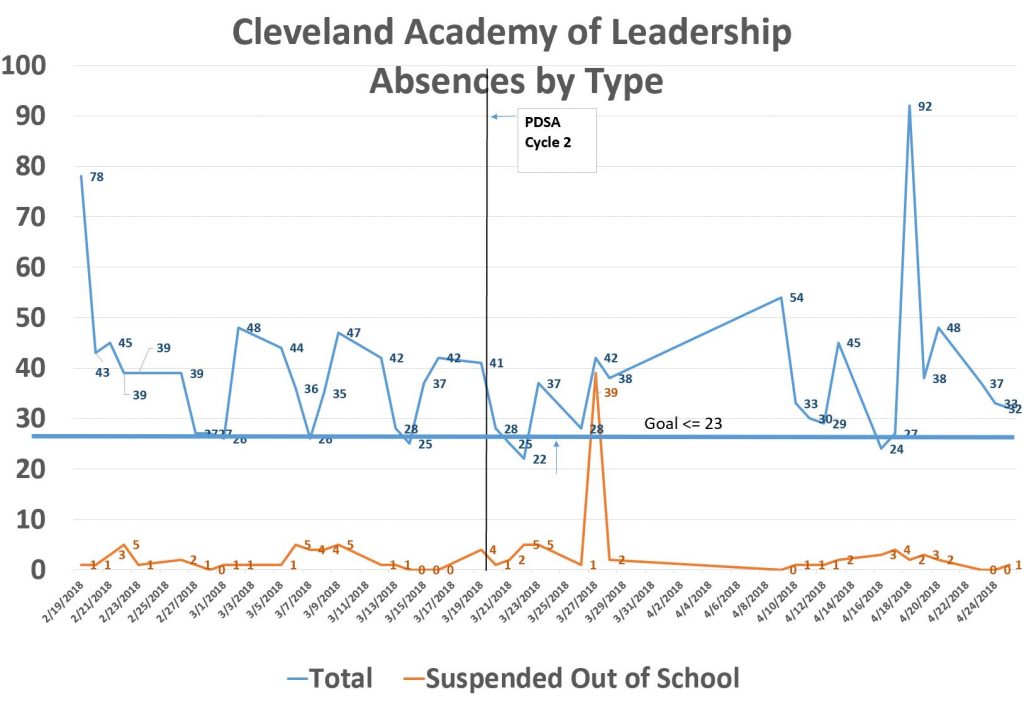
Continuously improving has become the norm in the local school systems. Cleveland Academy of Leadership has worked with SAM to improve student attendance from a baseline of 94 percent. With the data in hand, the school recognized that Mondays and Fridays have the lowest attendance rates. Using continuous improvement strategies, the school developed a plan to remind families about the importance of school attendance through robo-calls on Sundays and Thursdays. As a result of rapid-cycle continuous improvement, the average number of students absent has been reduced from 33 to 27 students. The school is continuing to refine its attendance strategies using rapid-cycle continuous improvement strategies.
With SAM’s partnership, preschool programs in Spartanburg schools have improved.
A block grant from South Carolina’s Education Oversight Committee supports two school districts’ partnerships with Quality Counts, a preschool quality improvement organization. With Quality Counts, these school districts are refining their practices and improving kindergarten readiness for the students they serve. The partnerships have led to promising results. Teachers are modeling proactive, student-centered behavior, and children are growing as a result. Pre- and post-assessment results in the 4-year-old kindergarten classrooms show significant improvement: Several areas measured by the Early Childhood Environment Rating Scale (ECERS-3) grew more than 75 percent, including language and literacy, learning activities and interactions. The Classroom Assessment Scoring System (CLASS) also showed improvement.
SAM has been a champion of student-centered collaboration in Spartanburg, and behaviors, practices and policies are changing as a result.
The post Spartanburg Academic Movement earns proof point through shared community vision appeared first on StriveTogether.
]]>The post Seeding Success reaches proof point through community collaboration and data use appeared first on StriveTogether.
]]>Here are a few examples of how systems are changing in Shelby County:
Partners are aligned around a cradle-to-career vision.
Seeding Success was chosen to lead the Community Foundation of Greater Memphis’s Beyond the Classroom initiative, supporting community organizations to improve practices and, ultimately, outcomes. Through this initiative, Seeding Success identified opportunities to build the capability and capacity of five organizations that support youth from kindergarten to high school graduation.
One of the five participating organizations, Porter-Leath, is an Early Head Start and Head Start provider that prepares preschool students for kindergarten. Through Beyond the Classroom, Porter-Leath adopted the data-driven culture of Seeding Success and has started using data more effectively. For example, the organization updated its process to ensure that teachers have student-level academic data 15 days after assessments. This update allows teachers to react more quickly to test results and better support students in reaching their goals.
The data-capability building Porter-Leath gained from Seeding Success has led to significant results. Over three and a half years, the percentage of students ready to learn in kindergarten has increased from 33 percent to 82 percent. The use of real-time data has become so fundamental to Porter-Leath’s practices that it has been embedded in their strategic plan, a direct result of the Beyond the Classroom initiative.
Partners have access to real-time, student-level data.
Seeding Success is the lead data expert in Shelby County, supporting a centralized database of student-level data that provides real-time academic data. Twenty-five partner organizations access the database daily to support 130,000 students in the community.
To gain access to the database, partners undergo a rigorous onboarding process and participate in monthly collaborative action network meetings and monthly data meetings. Partners also attend ongoing training focused on using student-level data for continuous improvement.
With access to this data, organizations and institutions in Shelby County have seen improvement in student achievement. Emmanuel Center’s summer literacy program recognized that regular attendance was critical for students to avoid losing skills over the summer. They accessed the Seeding Success database of student-level data to identify how to customize supports for students. These targeted supports led to student success, like one student who improved two reading levels over a seven-week period.
Partners use data to improve outcomes for students.
Partners in Shelby County adopt Seeding Success’s continuous improvement methods by using student-level and programmatic data. As a result, partners can measure their strategic and organizational impact, expand their efforts and share practices with other organizations to improve outcomes across the community.
Seeding Success supports partners to implement strategies to accelerate outcomes for students in Shelby County. By sharing academic, behavior and attendance data provided by Shelby County Schools, Seeding Success helps partners learn about the barriers students face in and out of school. Seeding Success has created an online toolkit for continuous quality improvement so that partners can access new tools and strategies to strengthen their work.
Porter-Leath used continuous improvement strategies to reach a population-level improvement. In 2017, students enrolled in Porter-Leath’s pre-kindergarten program outperformed their peers who had not been exposed to pre-kindergarten, performing 14 percent higher on the fall Measure of Academic Progress (MAP) Reading RIT. Gains in fall MAP scores were so significant that Porter-Leath’s students increased the overall level of kindergarten readiness in Shelby County.
What’s next?
Seeding Success has led partners in Shelby County to use data to make decisions and improve outcomes, and the entire community is stronger as a result. By collaborating with organizations that affect different aspects of a child’s life, Seeding Success is positioned to spread and grow the culture of continuous improvement throughout the community to ensure every child is successful, from cradle to career.
The post Seeding Success reaches proof point through community collaboration and data use appeared first on StriveTogether.
]]>The post Learn to Earn Dayton achieves proof point as systems change to support students appeared first on StriveTogether.
]]>Here are a few examples of how systems are changing to support students in Dayton and Montgomery County:
Working collaboratively with Learn to Earn Dayton, the city of Dayton and Montgomery County have changed policies to address critical education needs.
 Within the last two years, the partnership has played a critical role in the success of two tax levies to support students and families, including mobilizing voters to pass the levies and disseminating funds. Learn to Earn Dayton led focus groups with the community to understand barriers to access to preschool. The results from those focus groups led to a Preschool Promise initiative that has dedicated more that $30 million for preschool over the next eight years. More than 1,000 preschool children benefitted from the levy in 2017.
In another policy success, Montgomery County voters passed a human services levy. The funds are available through a joint application process with United Way of Greater Dayton and are dedicated to collective impact practices in education that use evidence-based interventions. Previously, these funding sources were separate and allocated only in a general way for education. Now, funds from United Way, private and corporate donations, and Montgomery County property taxes are guided by shared goals and agendas.
Practitioners have access to student-level data to inform actions and narrow disparities.
Learn to Earn Dayton has created a culture of data use by making data reports available to all schools to support analysis and decision-making. This real-time access to student-level data has made an impact.
Lisa Minor, director of curriculum at Trotwood-Madison City Schools, shared the importance of accessing data from schools across the community. Student-level data enabled Minor to work with school district leaders to identify the supports students needed to be successful. “As a principal, it was very powerful to not only see the scores from my building but also the data from surrounding schools that feed into mine,” she shared.
 Student-level data was also used to address disproportionate discipline rates. Data in the school district showed that disproportionate discipline rates for male African-American students correlated to lower academic performance. The school fostered a partnership with the University of Dayton to create professional learning communities for teachers during the 2016-2017 school year. Currently, there are 22 participating teachers, and mid-year data show that teachers who have participated in the learning communities have higher classroom performance than those who have not. As a result, Trotwood-Madison City Schools plans to integrate culturally responsive training into new teacher professional development opportunities, including classroom management, to improve teacher effectiveness.
The community works collaboratively to spread best practices and action plan.
Learn to Earn Dayton hosts an annual summit for the community around relevant education topics. The event allows 500-600 key stakeholders to learn from each other and share best practices, including how they are using data.
During one of the summits, the partnership brought in Joel Vargas, vice president of school & learning designs at Jobs for the Future, to present on the importance of eighth-grade algebra. This event lead Brookville Superintendent Tim Hopkins to redesign his sixth- to eighth-grade math curriculum so that he could offer Algebra I as the default course for eighth grade, something not previously offered by his district. Learn to Earn Dayton, with partner support, hired consultants to help Superintendent Hopkins with the redesign, including adjusting standards so that all students were ready for Algebra I when they started eighth grade.
 Five years after the change, the first group of students to use the new curriculum is preparing for high school graduation and postsecondary enrollment. The students in Superintendent Hopkins’ district have seen increased rates of FAFSA completion (over 95 percent in both 2016 and 2017), high school graduation and postsecondary enrollment compared to other districts.
What’s next?
Learn to Earn to Dayton has created a strong culture of data use, collaborative action and continuous improvement. The community’s partners share a commitment to equity and eliminating disparities. Building on a solid foundation, Learn to Earn Dayton is well-positioned to deepen its impact and do what it takes to ensure every child in the community reaches his or her full potential.
StriveTogether congratulates Learn to Earn Dayton on this milestone along the path to success for every child in Dayton and Montgomery County, cradle to career!
The post Learn to Earn Dayton achieves proof point as systems change to support students appeared first on StriveTogether.
]]>The post Graduate Tacoma reaches proof point as graduation rates climb appeared first on StriveTogether.
]]>In 2010, just over half of Tacoma students were graduating high school, prompting USA Today to label Tacoma schools as “dropout factories.” Collaborative effort in the community has turned this headline on its head. Today, more than 240 community partners own a clear and common goal for students in Tacoma. For the last seven years, Tacoma Public Schools (TPS) has seen an increase in high school graduation rates, currently at 86.1 percent. This improvement, though, is just the beginning.
Here are a few examples of the systems-changing work of the partnership:
Organizations, institutions and community members in Tacoma have aligned their work to support the cradle-to-career vision. TPS has set measurable graduation goals that align with communitywide goals facilitated by the Graduate Tacoma partnership. The city also has integrated these goals into its own strategic plan, with high school graduation as a strategic priority, demonstrating the commitment to students across the community.
“When people think about education improvement and engaging families, the first thought is usually the PTA. We have broadened our reach to include different community members,” said Amanda Scott-Thomas, director of the TPS Community Partnership Office.
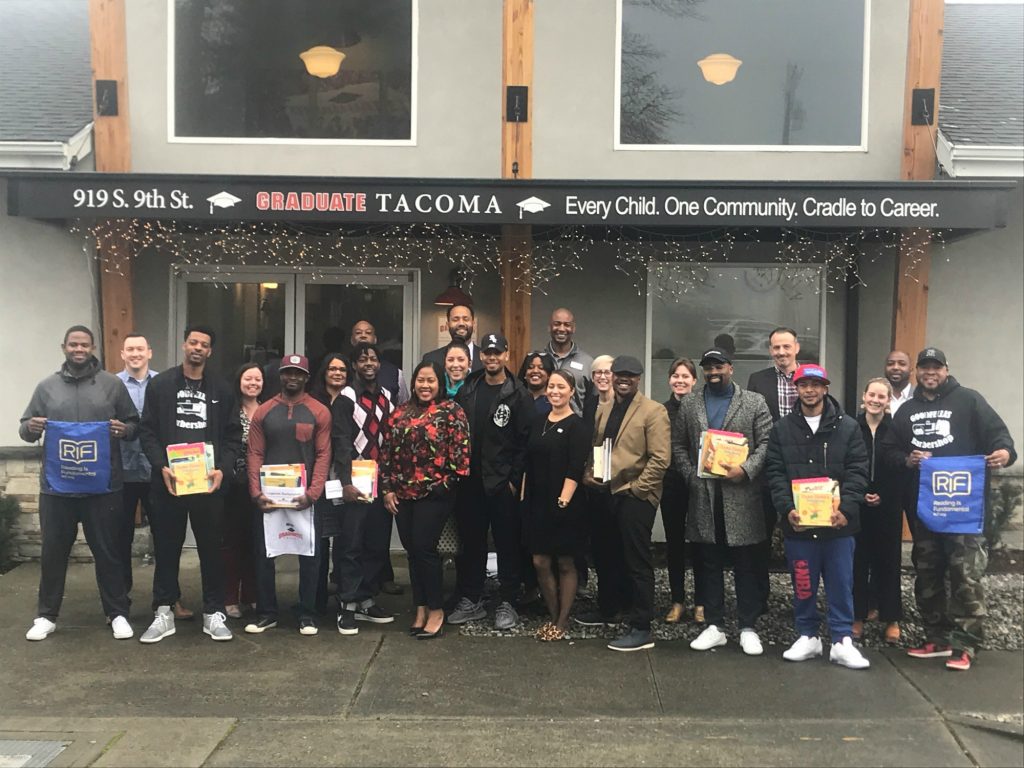
Thanks to the work of Graduate Tacoma, business owners and community members see and embrace their role in improving education for every child. This sense of ownership is seen daily, like in the Hilltop neighborhood, where barbers are sharing books with boys of color. The community doesn’t just look at data and “admire the problem” — they are aligning their actions toward shared goals.
 Graduate Tacoma and TPS have partnered to increase and improve data use. The organizations’ data-sharing agreement yields student-level information on achievement, attendance, testing and more, disaggregated by race/ethnicity and income level. Student-level data is used to target interventions to students on their path to high school graduation and beyond.
Student-level data is used to target interventions to students on their path to high school graduation and beyond. As one example, Tacoma students now rank second in the state on applying for state-sponsored scholarships like Washington State Opportunity Scholarships (WSOS). And when the district noticed that certain types of students were disproportionately underrepresented in advanced placement courses, they created a policy to automatically enroll them. Now high school students who may have never thought of themselves as candidates for college credit-eligible classes are enrolled in these more rigorous courses, a policy shift that has doubled the number of students of color, students in poverty and the overall number of students taking these classes from just three years ago.
The school district has developed a robust data infrastructure to ensure students are on track and supported to succeed. “A focus on current data, as opposed to just historical data, is helping teachers get the data they need to work with the students in their classrooms right now,” said S.J. Jacobson, data manager at TPS.
Part of this infrastructure allows community partners to have access to students’ academic data to provide more targeted support for children in all areas of the community. Results indicate that partners are changing the way they work and moving at a faster pace because of their increased access to data.
Graduate Tacoma’s Collaborative Action Networks (CANs) have grown, becoming more results oriented and data driven in addressing community challenges. CANs are engaging partner organizations strategically to create impactful practices. These groups consist of cross-sector practitioners and individuals who use a continuous improvement process to develop action plans to improve community-level outcomes.
The Out-of-School and Summer Learning Network created a summer learning system that tracks participants across partners and enables them to identify and serve additional students. Over the last three years, partners have served an additional 5,840 students with expanded programming slots. The Early Learning and Reading Network has worked with TPS on preschool programming. Now, 30 of the 35 elementary schools have preschools on site.
What’s next?
Graduate Tacoma has been designated as proof point in recognition of its work to rally the Tacoma community around data-driven results. The work doesn’t end there, however. By the class of 2020, Graduate Tacoma is committed to increase by 50 percent the graduation rate of TPS students and those who complete a college degree or technical certificate.
StriveTogether congratulates Graduate Tacoma on this milestone along the path to success for every child in Tacoma, cradle to career!
The post Graduate Tacoma reaches proof point as graduation rates climb appeared first on StriveTogether.
]]>The post In Multnomah County, leaders, school districts and organizations are improving outcomes and changing systems appeared first on StriveTogether.
]]>
Here are a few examples of the systems-changing work of the partnership:
School districts, community organizations and businesses in Multnomah County have aligned their goals, structures and activities to support the cradle-to-career vision of All Hands Raised.
All Hands Raised worked with Boise-Eliot/Humbolt Elementary School and Albina Head Start to facilitate the introductions of pre-K students and their families to the kindergarten teachers at the elementary school. Boise-Eliot/Humbolt and Albina Head Start were also able to vertically align their efforts to ensure students were supported academically, improving kindergarten readiness.
The partnership also brings together all six superintendents in Multnomah County to share learning with one another. This has created transparency among districts with superintendents sharing strengths and weakness with one another and working to spread successful initiatives. “It has created a good spirit of competition between superintendents, who want to do better after we look at data,” says Paul Coakley, superintendent of Centennial School District and a member of the Leadership Council.
Data is used regularly to support students.
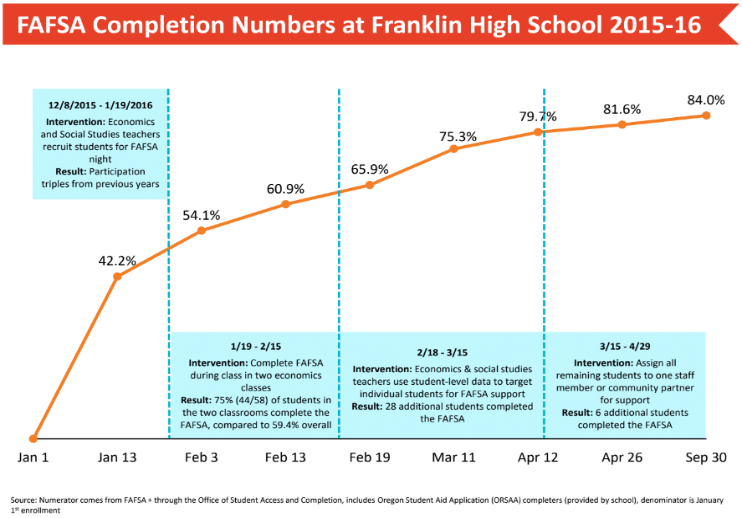
After Franklin High School began receiving real-time updates with student-level completion data for federal college student aid applications, the school’s economics classes designated the entire month of December to the Free Application for Federal Student Aid. They discussed everything from taxes to how to pay for college, and students are understanding the importance of completing FAFSA and how it impacts the process of college completion.
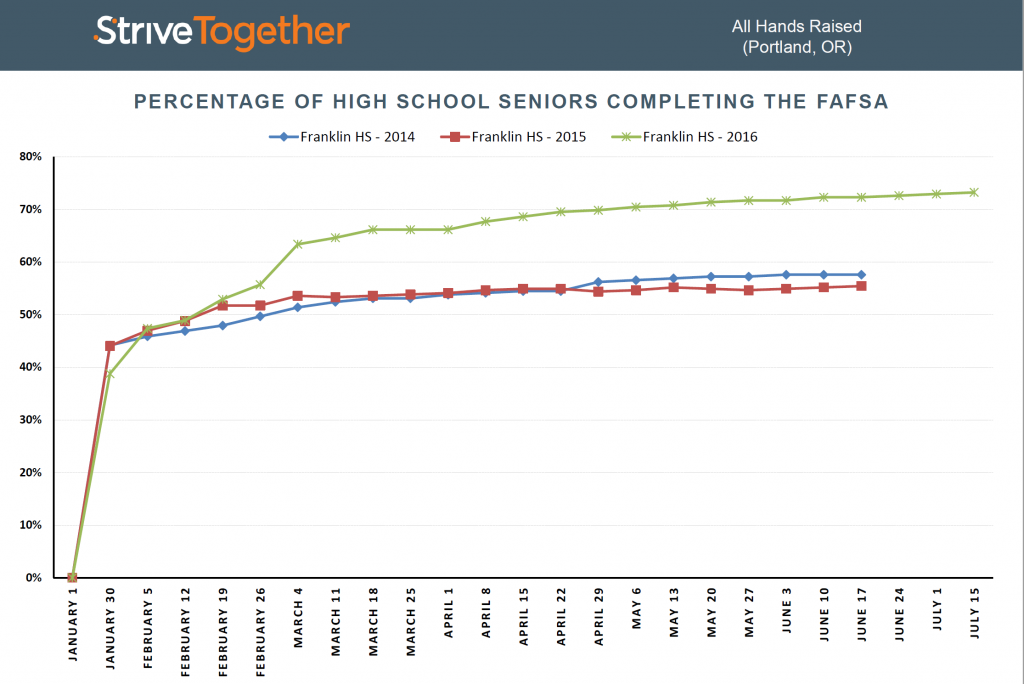
Franklin High School counselors were also able to analyze data to determine how to differentiate support for students. Raquel Liaz, college and career coordinator at Franklin High School, explains: “We looked at the number of African-American and Hispanic students who were college-bound but wouldn’t be able to pay for it — they needed to complete FAFSA. Most of our students would be first-generation college students. We realized we had to provide different interventions and target student groups to help them complete FAFSA.”
All Hands Raised has established a sustainable model to support the work of the partnership.
A data committee was established by All Hands Raised to look at what data gaps existed, who looked at data, and how it was being shared with the community. Without real-time data, teachers were not able to monitor student performance. The committee set up a structure for data to be pulled in real time and All Hands Raised created data visualizations to make the data more digestible. The data committee ultimately became obsolete because it was able to establish a systemic process to support partners.
All Hands Raised elevated the work being done around equity in schools and brought culturally-specific community-based organizations and corporate leaders to the table. Businesses learned about what was being done to support students and families, and shifted their company cultures in recognition that student success is the responsibility of the community, not just schools. Principal for Half a Day, an initiative facilitated by All Hands Raised, puts business leaders in schools for half of a day to raise awareness of the barriers as well as great work that exists in schools. After gaining a deeper understanding of the education ecosystem, business leaders have changed the way their organizations support the community.
The post In Multnomah County, leaders, school districts and organizations are improving outcomes and changing systems appeared first on StriveTogether.
]]>The post Across Racine County, outcomes are improving and systems are changing appeared first on StriveTogether.
]]>Aligning partners around a shared result: Higher Expectations and its partners have aligned their work around a fully capable and employed Racine County workforce in policy and practice. United Way of Racine County (UWRC) aligns all funding decisions to this vision, and Racine Unified School District (RUSD) launched its “North Star,” a vision of “all students graduating prepared for college and/or career.” Recognition from Ford Next Generation Learning highlights RUSD in collaboration with Higher Expectations efforts to develop a collaborative structure that supports community engagement in schools. Higher Expectations also has engaged more than 91 employers in the Academies of Racine, which provides students with opportunities to gain skills needed for a 21st century workforce.
“I’ve now lived in four different communities, but have never seen a community as well aligned on a single focus, a real purpose of preparing [young people] for careers. [Higher Expectations’] work resonated strongly with me,” said Chad Severson, InSinkErator CEO and a Higher Expectations leadership table member.
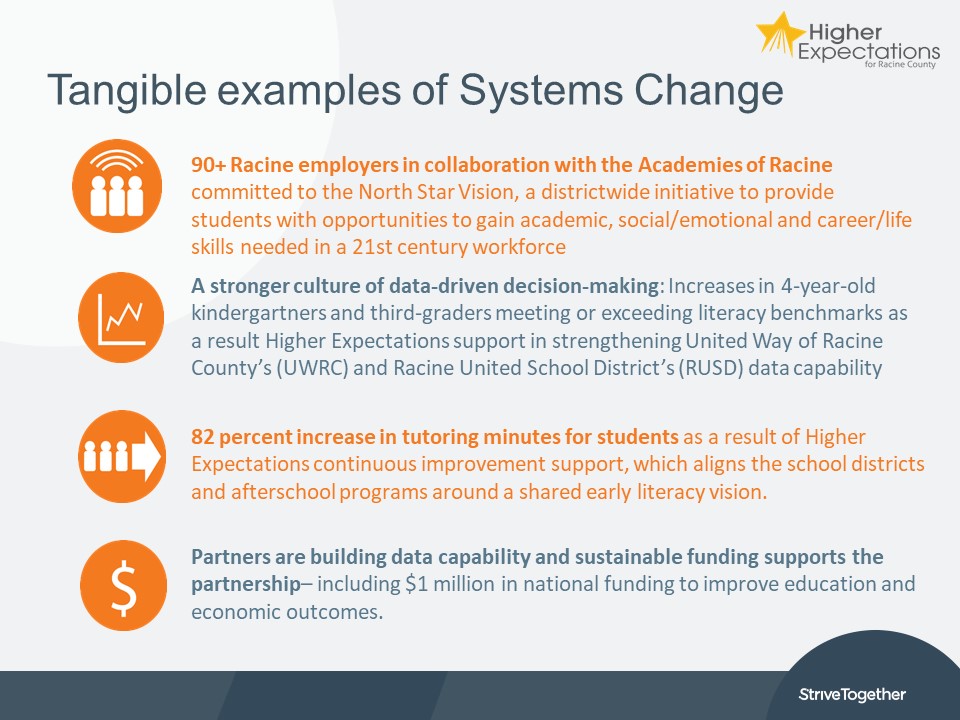
Building a culture of data-driven decision-making: Employing tools from the StriveTogether Leadership Program and the Tableau Fellowship, Higher Expectations has strengthened the capability of United Way of Racine County (UWRC) and Racine Unified School District (RUSD) to refine and disaggregate student-level data, set literacy achievement goals and assess and monitor programmatic impact through continuous improvement.
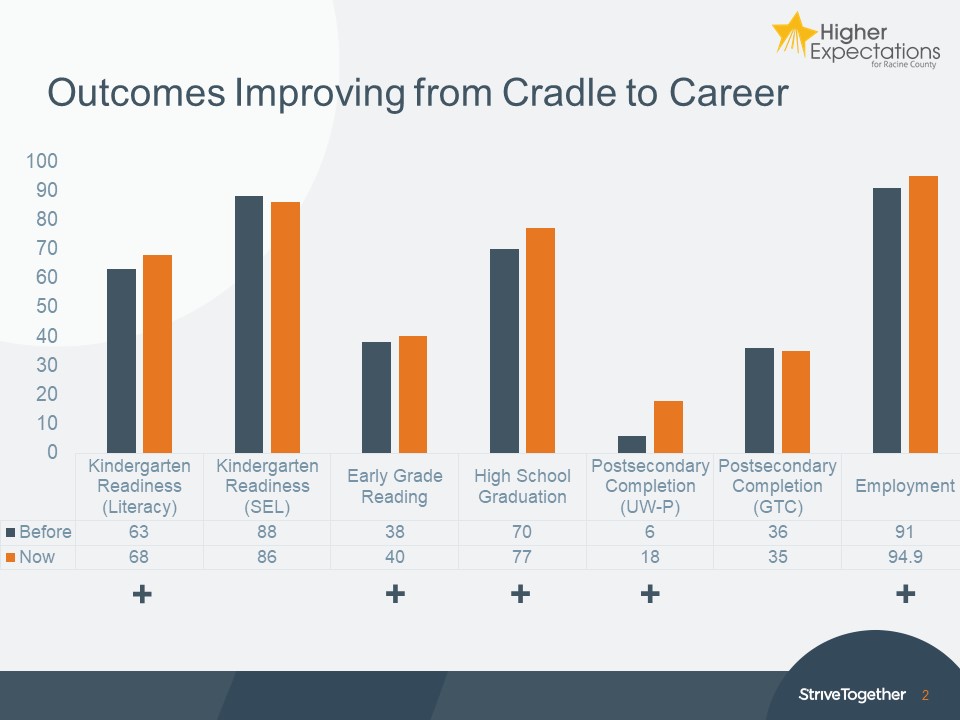
RUSD has seen a 5 percent increase in 4-year-old kindergartners meeting or exceeding spring literacy development and a 2.7 percent increase in the number of third-graders achieving or exceeding the spring national literacy benchmark for the Measure of Academic Progress (MAP) assessment.
District administrators described the power of using data for improvement after seeing 80 percent of classrooms with teachers participating in district training achieving higher reading growth than the median high-poverty, first-grade classes districtwide.
“Higher Expectations’ data support has taken the fear out of continuous improvement for teachers,” said Janell Decker, Racine Unified School District assistant director of curriculum and instruction. “Teachers in the literacy instruction cohort are collecting and looking at data daily, and meeting monthly to see what the data is telling us. Is this literacy intervention working? If not, then it is fun to theorize around why. Teachers go and research, and we think about how to support in better ways.”
Other achievements include:
- Higher Expectations Data Manager Matt Snyder supported United Way of Racine County (UWRC) in tracking weekly “minutes data” for the Schools of Hope Tutoring program. As a result, UWRC each week identified and supported students who were at risk of not meeting the 1,800-minute goal (a goal set by analyzing best practice research from other tutoring programs). In the 2016-2017 academic year, there was an 82 percent increase in the number of tutoring minutes students received because of weekly data analysis and strategy changes in real time.
- Higher Expectations and RUSD used national research and local data to make the case for expanding access to full-day, 4-year-old kindergarten (4K) in Racine. RUSD increased the number of full-day 4K classes from 0 to 10 in three years. The district prioritized expansion to Title I schools, recognizing the need to support low-income students. This represents a $1 million commitment to expanding high-quality early learning programs.
Building and investing in capability and staff to get results: Partners consistently build capability and staff are supported with sustainable funding to implement the evolving partnership strategy.
Higher Expectations has played a significant role in building the capability of partners across Racine County, including hiring and coaching new data support; Results Count leadership development for cross-sector teams working on five outcomes; and advocacy and policy.
After having the opportunity to have her own capabilities built, Racine County’s Human Services Director Hope Otto identified opportunities to spread Results Count skills and competencies across the agency to better address the skill shortage among Racine county residents.
“The A3, B/ART (boundaries of authority, role, task) and other results-based leadership tools has paid dividends. The A3 tool helped narrow the focus, so we could see what to work on. Now we are seeing triple the number of GEDs (general equivalency diplomas),” Otto said.
Higher Expectations has multiple years of sustainable funding, including multi-year funding commitments from local employers and public institutions with $1 million in national funding to support improving education and workforce outcomes for Racine County.
The post Across Racine County, outcomes are improving and systems are changing appeared first on StriveTogether.
]]>