The post Creating possibilities with outsider leadership: Lessons from Stacey Abrams appeared first on StriveTogether.
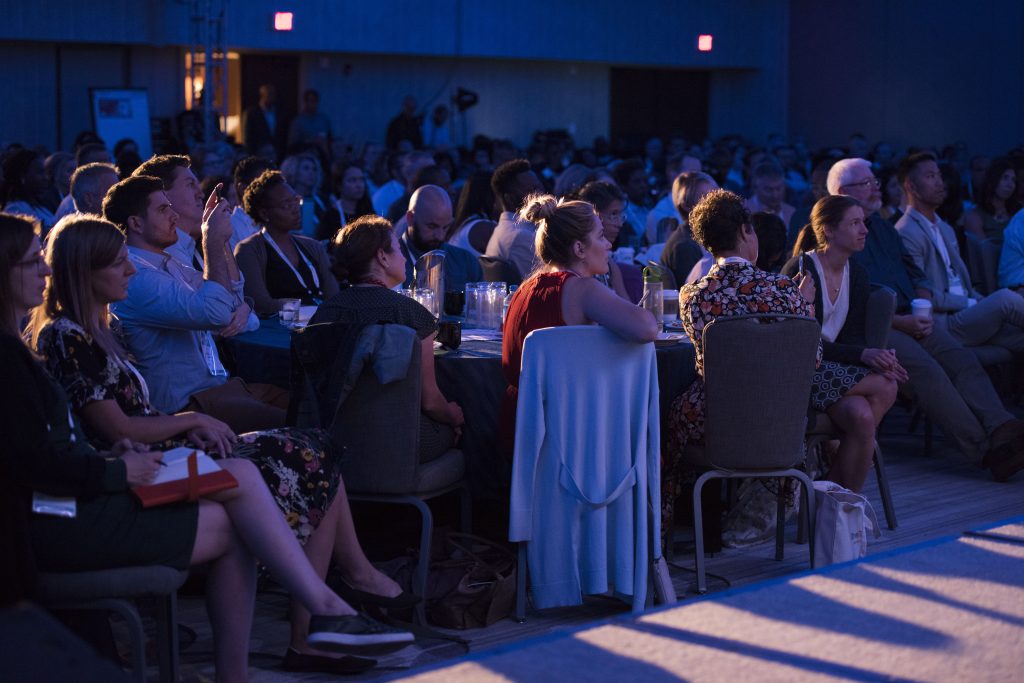
]]>Even before Abrams set foot in the jam-packed ballroom at the 2019 StriveTogether Cradle to Career Network Convening in Washington, D.C., the crowd was already cheering for her arrival and ready to learn from her experiences.
As she shared stories of her own childhood in Mississippi and how her parents grew up, Abrams underlined the importance of public education and the ecosystem of supports that are necessary to lift people to their full potential — from strong, supportive mentors and family members to food security, housing, health care and basic needs like clean clothes.
Her lessons on leadership were not just inspiring, but they resonated with the work of network members in communities across the nation. Here are a few of her motivating insights:
Find places of common cause to get things done
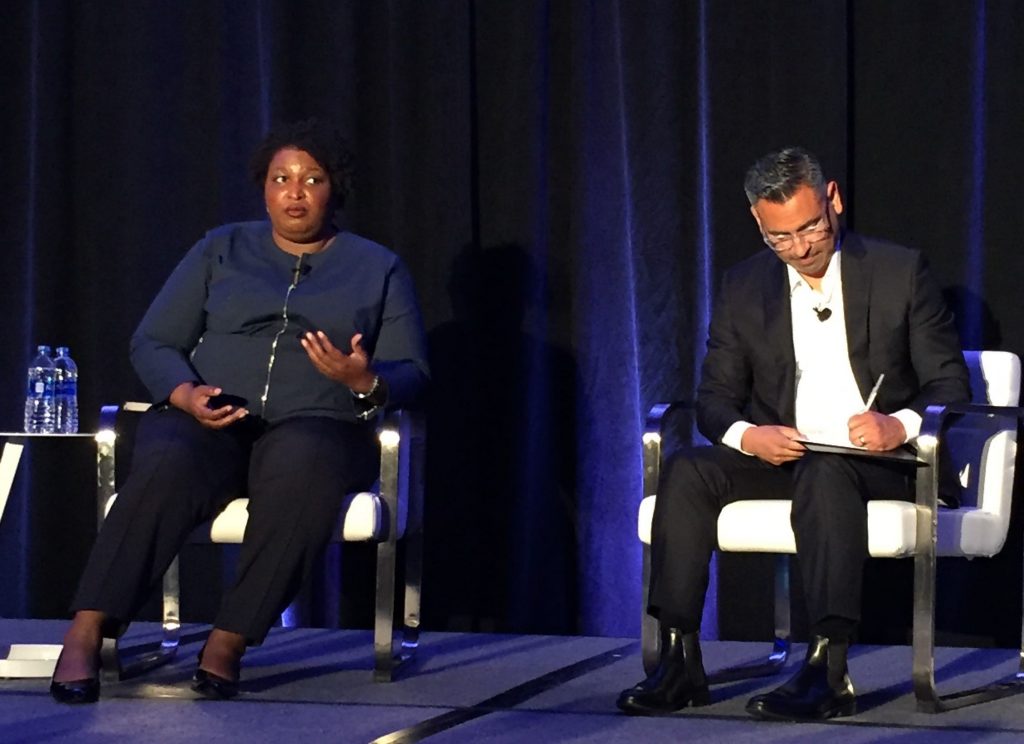 Lesson #1: “Ideology is not the same as intention.” Abrams shared stories of not settling for just fighting back against a bad bill but working with legislators across the aisle to find solutions, because she wasn’t going to be blinded by ideology but instead stayed focused on results. The difference between ideology and intention is an important message for anyone working across sectors to achieve better, more equitable results.
“I don’t believe in conversion,” she said. “I don’t try to make them agree with me. I try to find places of common cause where you can make advances. I believe in incrementalism. You’re not going to get everything you want at once, but you can get more of what you need the longer you’re willing to work at it.”
As our cradle-to-career partnerships work to transform systems, a focus on changing mindsets, beliefs and mental models can yield long-lasting impact, but it can’t happen overnight. Instead of focusing solely on changing hearts and minds, our communities can — and are — changing systems: changing policies, shifting funding and disrupting power structures.
Speak the whole truth
Lesson #2: “Transparency is essential to transformation.” Abrams encouraged us to be willing to admit our mistakes, own our responsibility in our successes and our failures, and hold ourselves accountable by measuring ourselves against real numbers.
Public accountability is no stranger to the StriveTogether Cradle to Career Network. As Abrams said, “Collective impact partnerships have at their core the notion we are in this together and the work that has to be done has to make certain that everyone has a stake.” To help everyone to truly own their role, our cradle-to-career partnerships use data as a flashlight to illuminate gaps and mobilize people into action to create opportunities for kids of color and kids from low-income families.
Her push to be vulnerable and admit our failures and mistakes is critical. We have to be more willing to admit our shortcomings and invite others in to help find solutions. StriveTogether’s own racial equity journey is a powerful example of learning from failure and not allowing that failure to be fatal, but rather to use stumbles as lessons for improvement.
Lift up unexpected voices and show up
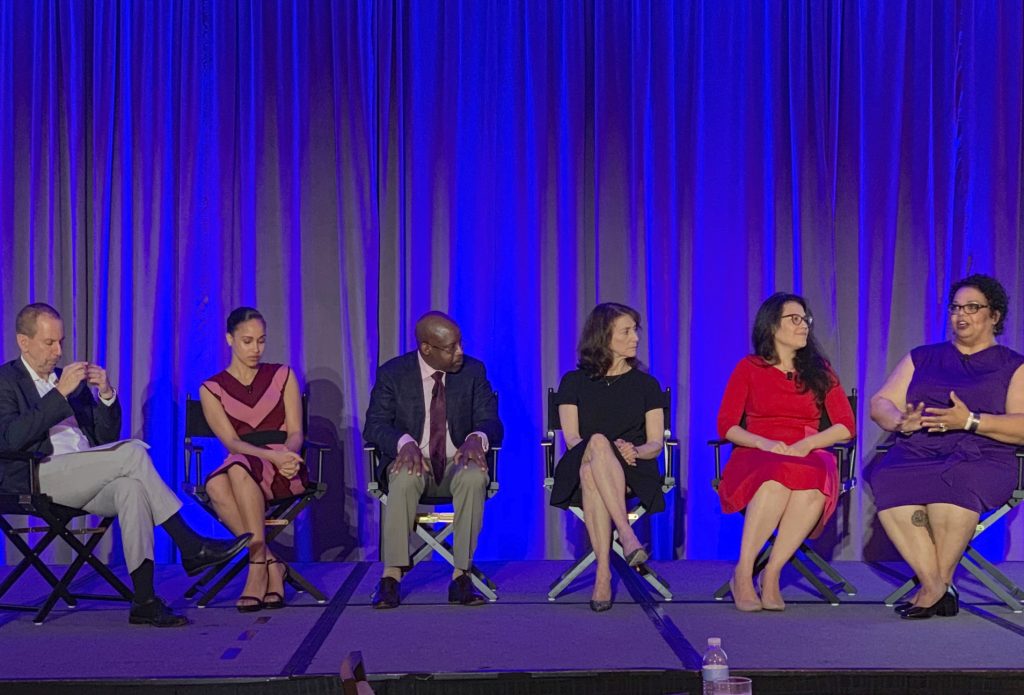
Lesson #3: “Lead from the outside.” Abrams has written a whole book about this, and her invitation to leaders to bring unexpected voices to the table was met with loud applause. “If you want to know how to help a struggling child, talk to a struggling child,” she said. “When we’re willing to work not with community, but in community, that’s when transformation is real.”
Her wisdom on how to influence policymakers is timely as our Network is seeing more policy wins and as we enter yet another election cycle. “Politicians respond to three things: money, peer pressure and attention,” Abrams said. As advocates, we have a responsibility to show up in the places where politicians are in public and explain the problems we’re facing through data and stories, explaining why these challenges are problems and being clear about the solutions.
As communities work to change power dynamics in communities and empower youth and families to determine their own destinies, take stock of what Abrams shared: “People do not cede power. You take it. You can’t wait for people to cede power. Power is seductive and attractive. … It’s not about getting them to cede power; it’s making sure they understand it’s not their power to hold.”
What’s next?
Abrams describes herself as a meliorist — not an optimist or a pessimist, but someone who believes that the world can be made better by human effort. Our job, she says, is to believe in possibilities and find antidotes. As unstoppable changemakers, all of us have an obligation to find common cause to get things done, speak the whole truth and lift up unexpected voices. We have to take bolder swings at policy change and learn in public.
And some of us — I’m looking at you, fellow women and people of color — need to run for something.
The post Creating possibilities with outsider leadership: Lessons from Stacey Abrams appeared first on StriveTogether.
]]>The post There’s no secret sauce to creating real change in communities, but trust is part of the recipe appeared first on StriveTogether.
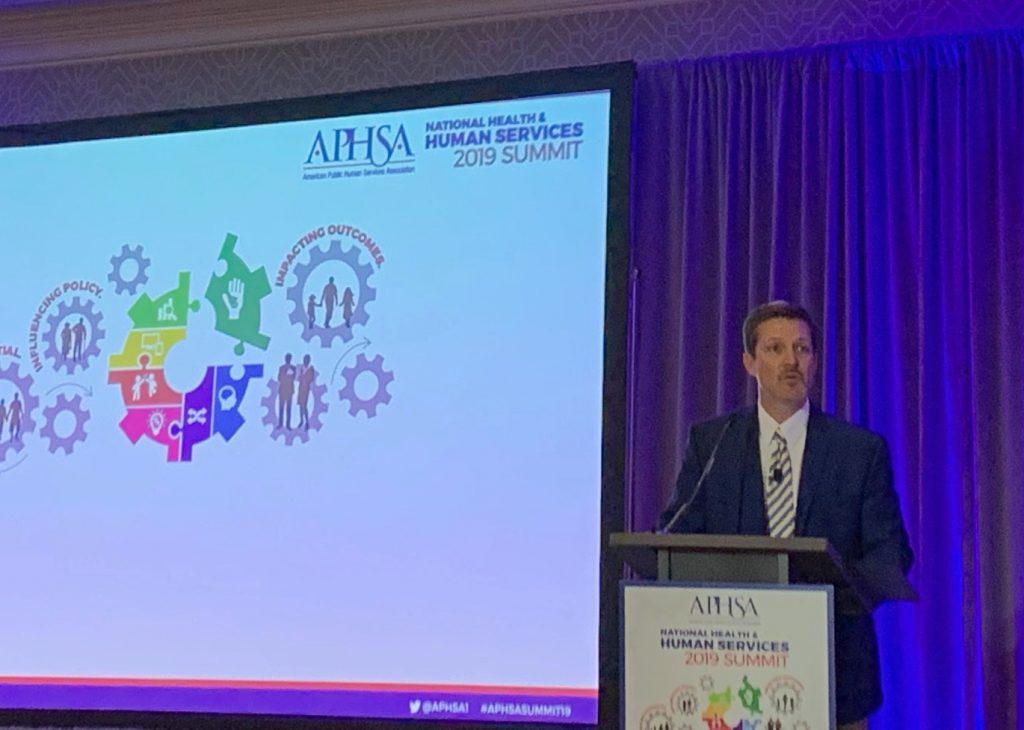
]]> Last week I had the privilege to be an interloper at the American Public Human Services Association (APHSA) annual summit. More than 400 people from human services organizations — mostly public, as the name would suggest — joined together to discuss how to best serve children, young people and families. As I sat in on sessions, chatted with attendees and admitted to my outsider status, I realized one REALLY BIG thing. These are our brothers and sisters in service of our vision. I sometimes feel like we’re isolated in our work or that we have to pull people along to achieve our goals. This feeling is at best myopic and at worst dishearteningly pessimistic. As I met new friends and allies, I heard them speak our language about race equity, systems transformation, practice improvement and policy change.
There are many truths in the work we do (although not everyone wants to admit to or face them):
- Wealth gaps are increasing between people of color and white people
- About 60% of people experiencing incarceration are people of color
- One in eight children experience abuse or neglect by age 18
This data tells a story. Not one of individual deficits, but one of systems that perpetuate oppression and allow harm to the most vulnerable. To achieve better and more equitable outcomes for every child and family, we need to support one another as humans AND work to upend the systems that enable these results to occur. Nelson Mandela once said that “there is no keener revelation of a society’s soul than the way in which it treats children.”
Communities are better when we work together differently
 The StriveTogether Cradle to Career Network is focused on economic mobility, especially for kids and families of color and those experiencing poverty. To achieve this goal, we talk about engaging “adjacent sectors.” I often get confused expressions or eye rolls when I use this term or questions about what fresh jargon we’re using. I reflected and remembered that the StriveTogether approach is built on multiple sectors co-designing and co-developing better outcomes. We are circling back to our roots by embodying the notion that communities are better when those who make them up work differently together.
Understanding the alignment that exists across sectors is huge. The report A National Imperative: Joining Forces to Strengthen Human Services in America was written in partnership with APHSA and the Alliance for Strong Families and Communities. If you look at the executive summary, you’ll also notice a few familiar names identified as investors. The recommendations from the report mirror what our Network has identified in the StriveTogether Theory of Action :
:
| National Imperative Recommendations | StriveTogether Theory of Action Pillars |
| Commitment to outcomes — Focus on agreed-upon set of outcomes to drive the work | Shared community vision — Work with people throughout the community to create one vision everyone can support |
| Capacity for innovation — Develop capacity for innovation through better data sharing, analytics, technology and knowledge exchange | Evidence-based decision-making — Gather, assess and act on the evidence in front of us |
| Strategic partnerships — Establish deeper and disruptive partnerships to realize maximum value | Collaborative action — Have a bias toward action that is taken together |
| New financial strategies — Develop diverse financial strategies and generate public and private funding | Investment and sustainability — Engage investors to ensure we have enough sustainable resources to do the work |
The public health services sector aligns with our approach to transform systems. We share common values and concepts in our work. This feels like the start of something special.
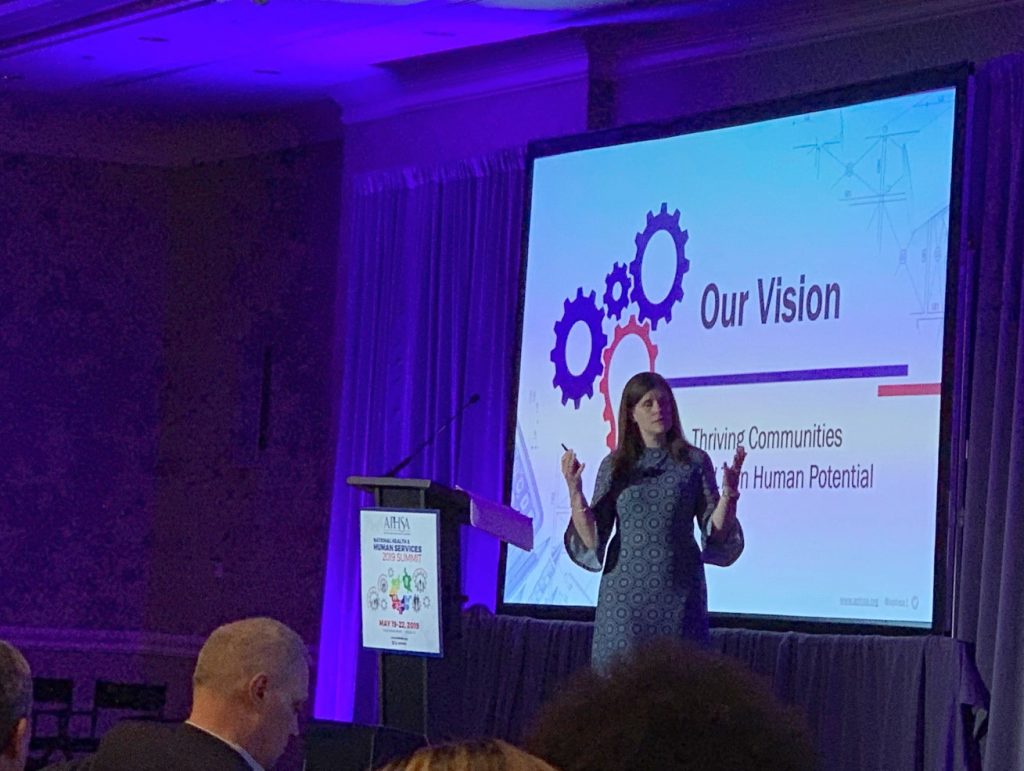 I left the conference and returned to Cincinnati again as a social worker, but also with an extra dose of belief in the work we do as a Network. Our CEO Jennifer Blatz wrote a blog last week on the need for us to build authentic relationships to create real change in communities. There’s no secret sauce for how to do this, although I imagine the recipe requires a dash of trust, a pinch of love and a few crushed egos.
So, how can we ensure we’re partnering with human services organizations to achieve the results that every community deserves? I am looking to you, readers, to share your examples of how this is taking shape in your own backyard.
The post There’s no secret sauce to creating real change in communities, but trust is part of the recipe appeared first on StriveTogether.
]]>The post Social change happens at the speed of relationships appeared first on StriveTogether.
]]>After spending an afternoon with Spartanburg Academic Movement, he reached back out to me to talk about his experience. During our call, he shared that he was surprised by what he saw in Spartanburg — different community members coming together around data to collaborate, solve problems and improve outcomes. He said he had been traveling across the country as part of an Aspen Institute initiative and that he was encountering people in local communities forming relationships to solve complex problems. A couple of months later, he wrote about the StriveTogether approach as one of many examples of people working to repair the social fabric of an increasingly fractured country.
 Over the past year, Brooks has continued to lift up stories of people in communities working together to solve problems. He calls it “weaving” and is making it a personal mission — through his column, his latest book and his new project at the Aspen Institute — for “weavers” to build inclusive communities centered on connection and relationships rather than hyper-individualism.
To officially launch this project, the Aspen Institute, under David Brooks’ leadership, last week hosted a gathering of 250 weavers from around the nation, called #WeaveThePeople in Washington, D.C. I was lucky enough to be invited, and wow, what an experience. I didn’t know what to expect going in, but the event was not your typical conference.
Have the courage to speak hard truths
We spent the first part of Day One hearing powerful stories of what it looks like to make connections and build relationships in community. We also spent time as a group defining our shared values. The values that emerged will feel familiar to members of the StriveTogether Cradle to Career Network: authenticity, community voice, inclusivity, curiosity, courage, equity. It should come as no surprise that I added results to the list.
Establishing our core values as weavers prepared us for what would come next — a critically important discussion about the significance of race in our work. As group members challenged one another not to sugarcoat the reality that deep systemic issues persist and that oppression in this country is intentionally designed, the conversation got very real. Things got uncomfortable, the planned agenda fell apart, and through the awkwardness, this community of weavers started to build trust.
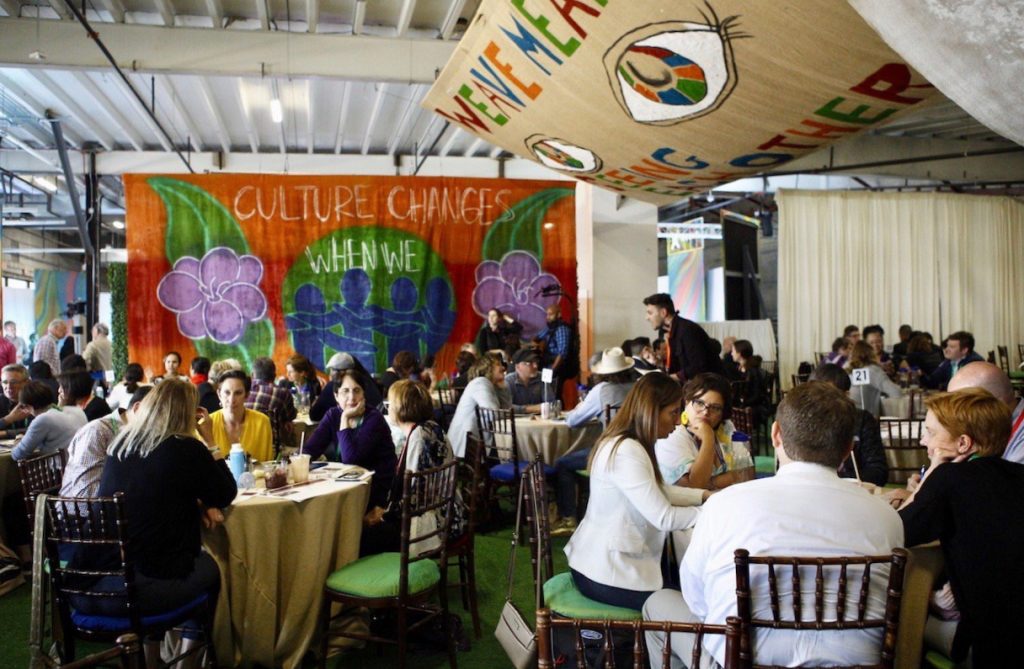
I realized how necessary it is for us to have the courage to speak hard truths and that those of us with power and privilege (i.e., white leaders like me) have a responsibility to acknowledge it and work through the discomfort. I thought about the parallel process that happens in communities across the Cradle to Career Network — how partnerships must identify shared values, speak hard truths and confront systems of oppression head-on to get to results. I came into this three-day event wondering what the result would be. I was starting to feel like I was part of a social experiment in which the relationship was the result — and I was struggling a bit to reconcile that.
We have to work across differences to achieve our results
By Day Two, I decided I would lean in to the design and trust the experience. We spent time in the big groups and small groups, discussing issues like the science of relationships and how to talk across differences. Weavers shared deeply personal stories of trauma and how that has helped them to build trust and make connections. Journalists gave us tips on how to tell better stories about our work and encouraged us to capitalize on the fact that Americans gravitate toward “whodunit” plots and crime dramas in which groups of people address and solve compelling problems together.
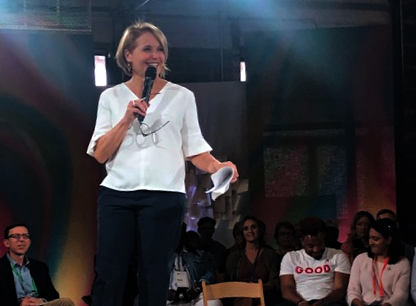 And then I was more than a little starstruck when America’s sweetheart herself, Katie Couric, stood up to facilitate a panel of weavers talking about “the neighborhood as the unit of change.” We were finally getting to the importance of place in this work, AND the conversation was being led by my all-time favorite Today Show personality. During this panel, one of the speakers, Janet Topolsky of Aspen Strategies Group, asked us, “How do you meet people, not where the need is, but where they dream?” This resonates in our work at StriveTogether. We can’t stop at analyzing the problem; rather, we must look to the future.
Later in the day, Eric Liu of Citizen University reminded us that America is a country founded on arguments. Anyone who’s seen “Hamilton” and enjoyed its epic rap battles knows this — America is both a democracy and a republic, a beautifully complicated melting pot for diverse peoples with conflicting ideologies. Arguments are a given. But Liu is challenging us to do better, because the more divided we become, the more stupid our arguments become. Liu encouraged us to have better arguments instead of unproductive ones on Facebook.
My echo chamber has also become quite cozy and most of the readers of this blog are in it. But our work at StriveTogether is about changing systems, and systems are made up of people — people of different ideologies and political persuasions. We have to work across differences to achieve our results. To have better, more productive arguments, we must take winning off the table, build relationships, listen passionately, embrace vulnerability and be open. This mass multicultural democratic republic is an experiment, and weavers are leading the way because we know how to build connections and leverage relationships.
By the end of Day Two, like so many others, I had shed some tears, questioned my own personal values, “weaved” with more than a few brilliant people during breaks to figure out how to work together to achieve our shared results.
‘Relationships are built at the speed of trust’
Day Three was all about action and the question: Where do we take this movement from here? Our big circle discussion included designer Lisa Kay Solomon, who walked us through some examples of innovative design and challenged us to think about what the structure could look like for taking this work forward, how we engage more people in the movement and what might be the unanswered questions we need to address. We moved to our small groups and began mapping out a design. Despite my desire to get to action, I was struggling with talking strategy because I was not clear on our shared aim or result for the work. I wanted to name something, anything, even as broad as “solving the country’s most intractable problems” (not exactly a SMART aim!), but I was challenged by some other weavers that the relationship is the result.
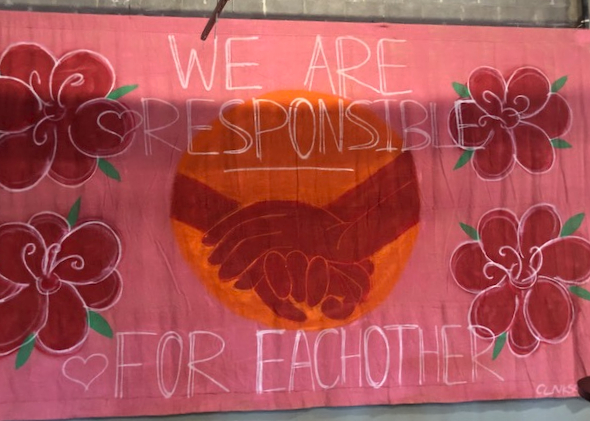
As we came together in the big group of 250 weavers, it became clear there was more trust to be built and more work to be done to become a true community. I remembered a blog by a partner in this work from Memphis, Adriane Johnson-Williams, in which she wrote that trust is a verb and that trust has to be built before action can begin. Trust takes time and is built through relationships. So, perhaps the relationship is indeed the result. To quote a fellow weaver, the Rev. Jennifer Bailey of Faith Matters Network, “Relationships are built at the speed of trust, and social change happens at the speed of relationships.” Could anything be more true in the work we are trying to do?
I am leaving #WeaveThePeople very optimistic about the future because our Network is comprised of passionate and innovative weavers across 66 communities who impact more than 13 million children. We are a powerful movement AND we can benefit greatly from connecting to other weavers. The power of relationships and community building makes us unstoppable. I encourage you to become a weaver.
The post Social change happens at the speed of relationships appeared first on StriveTogether.
]]>The post Make a beeline for allies in our collective impact work appeared first on StriveTogether.
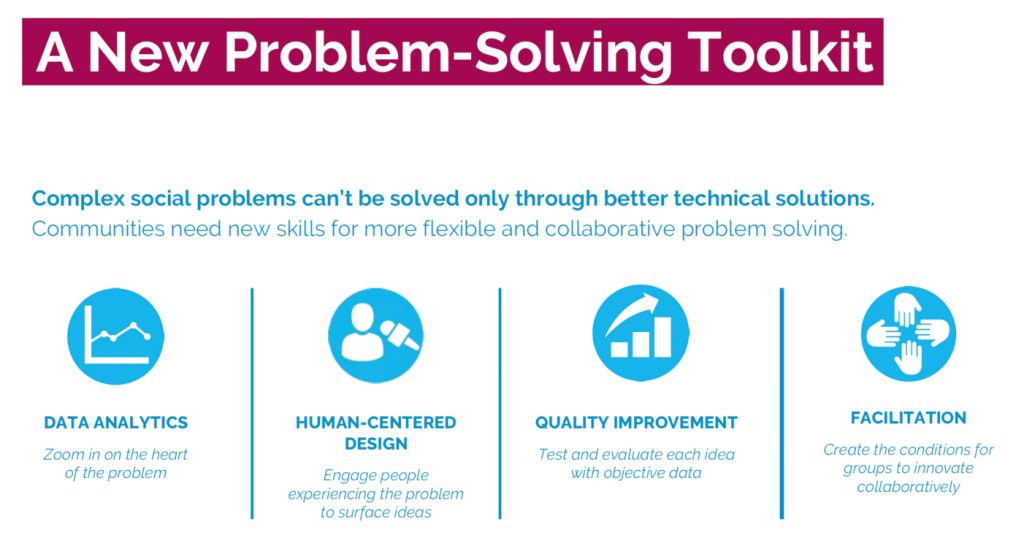
]]> Community Solutions helps communities adopt the best problem-solving tools from multiple sectors to end homelessness and the conditions that create it. The organization was created by Rosanne Haggerty, who spent 20 years developing affordable housing but couldn’t build apartments nearly as fast as homelessness and poverty were expanding. In 2011, she launched Community Solutions with a team of co-founders to find faster solutions. Today, they help communities optimize their existing resources to make measurable social change at scale.
But how exactly are they getting these results? Homelessness, like education gaps and poverty, is sometimes seen as an intractable problem, but at StriveTogether and the Cradle to Career Network, we know better.
For members of the Cradle to Career Network, Community Solutions’ process will seem very familiar. Their approach includes focusing on data; facilitating partners toward shared goals and action; targeting strategies to specific sub-groups (e.g. chronic, veteran or youth homelessness); identifying technical, complex and complicated challenges; and testing and refining strategies with small tests while thinking about the policy changes and resource flows needed to transform systems to END homelessness in communities across the country.
Years ago, I heard Nate Waas Schull from All Hands Raised describe attending a StriveTogether convening as being the girl in the bee suit in Blind Melon’s “No Rain” video, who feels lonely until she finally finds a whole field of bees — moving from feeling alone doing large-scale change work in your community, to finding friends and peers from across the country. Well now, my StriveTogether friends, let’s welcome to the field another colony of change agents using a similar process to ensure no one experiences homelessness in our communities.
Nate’s analogy resonated with me as I attended a Community Solutions Learning Session for its Built for Zero communities and team members at the end of March. Built for Zero is a rigorous national movement to end veteran and chronic homelessness in more than 70 communities across the country. Coordinated by Community Solutions, this effort supports participants in developing real-time data on homelessness, optimizing local housing resources, tracking progress against monthly goals and accelerating the spread of proven strategies.
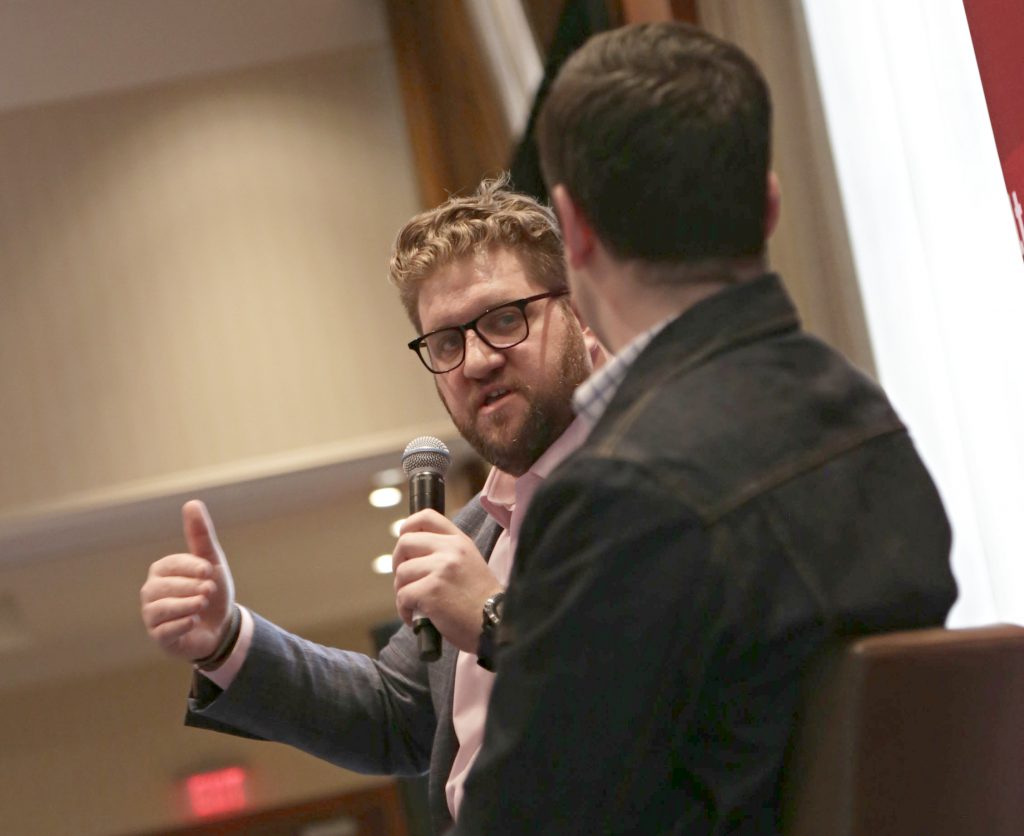
While being interviewed onstage by Jake Maguire of Community Solutions at last month’s event, I shared insights from the collective impact work of StriveTogether and the Cradle to Career Network, including how we use collaboration, center equity and focus on continuous improvement to create change in our communities. I walked away from the Learning Session feeling confident and excited that not only are there similarities in our work and approaches, there are common skills and competencies needed to execute large-scale social change efforts.
Moving forward, we’ll partner with Community Solutions to share emerging practices and support each other’s critical efforts for marginalized communities. In the meantime, I recommend that you visit their website to see if your community is taking on the Built for Zero challenge or learn more about how your community can get involved.
Our work at StriveTogether of transforming the systems that impact children and families is always strengthened by working across sectors. So, as Christian Paige said during his spoken word performance at our 2018 Cradle to Career Network Convening, let’s “write an eviction notice for homelessness” and change it from an issue we face to a “[parable] of what can be conquered by collective impact.”
The post Make a beeline for allies in our collective impact work appeared first on StriveTogether.
]]>The post Social justice and teamwork are the future of globalization appeared first on StriveTogether.
]]>How might we prepare global residents for the future of work? Past waves of globalization offer lessons on what it will take to more effectively weather the transition. As leaders consider how to shape a new architecture for Globalization 4.0 (the theme of the World Economic Forum’s 2019 Annual Meeting), we must prioritize the goal of addressing persistent inequalities – particularly those based on race, income, gender and place. This is the moonshot of our generation.
Growing up in the 1990s with the global proliferation of American consumer goods and the start of the digital revolution, globalization seemed inevitable. Creative disruption threatened every industry, blue-collar and white-collar jobs alike. But the interconnectedness of our world accelerated by globalization was also thrilling. Millennials grew up expecting change, knowing that because it’s impossible to unwrite the past, we must accept the uncertainty of change.
It’s time to be unapologetic about the emergent nature of our ever-changing world. No problem of human destiny is beyond human beings, so here are three prescriptions for leaders to embrace as we prepare for the future:
1. Take a systems approach
Communities and countries can’t pretend to build walls around themselves. Let’s face it: our world is interconnected, and our fates are linked. The reality of climate change makes this crystal-clear. To combat nationalism and nativism in favor of globalism and humanism, we must remember the African proverb that if you want to go fast, you can go alone, but if you want to go far, we must go together.
Leaders working towards large-scale social change are taking a systems view on a range of issues from Built for Zero (to end homelessness) to Campaign Zero (to end police violence). In my hometown of Chicago, hospitals are working alongside residents to reduce health disparities through West Side United.
If you take the long view, we’re living in the best possible time to be alive, according to Harvard psychologist Steven Pinker. While we should be optimistic, society still seems more polarized than ever, with people talking past one another, arguing to win instead of arguing to learn. Speaking on this topic at the 2018 World Economic Forum Annual Meeting, I shared strategies to help others and ourselves take a systems view and slow down our thinking to address the root causes before moving to action.
2. Disrupt the accrual of power and privilege
Our current systems are perfectly designed to get the results we’re getting, and the market alone will not generate the best outcomes for those most burdened – particularly people of color, women and other minority populations. To disrupt the accrual of power and privilege, we need to create new systems that intentionally reverse structural inequities. We must embrace john a. powell’s targeted universalism and work with community partners to create systems that work for those most burdened.
This is the crux of my work to coach hundreds of cross-sector leaders toiling to build a brighter future for every child in 70 regions across the United States. The community partnerships in the StriveTogether Cradle to Career Network concurrently work to change everyday practices and behaviors, while advancing policies to transform the patchwork of systems that young people encounter across healthcare, education, housing, public safety, food security and more.
3. Leverage the power of networks
Systems thinker Donella Meadows ranked the power to create self-organizing systems as one of the most powerful leverage points to transform systems. As leaders consider ways to make globalization work for the greatest number of people, supporting networks that make thinking visible will be key. From professional learning communities among educators to Collaborative Improvement and Innovation Networks in the maternal and child health sector, groups of leaders and practitioners are increasingly coming together to share ideas, lessons and promising practices – and these networks need to get better about moving from sharing knowledge to transferring learning into action.
One network of which I’m proud to be a part is the Global Shapers Community, an initiative of the World Economic Forum spanning nearly 400 city-based hubs in 171 countries. Global Shapers self-organize to create local projects to improve the state of our communities – and share ideas and innovations with Shapers around the world to accelerate impact on a global scale. This movement is a positive example of what can happen when the power of globalization is harnessed for good.
As leaders around the world work to future-proof globalization, combat nativism and tribalism, and find solutions to global risks like pernicious inequalities, let’s find ways to work together to build better, stronger systems where everyone has the potential to succeed.
The post Social justice and teamwork are the future of globalization appeared first on StriveTogether.
]]>The post In Cincinnati, systems are changing and student outcomes are improving appeared first on StriveTogether.
]]>After a decade of cross-sector efforts, nearly 80 percent of key indicators of student success are improving. And, behaviors, policies and practices have changed and continue to change across the community to align efforts and resources to improve outcomes from kindergarten readiness through post-secondary completion.
When StrivePartnership started in 2006, a group of leaders from various sectors throughout the Cincinnati area came together with a common goal: to improve academic success in the urban core. More than 300 cross-sector representatives joined the partnership, including school district superintendents, early-childhood educators, nonprofit practitioners, business leaders, community and corporate funders, city officials and university presidents.
By sitting around the same table, partners were able to align around shared educational goals and outcomes.
Now, 10 years later, organizations, institutions, and community members — including Cincinnati Children’s Hospital, United Way, Cincinnati Public Schools and the business community — are aligning their work to support a shared cradle-to-career vision.
Here are some of the successes StrivePartnership and its partners have had recently that exemplify how systems are changing:
1) Investing in what works: Public and private funders are changing the way they think about investments, recognizing the importance of investing in high-impact, evidence-based, scalable interventions in ways that secure sustainable public funding. Every Child Capital, a first-in-the-nation venture philanthropy fund focused on scaling proven early literacy interventions that have a business case for public funding and a secured public partner, has attracted more than $4 million dollars in funding.
Cincinnati Public Schools, in partnership with the Cincinnati Preschool Promise, is pursuing an unprecedented November 2016 levy to significantly expand access to preschool and strengthen the pre-K-12 public school system so every child has a strong start and a strong future.
2) Using continuous improvement: Over the last year, StrivePartnership developed a rapid-cycle continuous improvement capability training series, Impact U, for the region’s education leaders with Cincinnati Children’s Hospital (CCHMC) and StriveTogether. Community leaders are improving early grade reading, and a key Cincinnati Public Schools executive is now working half time at Children’s Hospital to ensure true collaboration.
“The bold experiment of ImpactU to build community capacity to have meaningful quality improvement skills that start small but build up in a systematic way is a critical partnership between CCHMC and StrivePartnership,” Tom DeWitt of Cincinnati Children’s Hospital said.
3) Aligning postsecondary partners: A collaborative of two- and four-year institutions from Ohio and Kentucky are analyzing data across postsecondary institutions to understand root causes for low postsecondary attainment through the Persistence Project. Spending time together strengthened relationships and allowed for sharing data across state lines, which is almost impossible.
“The work done across higher educational institutions might be difficult to continue without the avenue and opportunity that StrivePartnership provides to collaborate. It helps to have a regional focus. With the catalyst to move it forward, that has a bigger impact than working alone,” Dr. Patricia Mahabir of Gateway Community College said.
The StriveTogether Cradle to Career Network, which represents 68 communities across 32 states, is working toward the common result of the success of every child from cradle to career. StriveTogether has developed a method to assess the effectiveness of collective impact partnerships, helping communities stay focused on results and sustain impact over time. A community in the Cradle to Career Network will be designated as a Proof Point community when 60 percent of indicators across six cradle-to-career outcomes are maintained or improved year after year. Additionally, community leaders across sectors must demonstrate evidence of changing how systems work in four key areas: shared community vision, evidence-based decision making, collaborative action, and investment and sustainability.
StrivePartnership and its partners continue to strengthen civic infrastructure to support local efforts to achieve better and more equitable outcomes for children. Local partners are focused on continuing to build capability of leaders and practitioners to use data for improvement, adopt intentional strategies to address structural inequities, and expand parent and community engagement. They continue to pursue innovative approaches to align resources to what works, including public funding through a school levy to expand quality preschool.
Being designated as Proof Point is a significant achievement, but it represents a milestone – not the culmination of the journey. We congratulate StrivePartnership on this milestone, and we look forward to seeing the impact they will continue to make in the future.
The post In Cincinnati, systems are changing and student outcomes are improving appeared first on StriveTogether.
]]>The post How do you know your education system is changing? appeared first on StriveTogether.
]]>The StriveTogether approach is about positively improving the educational experiences of every learner from cradle to career. We believe that no matter what a student looks like, where they come from or what challenges they may face, they deserve fair access to resources and opportunities that can help them reach their goals in life.
We also believe that this kind of change cannot happen unless we remodel the systems that exist today.
Collective impact partnerships in communities across the country have shown that education equity can become reality, supporting every child from cradle to career. Though changing systems is a long, continual process, these communities are seeing early wins by illuminating disparities, shifting student supports and testing ways to improve.
Stories from communities give evidence this change is happening. From reducing chronic absence in San Antonio, Texas, to creating new public funding for preschool in Dayton, Ohio to changing the teaching and learning approach for middle schoolers in Austin, Texas — systems are changing to support better outcomes for students.
Through our work, we’ve gained a better understanding of what it actually means to sustainably change behaviors, practices and policies to support student success. We’ve recently updated the Systems Change gateway of the Theory of Action to reflect the learnings we’ve acquired over the years. Built on lessons from StriveTogether Cradle to Career Network members, the StriveTogether Theory of Action offers quality benchmarks that distinguish this work, not only from traditional collaboration, but from other collective impact approaches
We’ve learned that systems change requires the entire community to change or adapt in ways that best support learners — and we wanted the indicators to better reflect this collective effort. The new indicators in the Systems Change gateway essentially provide a more comprehensive picture of sustainable systemic change throughout a community:
- Organizations, institutions and community members align their work to support the cradle-to-career vision
- Partners effectively communicate in ways that demonstrate shared accountability for results and build community engagement
- Student-level data is accessible and used regularly by relevant partners to inform actions to improve outcomes and narrow disparities
- Partners use a variety of data to continuously improve and implement strategies that intentionally accelerate outcomes for populations facing persistent disparities
- Collaborative action efforts are sustained to improve outcomes and narrow disparities
- Community members are involved in the co-development of solutions to improve outcomes
- Public and private dollars are targeted to spread and sustain data-driven practices
- Partners consistently build capability and staff are supported with sustainable funding to implement the evolving partnership strategy
- Public and organizational policies change to support improvement of community-level outcomes and narrow disparities
Our new indicators make room for the diversity we expect to see in the unique work partnerships take on to change systems and allow for flexibility while staying focused on the impact that is vital to see real, sustained change.
The actions that must be taken to change systems look different in every community. Cogs and wheels may come in standard shapes and sizes, but people and communities don’t.
The post How do you know your education system is changing? appeared first on StriveTogether.
]]>